

On This Day in News: January 13, 2012
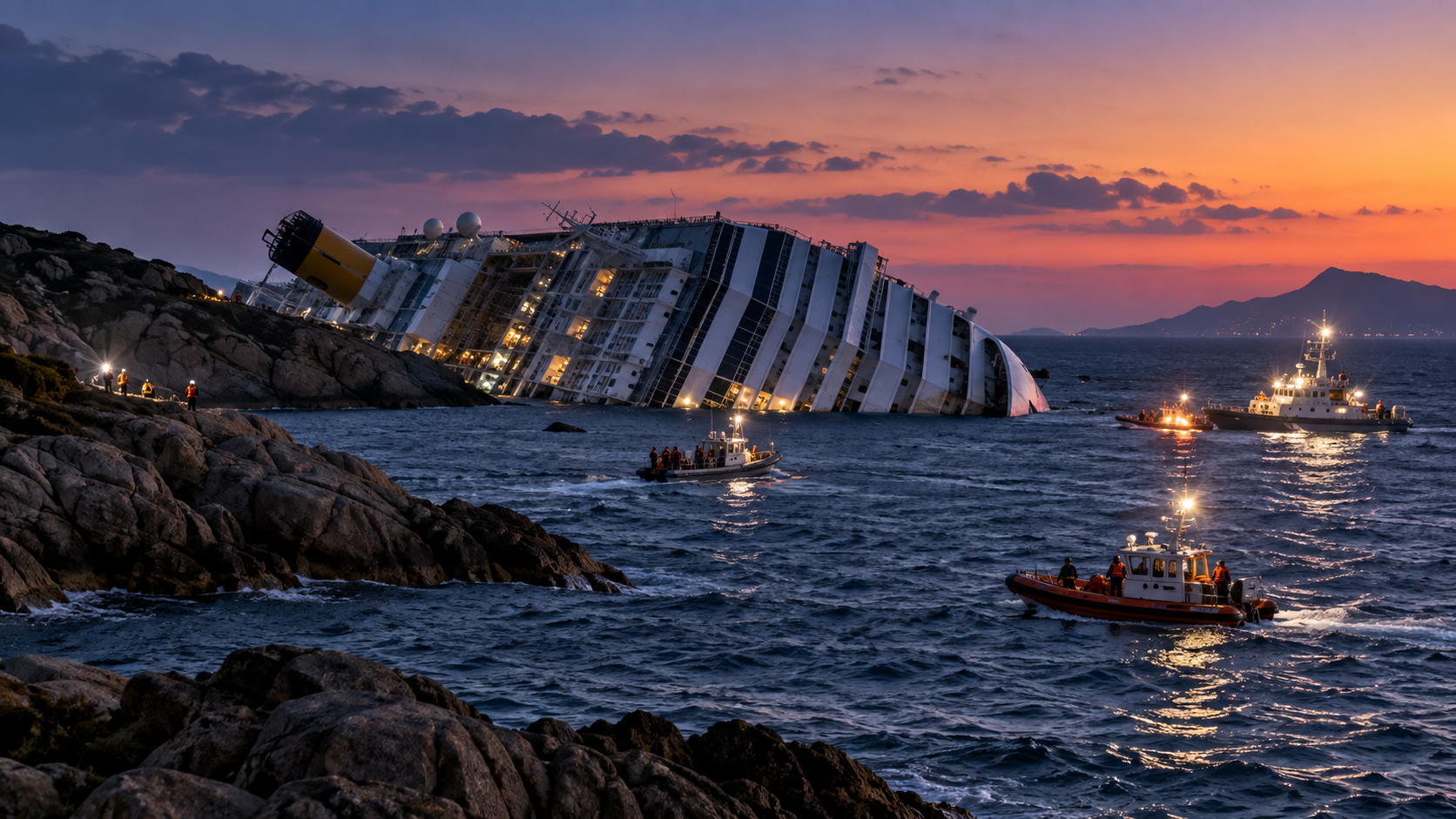
On the evening of January 13, 2012, the Italian cruise ship Costa Concordia began what was meant to be a routine Mediterranean voyage when it struck submerged rocks off the island of Giglio, tearing a massive gash in its hull. The impact caused the 290-metre vessel to rapidly take on water and list sharply to one side, plunging passengers and crew from a holiday atmosphere into confusion and fear. Power failures knocked out lighting and communications in parts of the ship, while contradictory announcements initially downplayed the severity of the situation. Many passengers later recalled being told it was only an “electrical problem” even as plates shattered, furniture slid, and the ship noticeably tilted.
As the reality of the damage became impossible to deny, the crew ordered an evacuation. However, the muster drill that would normally prepare passengers for an emergency had not yet been held for many on board, leaving thousands unsure of procedures and lifeboat locations. Launching the lifeboats was complicated by the ship’s growing list, which made some of them unusable on the high side of the vessel. Chaos unfolded on crowded decks and stairwells as families tried to stay together, language barriers slowed instructions, and cold January seas loomed only metres away. Local residents on Giglio, awakened by the sound of impact and alarms, rushed to the harbour to help, offering blankets, shelter, and private boats to those who made it ashore.
In the hours that followed, the Costa Concordia settled onto its side in shallow water just off the rocky coastline, where dramatic images of the half-submerged ship quickly spread across global news outlets. Thirty-two people lost their lives, including passengers who were trapped or swept away and crew members who stayed behind to assist in the evacuation. Attention soon turned to the actions of Captain Francesco Schettino, who had steered the ship close to the island for an informal “salute” manoeuvre and later left the vessel before the evacuation was complete. Recordings of coast guard officials ordering him to return to the ship became a focal point of public outrage and a symbol of failed responsibility at sea.
In the months and years after the disaster, investigations and court proceedings examined not only the captain’s decisions but also the cruise line’s safety culture and procedures. Schettino was eventually convicted of multiple counts, including manslaughter and abandoning ship, and sentenced to a lengthy prison term. The wreck itself remained a visible reminder of the tragedy until a complex salvage operation refloated and removed the vessel, one of the largest such efforts in maritime history. For the cruise industry, the Costa Concordia disaster prompted tighter rules on emergency drills, route planning, and bridge management, reinforcing hard lessons about the importance of preparation, clear communication, and accountability when thousands of lives are entrusted to a single ship.
On January 13, 2012, the Italian cruise ship Costa Concordia struck submerged rocks off the island of Giglio in the Tyrrhenian Sea during a close-to-shore maneuver. The impact tore a long gash in the hull, causing rapid flooding and a severe list as thousands of passengers and crew were settling into what was supposed to be a routine Mediterranean cruise.
Power failures and the unexpected tilt left many on board confused and alarmed. Early announcements suggested only a technical problem, but as the ship continued to lean and objects slid across decks, it became clear that a serious maritime emergency was unfolding just off the Italian coast.
The order to abandon ship came as the vessel’s list made some lifeboats difficult or impossible to launch, contributing to crowding, delays, and disorganized movement through corridors and stairwells. Local residents and authorities on Giglio quickly mobilized, using ferries and small boats to help transfer people from the stricken ship to shore in the dark and cold of a winter night.
More than 4,000 people were ultimately evacuated, but 32 lives were lost. In the aftermath, Italian investigators examined the route taken near the island, the timing and clarity of emergency communications, and the decisions made on the bridge, including the captain’s role and his failure to remain on board during the full evacuation.
In the longer term, the Costa Concordia disaster led to criminal proceedings against Captain Francesco Schettino, who was convicted on multiple charges, including manslaughter and abandoning ship. The wreck itself remained partially submerged off Giglio until a complex salvage operation refloated and removed the vessel, one of the most challenging projects of its kind.
The incident prompted scrutiny across the cruise industry, encouraging stricter rules on safety drills, voyage planning, and bridge management. It also shaped public expectations about accountability at sea, reinforcing the idea that large-scale tourism and modern engineering must be matched by clear emergency procedures and responsible leadership when lives are at stake.
Explore more of "On This Day ..."
Discover more events from the same date across news, politics, technology, sports, and other fields. Each link highlights significant moments that shaped history on different fronts.