

On This Day in News: January 12, 2010
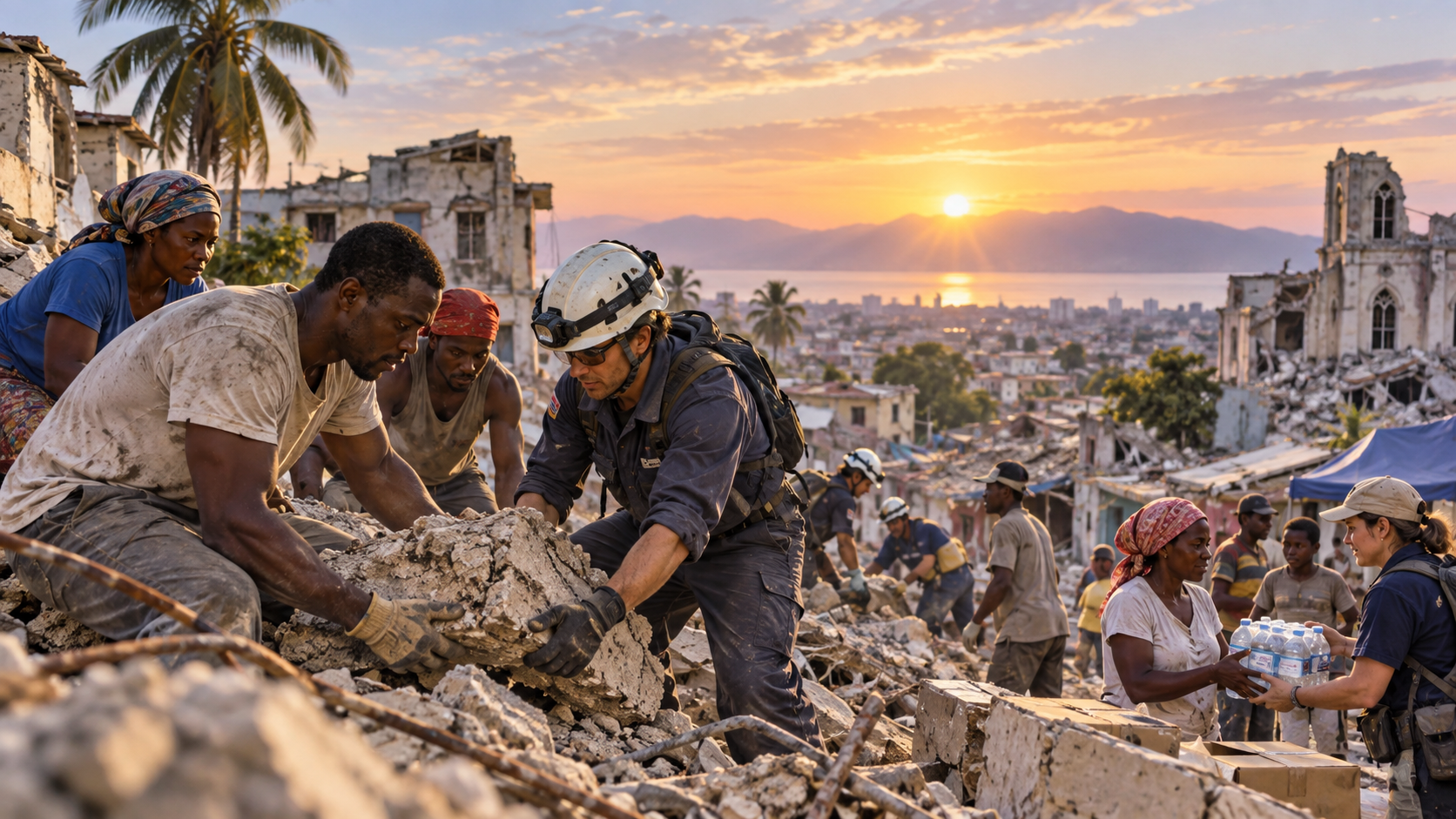
On January 12, 2010, a powerful magnitude 7.0 earthquake struck the Caribbean nation of Haiti at 4:53 p.m. local time. Its epicenter lay just west of the capital, Port-au-Prince, in a densely populated region where many people lived in fragile, informal housing built on steep hillsides and soft ground. Within less than a minute of shaking, schools, hospitals, government buildings and homes collapsed across the metropolitan area. Streets quickly filled with dust and debris as survivors searched by hand through the ruins, often without tools, electricity or reliable communications to call for help, while aftershocks continued to rattle already weakened structures.
The human toll was staggering. Estimates of the number of people killed range from around 100,000 to more than 220,000, with several hundred thousand more injured and some three million affected overall. Whole neighborhoods were reduced to rubble, leaving more than a million people displaced and living in makeshift camps of tarpaulins and tents that sprang up in public squares, on football pitches and along roadways. Iconic national landmarks, including the presidential palace, the main cathedral and key ministries in downtown Port-au-Prince, were destroyed or left structurally unsound, underscoring how deeply state institutions themselves had been shaken by the disaster. For many Haitians, the loss of archives, schools and cultural sites compounded the grief of losing family members and neighbors.
In the days that followed, Haiti became the focus of one of the largest international relief efforts in recent history. Search-and-rescue teams, medical staff and humanitarian agencies from across the world converged on the country, airlifting in food, water purification systems, field hospitals and heavy equipment. Foreign militaries helped reopen the damaged airport and restore basic logistics. Yet the same damage that made aid essential also made it difficult: the main port was crippled, roads were blocked and the airport quickly became congested as hundreds of flights competed for limited landing slots. Questions about coordination, the role of the Haitian government and the effectiveness and transparency of aid agencies sparked debate that would continue long after the emergency phase ended.
Rebuilding proved to be a long and uneven process. Billions of dollars were pledged for recovery and reconstruction, but progress was hampered by political instability, land tenure disputes, limited local capacity and the sheer scale of the damage. Many families spent years in temporary shelters or informal settlements, and the country later struggled with a deadly cholera outbreak linked to contaminated water. Even so, Haitian civil society groups, local communities and diaspora networks played a central role in recovery, organizing neighborhood committees, supporting schools, rebuilding small businesses and advocating for safer building practices. The earthquake of January 12, 2010, remains a defining event in Haiti’s modern history, a reminder of both the country’s vulnerability to natural hazards and the resilience and determination of its people.
On January 12, 2010, a magnitude 7.0 earthquake struck Haiti just outside Port-au-Prince, the country’s capital and most densely populated urban center. The region was highly vulnerable due to weak infrastructure, high population density, and widespread poverty.
The earthquake hit at 4:53 p.m. local time and caused thousands of buildings to collapse within seconds. Hospitals, schools, government offices, and homes were destroyed in areas that lacked modern seismic construction standards.
The disaster resulted in massive loss of life and widespread destruction. Official estimates placed the death toll in the hundreds of thousands, and millions more were affected or displaced. Tens of thousands of people were trapped beneath collapsed structures as survivors searched through rubble without heavy machinery or reliable communications.
Neighborhoods across Port-au-Prince and surrounding communities were reduced to ruins, and major landmarks such as the National Palace and main cathedral were devastated. Makeshift encampments formed throughout the capital as emergency services and rescue teams struggled to respond.
Haiti became the center of one of the largest humanitarian relief operations in recent history. International aid, rescue teams, and foreign militaries helped deliver supplies, rebuild infrastructure, and restore critical logistics such as the airport and port.
Rebuilding took years and faced obstacles including political instability, strained institutions, and housing shortages. Despite billions pledged for reconstruction, progress was uneven, and many survivors remained in temporary shelters long after the disaster. The earthquake remains a defining moment in Haiti’s modern history and a powerful reminder of the country’s vulnerability and resilience.
Explore more of "On This Day ..."
Discover more events from the same date across news, politics, technology, sports, and other fields. Each link highlights significant moments that shaped history on different fronts.