

On This Day in News: January 14, 2011
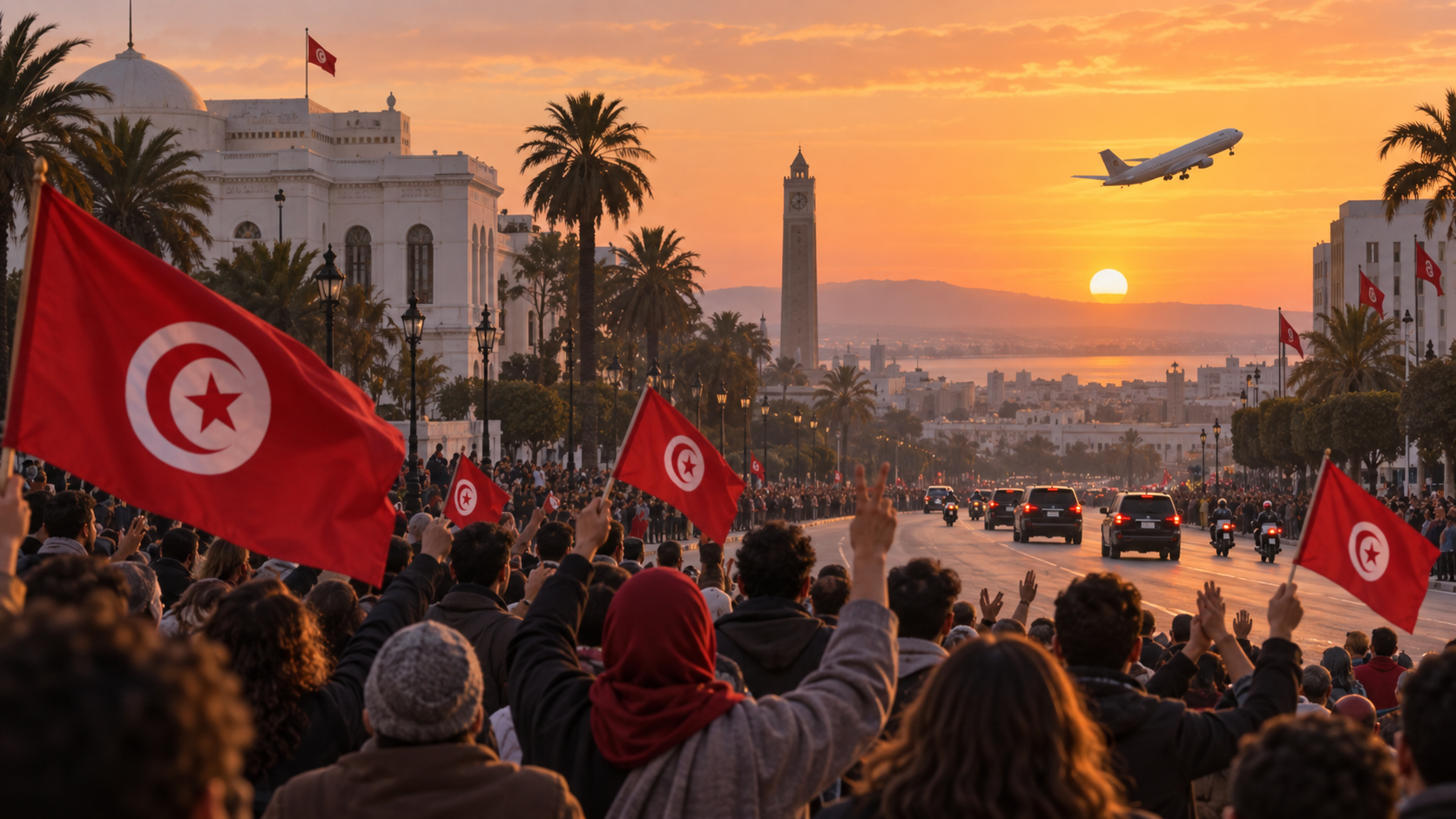
On January 14, 2011, weeks of mounting protests in Tunisia reached a dramatic climax in the capital, Tunis. What began in December as local anger over the self-immolation of street vendor Mohamed Bouazizi had grown into a nationwide movement denouncing unemployment, corruption, police brutality, and the 23-year rule of President Zine El Abidine Ben Ali. Under a state tightly controlled by security services and censorship, the sight of tens of thousands of people gathering along Habib Bourguiba Avenue signaled an unprecedented challenge to the regime. Demonstrators chanted for “work, freedom, and national dignity,” making clear that they wanted deep political change rather than limited economic relief.
That day, the government responded with a familiar mixture of concessions and force. Ben Ali declared a state of emergency, banned public gatherings of more than three people, and pledged early elections and lower food prices, while security forces tried to disperse demonstrators with tear gas and live ammunition. Protesters, however, refused to leave the streets, emboldened by social media images, satellite television coverage, and word of mouth from cities across the country. As clashes continued into the afternoon, it became clear that the old tactics of fear and control were no longer working. By evening, Ben Ali had boarded a plane and fled the country for Saudi Arabia, and officials announced his resignation, abruptly ending his decades-long presidency.
In the immediate aftermath, Tunisia entered a turbulent but hopeful transition. An interim leadership struggled to calm public anger, reform interior and security institutions, and prepare for free elections after years of one-party dominance. Political parties long suppressed by the state, including Islamists, leftists, and liberals, rushed to organize and compete in the new landscape. Trade unions, lawyers’ associations, and human rights organizations played significant roles in negotiating the rules of the transition, pressing for accountability for past abuses while trying to avoid a descent into chaos or military rule.
The events of January 14 reverberated far beyond Tunisia’s borders. Images of Tunisians forcing out an entrenched ruler inspired uprisings and reform movements across the Arab world, from Cairo’s Tahrir Square to protests in Yemen, Bahrain, and Syria, in what became known as the Arab Spring. In the years that followed, Tunisia held competitive elections and drafted a new constitution with strong protections for rights and pluralism, achievements that earned a group of civil society mediators the Nobel Peace Prize. Yet persistent economic hardship, regional inequalities, and political polarization have kept the legacy of the revolution contested. The anniversary of that day continues to prompt reflection on both the gains and the unfinished promises of a popular uprising that began with ordinary citizens demanding a voice in their country’s future.
By January 14, 2011, Tunisia had been gripped for weeks by mass protests sparked by the self-immolation of street vendor Mohamed Bouazizi in December 2010. What began as local outrage over corruption, unemployment, and harassment quickly grew into a national movement challenging President Zine El Abidine Ben Ali's 23-year rule.
Demonstrations spread from provincial cities to the capital, Tunis, where crowds gathered along Habib Bourguiba Avenue to demand “work, freedom, and national dignity.” Despite security crackdowns, arrests, and the declaration of a state of emergency, protesters continued to press for the president’s resignation and an end to authoritarian rule.
On January 14, 2011, Ben Ali fled Tunisia for Saudi Arabia as his government lost control of the streets. His departure ended decades of highly centralized, security-heavy rule and opened the door to an interim government that promised political reforms and new elections.
The change, however, was not an instant solution to Tunisia’s problems. Security forces and political elites from the old system remained influential, and economic hardship did not disappear overnight. Tunisians continued to protest over unemployment, regional inequality, and concerns that the goals of the uprising might be compromised during the transition.
In the longer term, Ben Ali’s ouster became a defining moment of the Arab Spring. Popular movements in Egypt, Yemen, Libya, and beyond drew inspiration from Tunisia, seeing that a sustained, largely grassroots uprising could force the resignation of an entrenched leader without a military coup.
Inside Tunisia, the revolution set in motion years of political experimentation, including competitive elections and the drafting of a new constitution that expanded rights and recognized pluralism. At the same time, ongoing debates over security, economic reform, and the balance of power have kept the legacy of January 14 at the center of national life and continue to shape how Tunisians and observers assess the broader trajectory of the Arab Spring.
Explore more of "On This Day ..."
Discover more events from the same date across news, politics, technology, sports, and other fields. Each link highlights significant moments that shaped history on different fronts.