

On This Day in News: January 15, 2009
On January 15, 2009, US Airways Flight 1549 took off from New York’s LaGuardia Airport on a routine afternoon flight to Charlotte, North Carolina, with a final destination of Seattle. Just minutes after departure, as the Airbus A320 climbed over the Bronx, a flock of Canada geese struck the aircraft, causing an almost simultaneous loss of power in both engines. With the plane rapidly losing altitude and densely populated New York City below, Captain Chesley “Sully” Sullenberger and First Officer Jeffrey Skiles had only seconds to decide how to respond to a crisis few pilots ever face in real time. Controllers offered a return to LaGuardia or diversion to nearby Teterboro Airport, but the crew quickly assessed that neither runway could be reached safely.
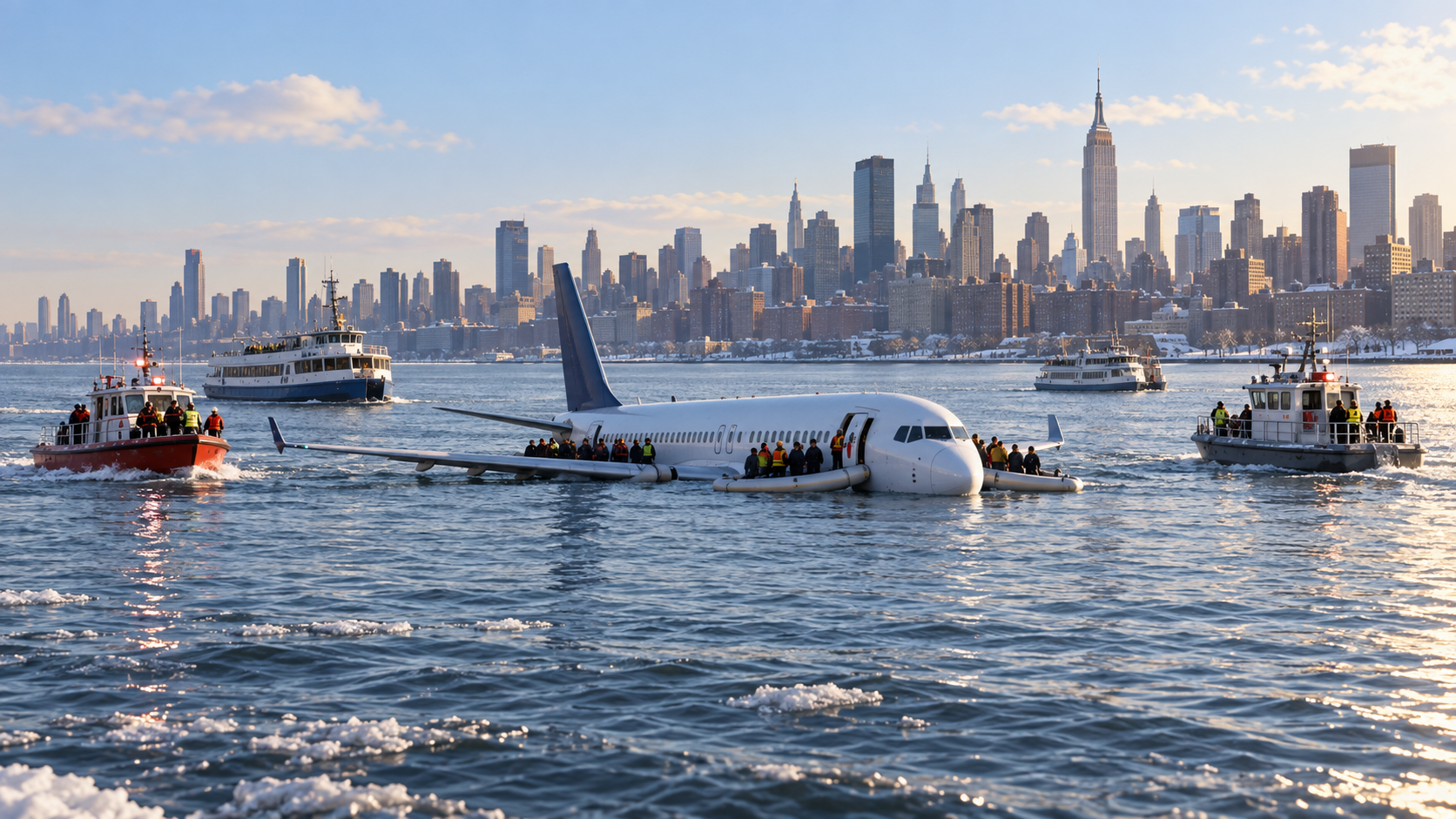
Instead, Sullenberger made the unprecedented decision to attempt a water landing on the Hudson River. He guided the powerless aircraft toward the broad, cold expanse of water that bisects Manhattan and New Jersey, carefully aligning the descent to avoid bridges, buildings, and river traffic. At approximately 3:31 p.m., less than four minutes after the bird strike, Flight 1549 touched down on the Hudson in a controlled ditching. The aircraft remained largely intact and afloat, allowing emergency slides to deploy and passengers to evacuate onto the wings and rafts in freezing January air. Despite the shock and chaos, the evacuation proceeded swiftly, aided by clear instructions from the cabin crew and cooperation among passengers.
Within moments, commuter ferries, Coast Guard vessels, police boats, and other craft converged on the scene. Many ferries diverted from their normal routes to assist, pulling passengers from the wings and rafts and bringing them to safety on both the Manhattan and New Jersey shores. Emergency responders treated people for hypothermia and minor injuries, but remarkably, there were no fatalities among the 155 passengers and crew. The incident was quickly dubbed the “Miracle on the Hudson,” a phrase that captured the improbable outcome of a dual-engine failure over a major city that ended without a single loss of life.
In the months and years that followed, the event became a case study in crisis decision-making, crew resource management, and aviation safety. Investigators highlighted the crew’s calm under pressure, the effectiveness of training for rare emergencies, and the role of teamwork between pilots, flight attendants, air traffic controllers, and first responders. Regulators and airlines revisited procedures for bird-strike risks, low-altitude emergencies, and water landings, incorporating lessons from Flight 1549 into training and planning. The Hudson River landing stands as a reminder that even in highly automated modern aviation, human judgment, professionalism, and quick thinking can still be decisive in turning potential catastrophe into survival.
On January 15, 2009, US Airways Flight 1549 took off from New York’s LaGuardia Airport bound for Charlotte, North Carolina, with a final destination of Seattle. The afternoon departure was a routine, short-haul flight operated by an Airbus A320 carrying 150 passengers and 5 crew members.
Just a few minutes after takeoff, while climbing over the Bronx, the aircraft struck a flock of Canada geese, causing both engines to lose thrust almost simultaneously. With limited altitude, no usable engine power, and dense urban areas below, Captain Chesley “Sully” Sullenberger and First Officer Jeffrey Skiles had only seconds to assess their options. Controllers suggested a return to LaGuardia or a diversion to Teterboro, but the crew quickly concluded that neither airport could be reached safely.
Instead of attempting a risky turn back to a runway, Sullenberger chose to ditch the aircraft in the Hudson River, using the wide waterway as an improvised landing strip. At approximately 3:31 p.m., less than four minutes after the bird strike, Flight 1549 touched down on the river in a controlled water landing, remaining largely intact and afloat.
The crew initiated a rapid evacuation, deploying slides and directing passengers onto the wings and life rafts in freezing winter conditions. Nearby commuter ferries, Coast Guard vessels, and police boats diverted from their routes to assist, pulling people from the water and from the aircraft. Thanks to the coordinated response and the stability of the airframe, all 155 people on board survived, with injuries limited mostly to hypothermia and minor trauma.
The “Miracle on the Hudson,” as the event came to be known, quickly entered public consciousness as a rare example of an aviation disaster averted. Investigators and safety experts studied the incident in detail, highlighting the importance of pilot training, crew coordination, and clear communication during high-stress emergencies.
The National Transportation Safety Board’s review led to renewed focus on bird-strike risks, low-altitude emergency procedures, and ditching techniques. Airlines and regulators incorporated lessons from Flight 1549 into simulations, checklists, and training programs. Beyond technical changes, the event became a widely cited example of professionalism and judgment under pressure, reinforcing public discussions about the role of human decision-making in an era of increasingly automated flight systems.
Explore more of "On This Day ..."
Discover more events from the same date across news, politics, technology, sports, and other fields. Each link highlights significant moments that shaped history on different fronts.