

On This Day in News: February 5, 1994
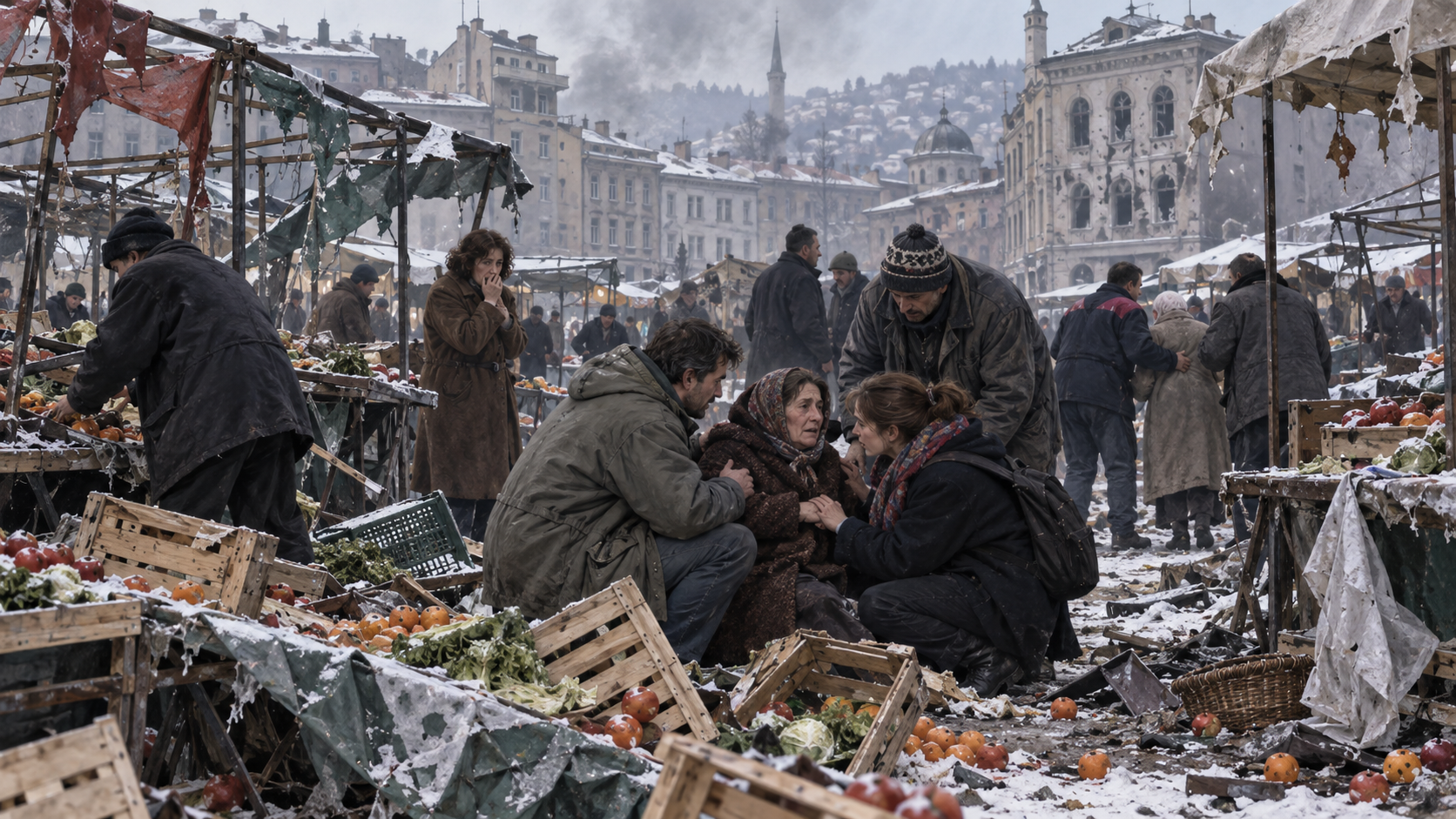
On February 5, 1994, a mortar shell exploded in the crowded Markale marketplace in central Sarajevo, killing 68 people and wounding more than 140. The market served residents enduring the long siege of Bosnia and Herzegovina's capital during the Bosnian War. The attack struck ordinary civilians buying food and supplies in a city already subjected to artillery fire, sniper attacks, shortages, and disrupted utilities. Images from the scene quickly circulated internationally and transformed distant reporting about the siege into an immediate political crisis.
Sarajevo had been surrounded since 1992 by Bosnian Serb forces positioned in the hills. The city's population included Bosniaks, Serbs, Croats, and others, while the conflict grew from the breakup of Yugoslavia and competing nationalist projects. United Nations peacekeepers and humanitarian agencies operated inside the city, but their limited mandate did not stop shelling. Investigators examined the crater and firing angles after Markale. Arguments over responsibility became part of wartime information campaigns, although international tribunals later attributed the attack to Bosnian Serb forces.
The massacre increased pressure on NATO and the United Nations to act. NATO issued an ultimatum demanding the withdrawal or control of heavy weapons around Sarajevo, and many guns were moved or placed under monitoring. Shelling decreased for a time, though the siege continued. A second deadly attack near Markale in August 1995 helped trigger a broader NATO air campaign against Bosnian Serb military targets, contributing to the diplomatic conditions that produced the Dayton peace agreement later that year.
Markale remains one of the most recognized civilian tragedies of the siege. It demonstrated the vulnerability of routine public spaces during urban warfare and the limits of humanitarian relief without effective civilian protection. The event is also a reminder that technical investigations of weapons, trajectories, and command responsibility can become essential to historical truth. Memorials in Sarajevo preserve the names of the dead, while survivors and families continue to resist efforts to deny or minimize what happened.
Markale was a working market where residents sought scarce food during a siege that restricted movement and basic services across Sarajevo.
The attack occurred within a broader campaign of artillery and sniper fire directed at a densely populated city from surrounding positions.
International outrage accelerated demands that heavy weapons be pulled back from Sarajevo or placed under United Nations supervision.
The ultimatum reduced some shelling but did not end the siege, and civilians remained exposed until the war's final phase in 1995.
War-crimes proceedings later used forensic evidence, military records, and testimony to assess responsibility for attacks on Sarajevo.
Remembering Markale centers civilian experience and underscores the importance of protecting markets, hospitals, and other public spaces during conflict.
Explore more of "On This Day ..."
Discover more events from the same date across news, politics, technology, sports, and other fields. Each link highlights significant moments that shaped history on different fronts.