

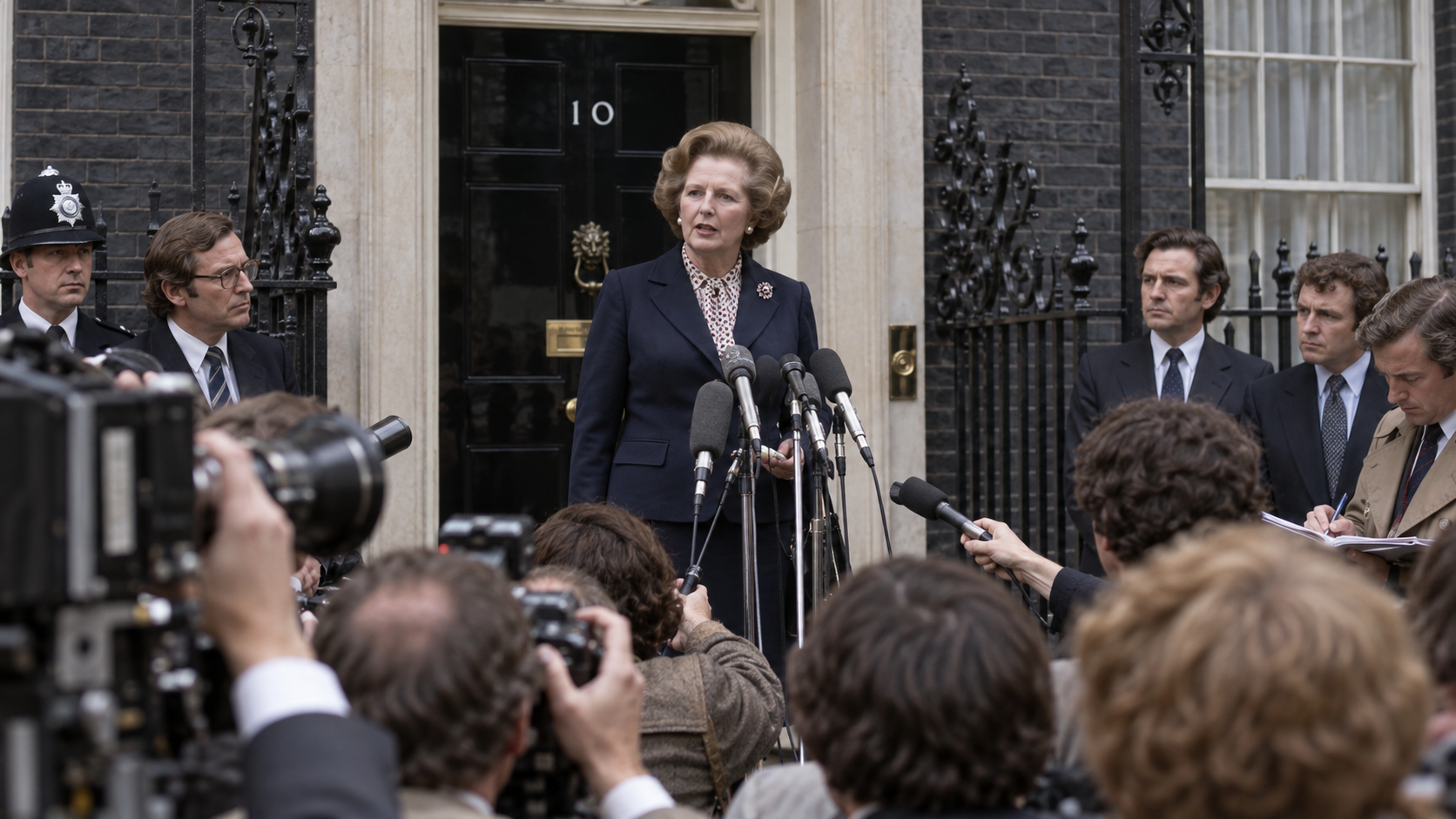
On This Day in News: May 3, 1979
On May 3, 1979, voters across the United Kingdom chose a new Parliament in a general election that returned the Conservative Party to power. The result defeated the Labour government led by James Callaghan and gave Conservative leader Margaret Thatcher the mandate to form the next government. Thatcher did not formally become prime minister until May 4, when she was appointed by Queen Elizabeth II.
The election followed a period of high inflation, industrial disputes, economic strain, and public frustration that became associated with the “Winter of Discontent.” Conservatives campaigned for lower taxation, limits on trade-union power, wider home ownership, and a different relationship between government and the economy. Labour argued that its policies offered greater social protection but struggled to overcome dissatisfaction with recent strikes and public-service disruptions.
The immediate result was a Conservative parliamentary majority and the end of five years of Labour government. Callaghan resigned the following day, and Thatcher entered Downing Street as Britain’s first woman prime minister. The election therefore marked both a change of governing party and the opening of a major new political era.
Thatcher remained prime minister for more than eleven years. Her governments pursued privatization, deregulation, restrictions on organized labor, and a more market-oriented economic program. Supporters credit these policies with reshaping the British economy, while critics emphasize unemployment, inequality, and the decline of some industrial communities. Remembering May 3 accurately means distinguishing the election victory from Thatcher’s formal appointment on May 4.
The May 3 event was the United Kingdom general election. Voters gave the Conservative Party a parliamentary majority and ended the Labour government led by James Callaghan.
The campaign followed inflation, strikes, and public-service disruption during the Winter of Discontent, with sharp disagreement over taxes, unions, public ownership, and economic management.
The result authorized Margaret Thatcher to form a government, but she was formally appointed prime minister on May 4, not May 3.
The election changed the governing party immediately, while its deeper economic and social effects emerged through legislation and conflict over the following years.
The election began more than eleven years of Thatcher-led government and a lasting shift toward privatization, deregulation, and reduced trade-union power.
Its legacy remains contested because the reforms changed growth, employment, inequality, public ownership, and the political vocabulary of Britain.
Explore more of "On This Day ..."
Discover more events from the same date across news, politics, technology, sports, and other fields. Each link highlights significant moments that shaped history on different fronts.