

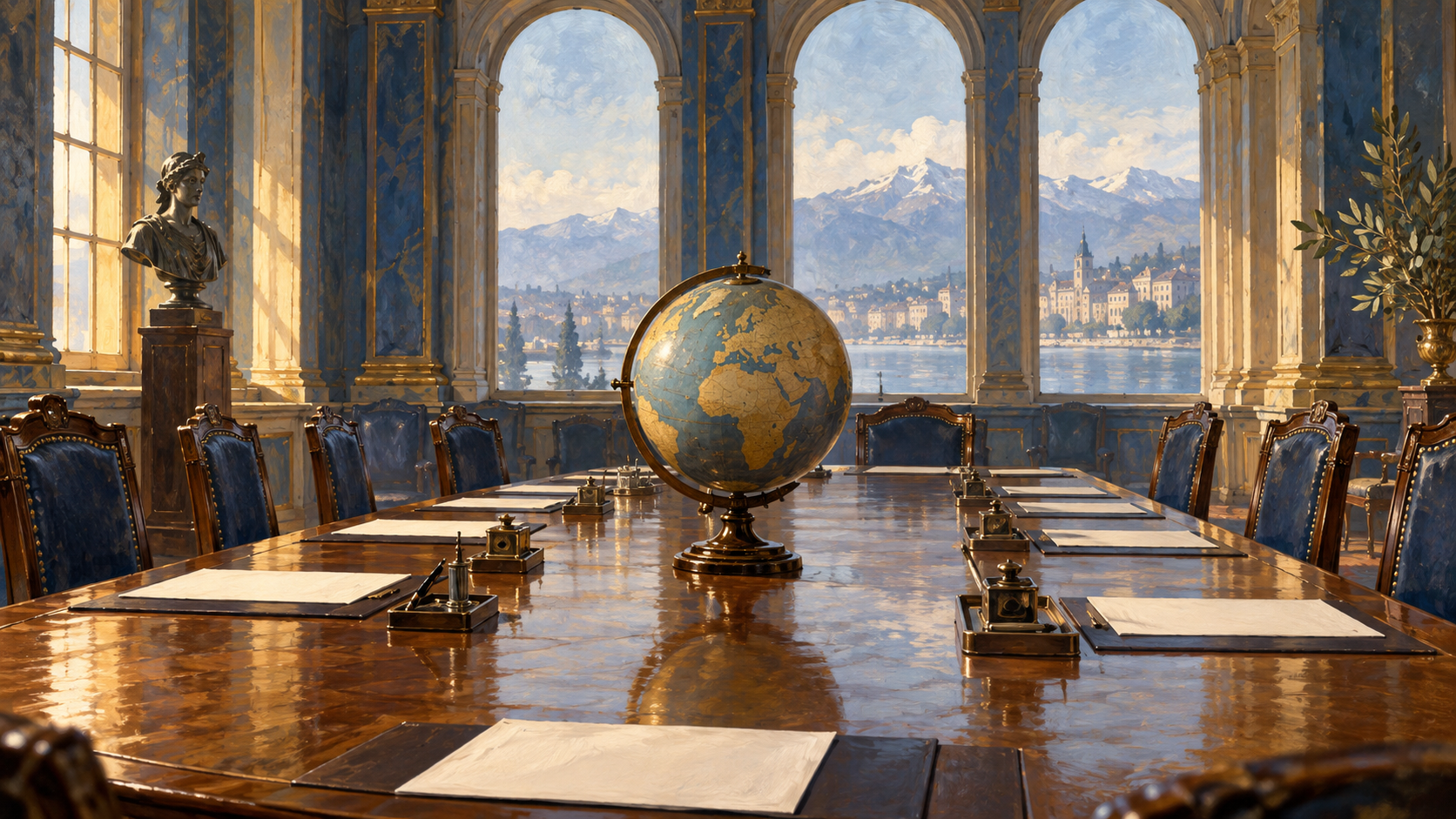
On This Day in Politics: January 10, 1920
On January 10, 1920, the League of Nations formally began its work, marking a historic moment in the evolution of global diplomacy. Emerging from the devastation of World War I, the League represented the first large-scale attempt to create a permanent international body aimed at preventing future conflicts through dialogue, collective security, and international cooperation. The organization was established as part of the Treaty of Versailles, which ended the war and sought to reshape the geopolitical landscape of Europe and beyond. Although the concept of such an institution had been championed by U.S. President Woodrow Wilson, the United States ultimately never joined, highlighting the tension between international ambitions and domestic politics.
With its headquarters in Geneva, Switzerland, the League convened representatives from dozens of countries, reflecting a shared desire to avoid the catastrophic violence that had defined the previous decade. Its founders believed that open diplomacy, arbitration, and joint action against aggressors could help address disputes before they escalated into war. The League’s early work focused on humanitarian concerns, disarmament proposals, and oversight of former colonial territories through a system of mandates. It also established committees dedicated to public health, workers’ rights, and the fight against human trafficking, demonstrating that international cooperation could extend beyond military matters into social and economic policy.
Despite its ambitious goals, the League faced immediate challenges that revealed the limits of its authority. Its ability to enforce decisions depended on the willingness of member states to act collectively, and key powers at times ignored or circumvented League recommendations. The absence of the United States, combined with the later withdrawal of major nations like Germany and Japan, weakened the organization’s legitimacy and enforcement capabilities. Throughout the 1920s and 1930s, unresolved territorial disputes, economic crises, and rising militarism tested the League’s effectiveness. While it succeeded in mediating some conflicts, its inability to prevent acts of aggression in the lead-up to World War II exposed structural weaknesses in its design.
Even so, January 10, 1920 stands as an important milestone in political history. The League of Nations paved the way for the development of the United Nations after World War II, and many of its structures, from specialized agencies to international courts, influenced the institutions that followed. The League demonstrated both the promise and the difficulty of maintaining global peace through cooperative governance. For “This Day in Politics,” the date underscores an early, ambitious attempt to build a rules-based international order—one that shaped expectations for diplomacy, collective action, and the pursuit of stability in a rapidly changing world.
By January 10, 1920, the world was still recovering from the devastation of World War I. The peace settlement negotiated at Versailles sought not only to redraw borders and assign reparations, but also to prevent another global conflict. One of the central ideas, promoted strongly by U.S. President Woodrow Wilson in his Fourteen Points, was the creation of a permanent international organization dedicated to resolving disputes peacefully.
On this day, the League of Nations formally came into existence when the Covenant of the League and the Treaty of Versailles entered into force. Headquartered in Geneva, the League was conceived as a forum where states could meet, negotiate, and coordinate collective responses to threats to peace, representing an unprecedented step toward organized international cooperation.
The League’s creation immediately established new structures for diplomacy: an assembly, a council, and a permanent secretariat. Member states pledged to submit disputes to arbitration or discussion and, in theory, to take joint action against aggressors. The League also began work on humanitarian and technical issues, from public health initiatives to oversight of former colonial territories through a mandate system.
Yet the organization’s limits were visible from the start. The United States, despite Wilson’s advocacy, did not join after the U.S. Senate rejected the treaty, weakening the League’s authority and global reach. The body had no independent armed force and relied on major powers to enforce its decisions. When those powers were unwilling to act, the League’s ability to deter aggression or sanction violators was sharply constrained.
Over the longer term, the League of Nations provided a blueprint for later efforts at international governance. While it struggled to prevent major crises in the 1930s and ultimately could not stop the slide toward World War II, it pioneered practices—such as regular multilateral meetings, specialized agencies, and international oversight—that influenced the design of the United Nations after 1945.
The League’s experience also reshaped thinking about collective security and the responsibilities of states in maintaining global order. Its successes in areas like public health, labor standards, and refugee protection showed that cooperation could make a difference even when political consensus was fragile. The moment it came into force on January 10, 1920 remains a key milestone in the ongoing effort to manage conflict and foster stability through shared international institutions.
Explore more of "On This Day ..."
Discover more events from the same date across news, politics, technology, sports, and other fields. Each link highlights significant moments that shaped history on different fronts.