

On This Day in Politics: January 11, 1908
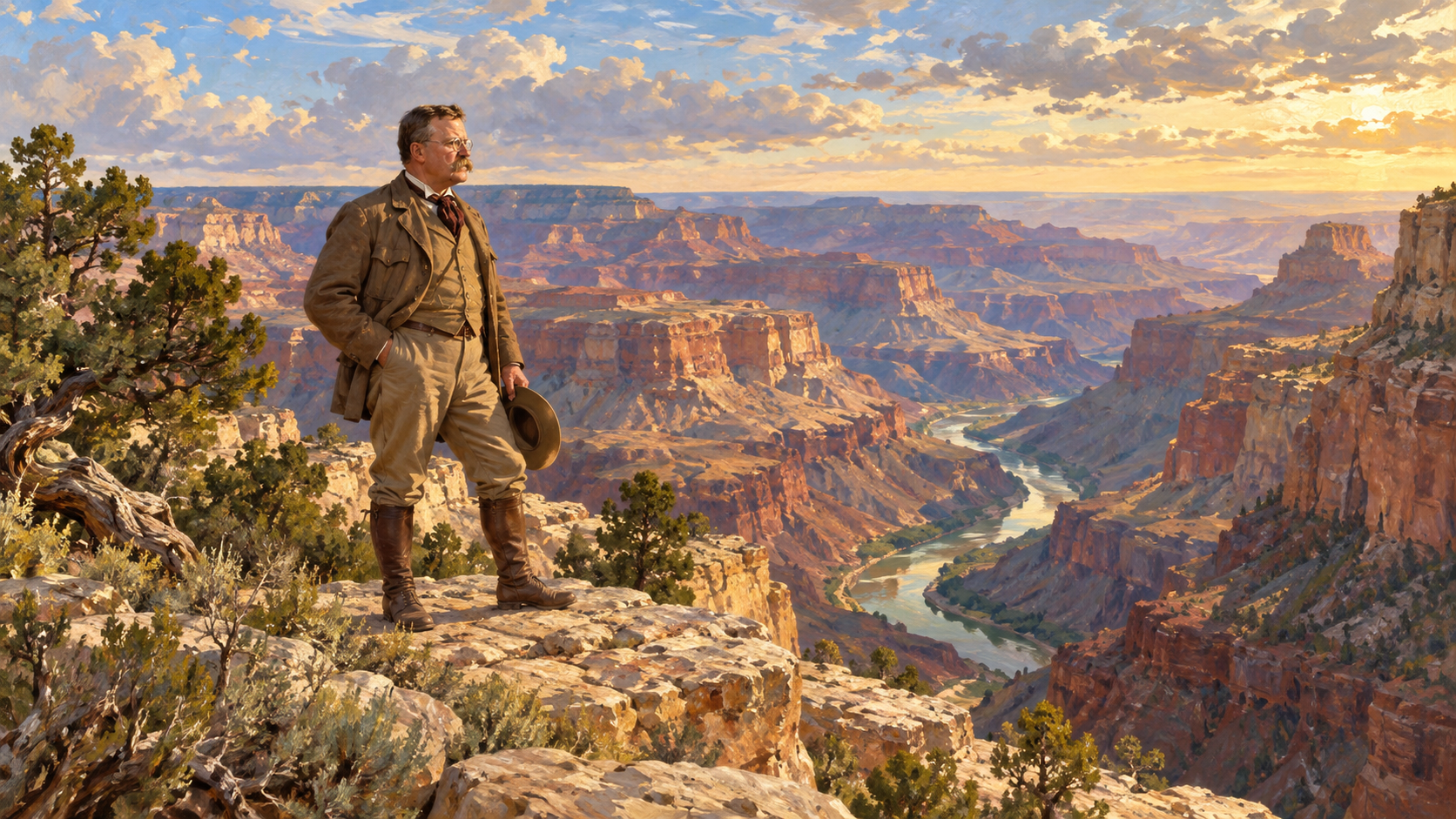
On January 11, 1908, President Theodore Roosevelt issued a presidential proclamation designating the Grand Canyon as a national monument. At the time, the canyon was already widely admired for its geological significance and breathtaking scale, but it was also at risk from mining claims, commercial development, and private exploitation. Roosevelt, a vocal champion of conservation, used the authority granted under the Antiquities Act of 1906 to ensure that the site would be preserved for future generations. His decision marked one of the most consequential uses of presidential power in the early conservation movement and represented a clear statement that some natural treasures were of such importance that they warranted permanent federal protection.
The move reflected Roosevelt’s broader vision for the emerging conservation system in the United States. He believed that unmanaged resource extraction posed long-term risks to both the environment and national welfare. By designating the Grand Canyon as a national monument, the administration placed 800,000 acres under federal protection, effectively halting new mining operations and commercial encroachments. Roosevelt famously urged Americans to appreciate the site’s grandeur rather than seek to exploit it, framing its preservation as both a patriotic duty and a defining part of responsible stewardship. His actions helped normalize the idea that the executive branch could intervene decisively to protect landscapes before irreversible harm occurred.
Although the proclamation was significant, it also sparked debate about the scope of presidential authority. Some local interests resisted federal oversight, arguing that Arizona Territory’s resources should remain open for economic development. Others questioned whether the Antiquities Act—originally intended to protect archaeological and cultural sites—was meant to be applied on such a massive scale. These objections foreshadowed future disputes over conservation, property rights, and the limits of federal power. Nevertheless, the monument designation held firm, and the Grand Canyon remained protected as political support for conservation continued to grow through the early 20th century.
The long-term impact of Roosevelt’s January 11 action became even more evident in 1919, when Congress elevated the monument to full national park status. The decision cemented the Grand Canyon as one of the most iconic natural landscapes in the United States and affirmed the value of early federal intervention. Today, Roosevelt’s proclamation is recognized as a watershed moment in American environmental policy—an example of how executive authority can shape national heritage for generations. For “This Day in Politics,” January 11 stands as a reminder that political choices about land management and conservation carry lasting consequences, demonstrating how a single decision can preserve a landscape that becomes central to national identity.
By January 11, 1908, the United States was in the midst of the Progressive Era, a time when conservation, public lands, and responsible use of natural resources were becoming major national issues. President Theodore Roosevelt had already emerged as a forceful advocate for preserving forests, wildlife, and scenic areas from unchecked commercial exploitation.
On this day, Roosevelt used his authority under the Antiquities Act of 1906 to proclaim the Grand Canyon a national monument. The move placed hundreds of thousands of acres under federal protection, blocking new mining and development claims and signaling that the canyon’s scientific, scenic, and cultural value outweighed short-term economic interests.
The proclamation immediately strengthened federal control over the Grand Canyon, curbing new claims for copper, uranium, and other minerals and limiting large-scale development. It aligned with Roosevelt’s broader conservation agenda, which sought to balance economic use of resources with long-term national interests.
However, the decision also drew resistance from some local and business interests who argued that Washington was overstepping by restricting access to valuable land in Arizona Territory. Questions arose about how broadly the Antiquities Act could be applied, especially when used to protect vast landscapes rather than small archaeological or historic sites, foreshadowing future legal and political disputes over presidential monument designations.
Over time, Roosevelt’s action on January 11, 1908 came to be seen as one of the defining moments in American conservation history. The monument designation helped pave the way for Congress to establish Grand Canyon National Park in 1919, ensuring even stronger and more permanent protections for the landscape and making it a central symbol of the national park system.
The decision also reinforced the idea that presidents could use executive authority to safeguard nationally significant places before they were irreparably altered. This precedent shaped later debates over public lands, environmental policy, and the proper role of the federal government in conservation. The protection of the Grand Canyon became a touchstone for conversations about how nations choose which places to preserve—and what those choices say about their values.
Explore more of "On This Day ..."
Discover more events from the same date across news, politics, technology, sports, and other fields. Each link highlights significant moments that shaped history on different fronts.