

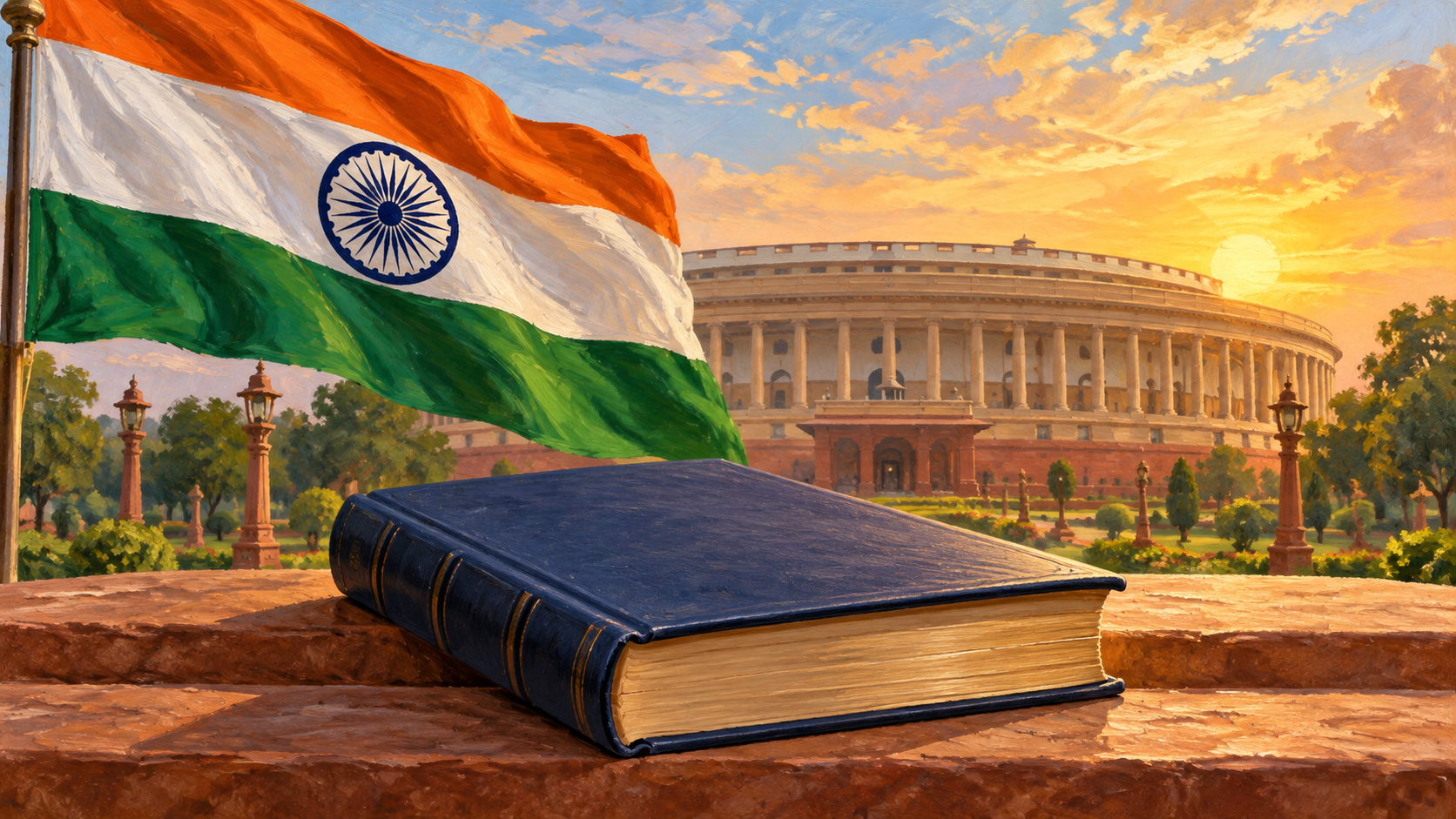
On This Day in Politics: January 26, 1950
On January 26, 1950, India officially became a republic with the implementation of its newly adopted Constitution, marking the end of nearly three years of political transition after independence from British rule. The date carried symbolic significance: January 26 had long been celebrated by Indian nationalists as “Purna Swaraj Day,” commemorating the 1930 declaration of complete self-rule. By aligning the birth of the republic with this historic date, India’s leaders drew a direct connection between decades of anti-colonial struggle and the beginning of a new constitutional order. When the Constitution came into force, the nation shifted from being a dominion within the British Commonwealth to an independent republic with its own elected head of state, President Rajendra Prasad.
The Constitution itself was the product of one of the most ambitious constitutional drafting efforts of the twentieth century. Chaired by Dr. B. R. Ambedkar, the Constituent Assembly spent nearly three years debating how to design a government suited to a diverse, newly independent nation of hundreds of millions. The result was a parliamentary democracy with strong protections for fundamental rights, universal adult suffrage, and an independent judiciary. These features were intended to safeguard individual liberty while also promoting social justice, national unity, and economic development. The adoption of such an expansive Constitution signaled India’s commitment to democratic governance at a time when many newly independent states were turning toward military or authoritarian rule.
The transition to a republic also redefined India’s political structure internally. The office of the governor-general, previously the representative of the British crown, was replaced by a ceremonial president selected by an electoral college. Executive power shifted fully to the prime minister and cabinet, bringing India closer to the Westminster model while adapting it to local needs. The Constitution created a federal system that balanced authority between the central government and states, though debates over the distribution of power would continue to shape Indian politics for decades. The new legal framework also provided mechanisms to address issues such as social inequality, minority rights, and affirmative action, reflecting the nation’s attempt to build a more inclusive society.
Looking back, January 26, 1950, stands as one of the most consequential days in modern Asian political history. The establishment of the Republic of India demonstrated how constitutional design could provide stability, legitimacy, and a roadmap for development in a postcolonial context. Over the years, the date has become a major national holiday known as Republic Day, celebrated with public ceremonies, cultural displays, and recognition of civic contributions. More than seven decades later, the principles embedded in the Constitution continue to influence political debates, judicial decisions, and national identity. India’s transformation into a republic on this day remains a defining moment in the shaping of the world’s largest democracy.
On January 26, 1950, India’s new Constitution came into force, formally transforming the country from a British dominion into a sovereign democratic republic. The date was chosen deliberately to align with “Purna Swaraj Day,” which had commemorated the Indian National Congress’s 1930 declaration of complete independence from British rule.
The Constitution was drafted by a Constituent Assembly that had worked for nearly three years to design a system of government suited to a vast, diverse, postcolonial nation. Led by figures such as Dr. B. R. Ambedkar, the Assembly drew on global constitutional models while responding to India’s unique social, political, and historical realities.
When the Constitution took effect, India replaced the British-appointed governor-general with an elected president, making Rajendra Prasad the country’s first head of state. Executive authority, however, rested primarily with the prime minister and council of ministers responsible to Parliament, embedding a parliamentary system at the center of the new republic.
The Constitution introduced universal adult suffrage, guaranteeing that every adult citizen could vote regardless of property, gender, or education. It also established a federal structure dividing powers between the Union and the states, while giving the central government enough authority to hold together a nation marked by linguistic, religious, and regional diversity.
Over time, the Constitution adopted on January 26, 1950, became the foundation of the world’s largest democracy. Its guarantees of fundamental rights, its provisions for social justice and affirmative measures, and its independent judiciary shaped how successive generations of Indians understood citizenship, equality, and state power.
Republic Day, celebrated annually on this date, underscores the enduring importance of that constitutional moment. Debates over federalism, civil liberties, and the scope of government continue to revolve around the framework created then, making January 26 a key reference point for understanding India’s political evolution and constitutional identity.
Explore more of "On This Day ..."
Discover more events from the same date across news, politics, technology, sports, and other fields. Each link highlights significant moments that shaped history on different fronts.