

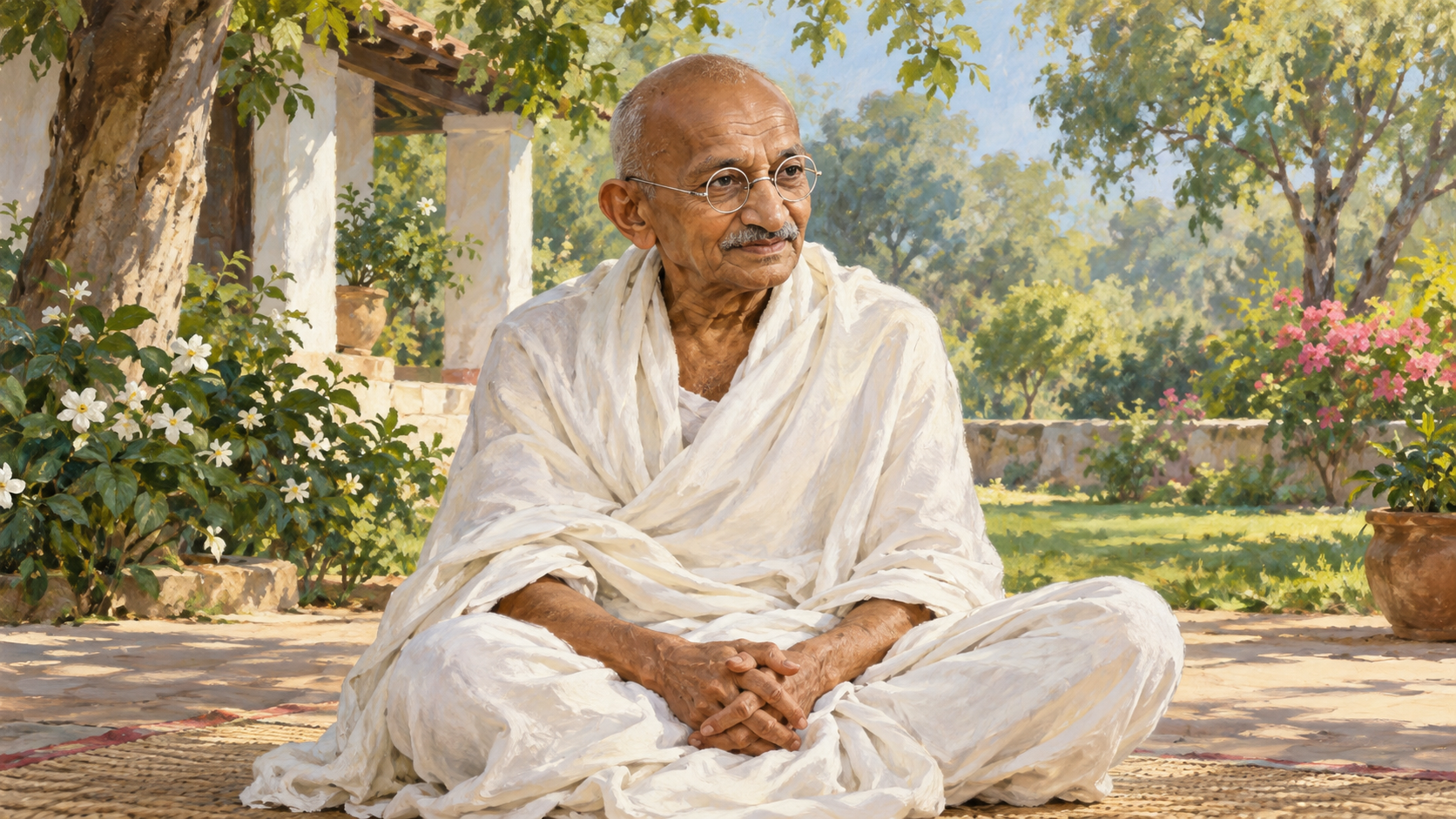
On This Day in Politics: January 30, 1948
On January 30, 1948, Mahatma Gandhi was assassinated in New Delhi by Nathuram Godse, a Hindu nationalist who opposed Gandhi’s advocacy of nonviolence and religious reconciliation during India’s transition to independence. Gandhi had been serving as a moral force in the tumultuous months following the 1947 partition of India and Pakistan, urging peace amid widespread communal violence. His daily prayer meetings had become symbolic gatherings focused on unity and healing. As Gandhi walked to one such meeting at Birla House, Godse stepped from the crowd and fatally shot him at close range. The assassination stunned India and the world, removing one of the most influential leaders of the twentieth century at a moment when the newly independent nation was still defining its political identity.
The immediate political consequences were significant. Gandhi’s death prompted the Indian government, led by Prime Minister Jawaharlal Nehru and Home Minister Vallabhbhai Patel, to intensify efforts to curb extremist groups and promote national cohesion. Authorities banned the Rashtriya Swayamsevak Sangh (RSS), the ideological organization with which Godse had been associated, citing concerns about rising radicalism and threats to public order. The government used the moment to reinforce its message that India’s future depended on secular democracy, not sectarian ideology. At the same time, Gandhi’s assassination reshaped public sentiment, generating widespread grief but also prompting many citizens to reconsider the rising polarization that had accompanied partition.
Internationally, Gandhi’s death had a diplomatic impact that extended beyond South Asia. His commitment to nonviolent resistance had inspired movements around the world, from civil rights activists in the United States to independence leaders in Africa. In the aftermath, foreign governments and global media reframed Gandhi’s legacy as a moral benchmark for peaceful protest and political reform. India, still establishing its place in global politics, gained both sympathy and heightened expectations to uphold the principles Gandhi had embodied—tolerance, justice, and nonviolence. This global attention strengthened India’s soft power at a critical early stage in its diplomatic development.
In the long term, the assassination reinforced Gandhi’s symbolic role in India’s political culture. His teachings influenced constitutional debates, national holidays, and social reform efforts for decades after his death. Yet his absence also highlighted the challenges facing the new republic: communal tensions, regional inequities, and debates over the balance between tradition and modernity. The events of January 30, 1948, remain a defining chapter in India’s political history, illustrating how the loss of a single leader can reshape the trajectory of a nation still in its infancy. Gandhi’s assassination continues to be studied as a moment of profound national reckoning—one that crystallized the values India sought to preserve and the divisions it still had to overcome.
On January 30, 1948, Mahatma Gandhi was assassinated in New Delhi by Nathuram Godse, a Hindu nationalist who opposed Gandhi’s vision of nonviolence and interfaith reconciliation. Gandhi had become a central moral voice in the months following India’s independence and partition, urging Hindus, Muslims, and Sikhs to reject revenge and communal hatred.
At the time of his death, Gandhi was holding daily prayer meetings at Birla House, focusing on peace and national unity. As he walked to one of these gatherings, Godse stepped from the crowd and shot him at close range. The killing shocked India and the world, removing a figure widely seen as the conscience of the new nation at a moment of deep political and social uncertainty.
In the immediate aftermath, Prime Minister Jawaharlal Nehru addressed the nation in a widely remembered radio broadcast, urging calm and mourning the loss of a leader he described as the “light” of India. The assassination prompted a swift crackdown on extremist groups, including a ban on the Rashtriya Swayamsevak Sangh (RSS), with which Godse had earlier been associated.
Gandhi’s death also helped the government reinforce its commitment to a secular, democratic republic. Leaders used the moment to call for an end to communal violence and to stress that the country’s future would rest on tolerance, constitutional rule, and the rejection of political violence. Public grief and anger over the killing served as a powerful reminder of the dangers posed by sectarian hatred in a newly independent state.
Over the long term, Gandhi’s assassination shaped both India’s internal politics and its global image. Within India, his ideas influenced constitutional debates, social reform movements, and later generations of political activists who drew on his emphasis on nonviolence, village-level democracy, and moral leadership, even as they disagreed on how to apply those principles.
Globally, Gandhi’s death elevated his legacy as a model for peaceful resistance, inspiring civil rights and independence movements around the world. The events of January 30, 1948, highlighted the fragility of democratic transitions and the ongoing struggle against extremism, while reinforcing Gandhi’s role as a symbol of nonviolent political change whose influence extended far beyond India’s borders.
Explore more of "On This Day ..."
Discover more events from the same date across news, politics, technology, sports, and other fields. Each link highlights significant moments that shaped history on different fronts.