

On This Day in Politics: January 31, 1949
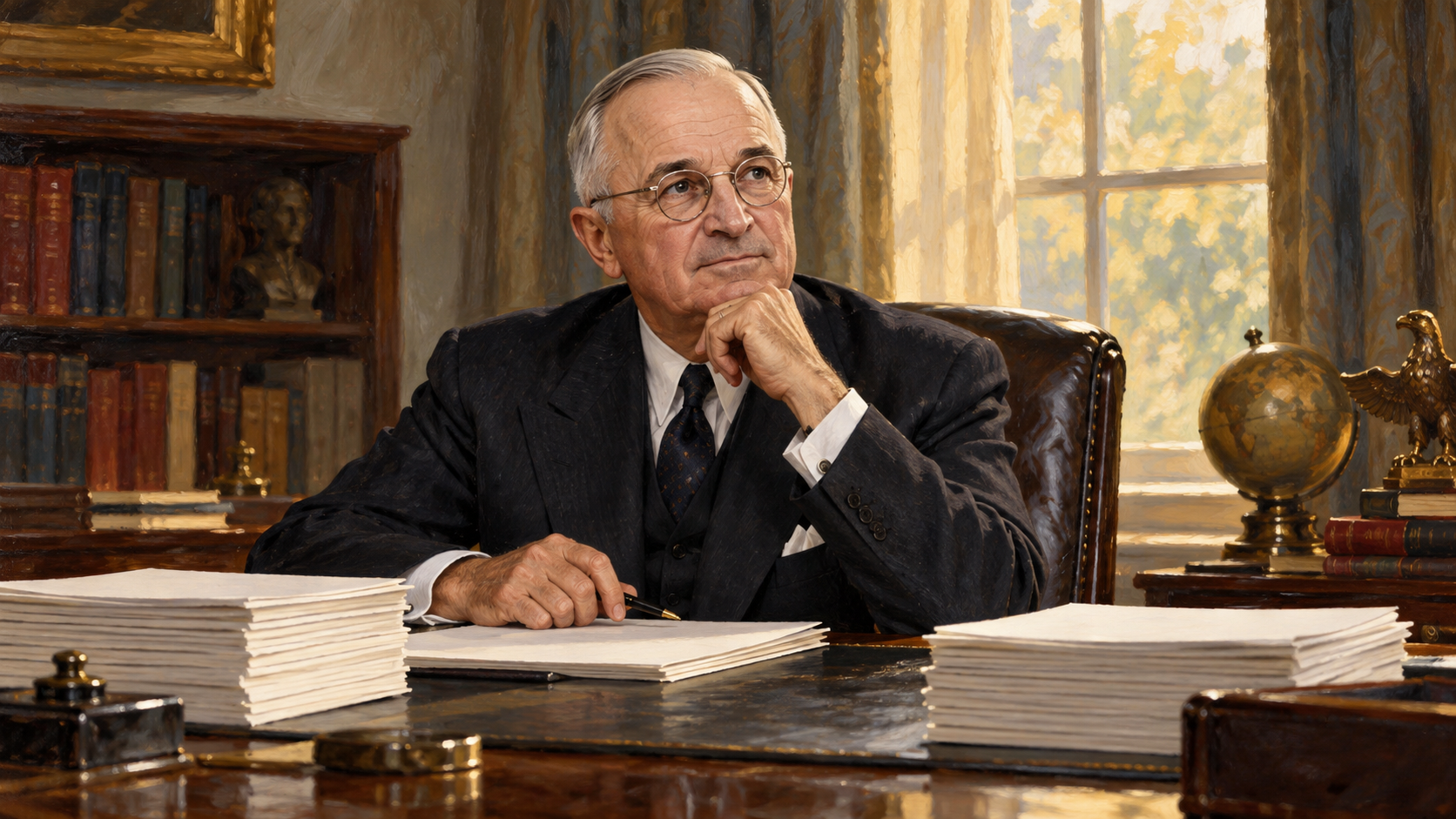
On January 31, 1949, President Harry S. Truman delivered his Annual Budget Message to Congress, using the moment to advance the core proposals of what became known as the Fair Deal. Building on the legacy of Franklin D. Roosevelt’s New Deal, Truman sought to expand federal involvement in social welfare, housing, health care, and civil rights. The Fair Deal aimed to confront the economic and social challenges facing a rapidly changing postwar nation—one marked by returning veterans, accelerating industrial growth, and the emerging tensions of the Cold War. In outlining this agenda, Truman emphasized the government’s responsibility to ensure widespread economic opportunity while protecting individual liberties, framing the coming years as a test of whether prosperity could be shared more equitably across American society.
The Fair Deal proposals included some of the most ambitious domestic policies of the mid-twentieth century. Truman called for national health insurance, federal aid to education, expanded Social Security benefits, higher minimum wages, public housing construction, and stronger civil rights protections. Many of these ideas faced immediate resistance from conservative lawmakers in both parties, who worried about federal overreach and rising government expenditures. At the same time, labor unions, civil rights groups, and progressive organizations rallied behind the Fair Deal, viewing it as a continuation of the reforms that had helped stabilize the economy during the Great Depression and World War II. The debate reflected a broader national conversation about the size and purpose of government in an era of newfound global leadership and domestic optimism.
Even though Congress rejected several high-profile elements—most notably universal health insurance—the Fair Deal still achieved significant legislative successes. The Housing Act of 1949 launched a major federal commitment to public housing and urban redevelopment, while expansions to Social Security extended coverage to millions of additional workers. The minimum wage was raised, and protections for organized labor were strengthened in certain areas despite earlier setbacks under the Taft-Hartley Act. Truman’s repeated calls for civil rights reform also helped lay the groundwork for future progress, including desegregation of the military and the emergence of a more assertive federal role in issues of racial justice. While incomplete, the Fair Deal shifted the national policy conversation and influenced domestic politics for decades.
Looking back, January 31, 1949, stands as a pivotal moment in the evolution of modern American government. Truman’s Fair Deal agenda highlighted competing visions of federal responsibility and set the stage for later reforms during the Great Society and beyond. It demonstrated the political challenges of transforming ambitious ideas into legislation while underscoring the enduring tension between social progress and fiscal caution. The Fair Deal continues to be remembered as an early effort to shape a more inclusive and secure postwar America—one that defined much of the mid-century debate over equality, opportunity, and the role of the federal government.
On January 31, 1949, President Harry S. Truman used his Annual Budget Message to Congress to highlight the core elements of what became known as the Fair Deal. Building on the New Deal legacy of Franklin D. Roosevelt, Truman argued that the federal government had a continuing responsibility to promote economic security, expand opportunity, and protect basic rights in the post–World War II era.
The Fair Deal emerged in a moment of transition. The United States was adjusting to peacetime after wartime mobilization, managing inflation and housing shortages, and navigating the early stages of the Cold War. Truman presented his program as a way to ensure that prosperity reached a wider share of Americans, including workers, veterans, and marginalized communities.
The Fair Deal agenda called for national health insurance, expanded Social Security, higher minimum wages, federal aid to education, civil rights protections, and a major push for public housing. These proposals sparked intense debate in Congress, where a coalition of conservative Republicans and Southern Democrats worried about federal spending, centralized power, and the implications for existing social structures.
While some major priorities, such as universal health insurance, failed to gain legislative approval, others moved forward. The Housing Act of 1949 authorized federal funds for public housing and urban redevelopment, and Social Security coverage and benefits were broadened. The Fair Deal thus produced a mix of immediate policy changes and high-profile defeats, highlighting both the possibilities and limits of reform in a closely divided postwar Congress.
Over the long term, the Fair Deal helped define the boundaries of mid–twentieth century American liberalism. Truman’s push for civil rights—including calls to end segregation and protect voting rights—did not immediately pass Congress, but it laid the groundwork for later breakthroughs in the 1950s and 1960s and signaled a growing federal role in questions of equality and justice.
The debates surrounding the Fair Deal also influenced how later administrations approached domestic policy. Ideas first advanced or reinforced in 1949 resurfaced in the Great Society programs of the 1960s and in ongoing discussions about health care, social insurance, and federal responsibility. The political choices made around January 31, 1949, thus became part of a broader story about how the United States sought to manage prosperity, address inequality, and shape the modern welfare state.
Explore more of "On This Day ..."
Discover more events from the same date across news, politics, technology, sports, and other fields. Each link highlights significant moments that shaped history on different fronts.