

On This Day in Politics: February 18, 1965
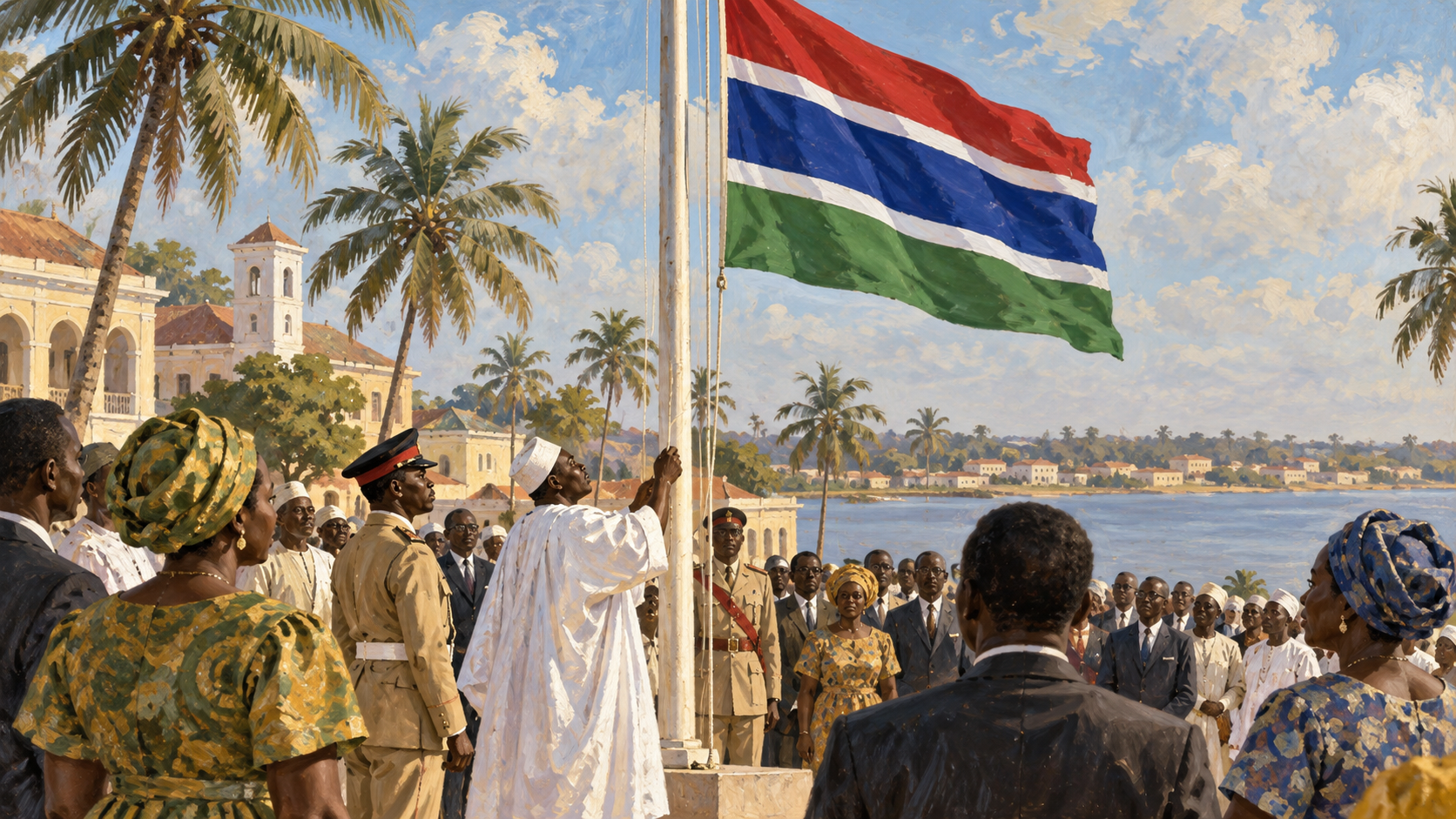
On February 18, 1965, The Gambia became independent from Britain, with ceremonies in its capital, then called Bathurst. The transition established the country as a sovereign state after colonial rule and placed responsibility for its political future in Gambian hands. Dawda Jawara, whose party had led the movement toward independence, headed the government. The country initially remained a constitutional monarchy within the Commonwealth rather than becoming a republic immediately. That distinction is important: independence changed the source of political authority and international status, while a separate constitutional decision later changed the form of the head of state.
The transfer followed a gradual widening of political participation. Earlier colonial elections had operated with a restricted franchise, and the development of parties in the 1950s created new channels for public competition. Jawara led the party first known as the Protectorate People’s Party, later the People’s Progressive Party. Its success in the 1962 general election brought him to office as premier, and full internal self-government followed in 1963. These stages meant that independence was built on existing electoral organization and governing experience. The February ceremony was a visible culmination of political work carried out through parties, constitutional arrangements, and negotiation over the end of colonial authority.
International recognition accompanied the change. The United States recognized The Gambia on the day of independence, with an American representative attending the ceremonies in Bathurst. Formal diplomatic relations and an embassy followed later in 1965. These steps illustrate how sovereignty operates beyond a country’s internal institutions: an independent government must also establish relationships with other states and act in its own name. Recognition did not solve the practical problems facing the new government, but it confirmed that The Gambia would participate in international affairs as a separate political entity. Decisions previously framed through British colonial administration now belonged to a different constitutional setting.
The Gambia became a republic in April 1970 after a referendum, showing that the independence settlement could be revised through a later public decision. Jawara and the People’s Progressive Party remained dominant for many years, and the country’s subsequent political history included both regular elections and the military coup of 1994. Those later developments should not be read backward as inevitable outcomes of independence. February 18 marks a specific achievement: the end of British sovereignty and the establishment of Gambian statehood. Its lasting significance lies in the right and responsibility to determine national institutions, even as the quality of representation and accountability remained matters for continuing political struggle.
Political parties expanded public competition during the 1950s. The 1962 election and internal self-government in 1963 helped prepare the transition.
Dawda Jawara’s leadership connected party organization with negotiations for full independence. The transfer was a process, not a single ceremony.
The independent country initially retained a constitutional monarchy. Becoming sovereign and becoming a republic were separate developments.
The United States recognized The Gambia on February 18. Diplomatic relations and a resident embassy followed later that year.
A referendum preceded the establishment of a republic in 1970. The political system continued to develop after colonial rule ended.
Independence gave Gambians authority over their national future, while leaving the enduring work of accountable government to subsequent generations.
Explore more of "On This Day ..."
Discover more events from the same date across news, politics, technology, sports, and other fields. Each link highlights significant moments that shaped history on different fronts.