

On This Day in Politics: March 18, 1871
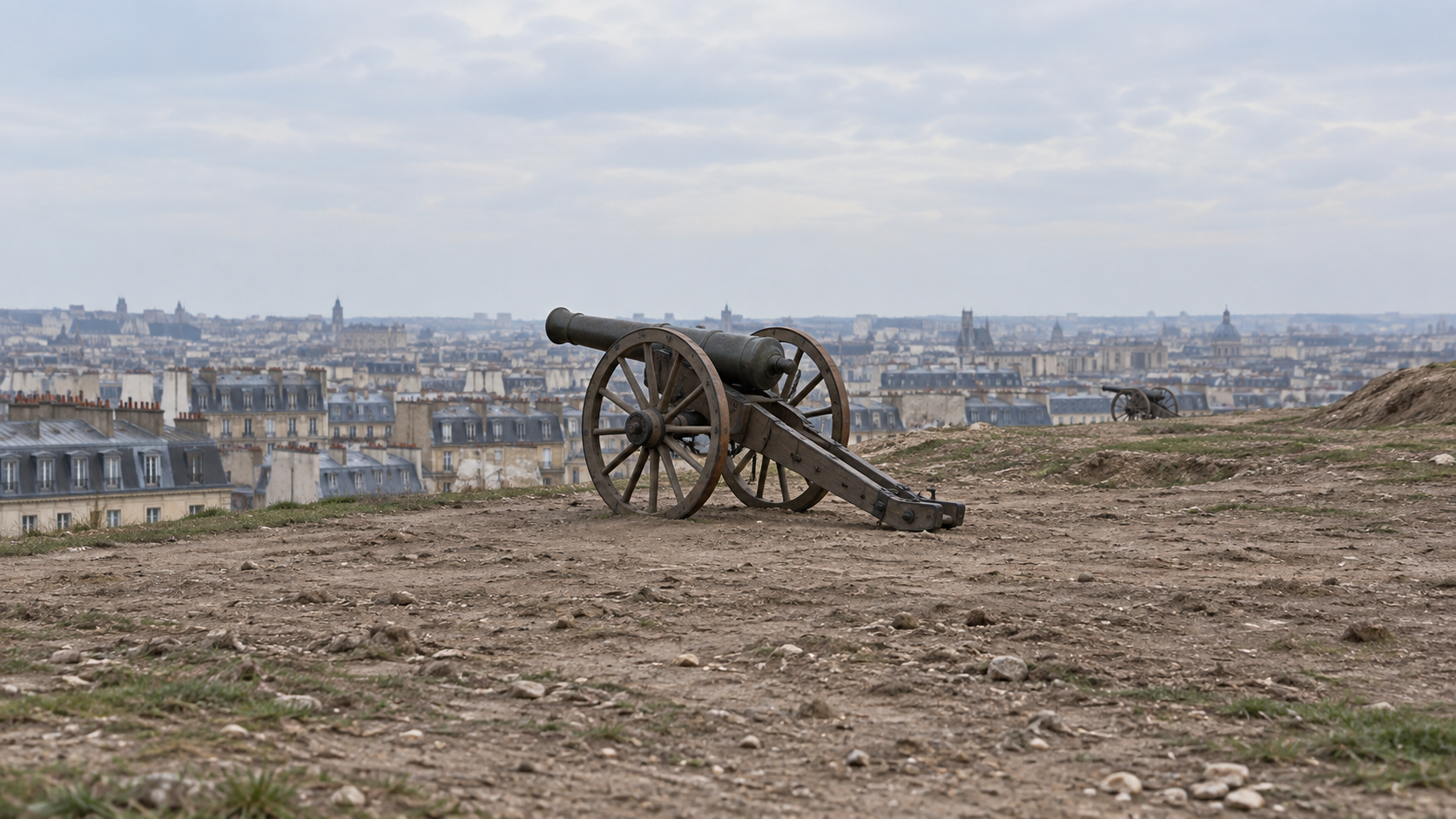
On March 18, 1871, an attempt by French government troops to seize cannon in Paris triggered the uprising that led to the Paris Commune. The confrontation centered on weapons held by the National Guard, including artillery on the heights of Montmartre. Residents and guardsmen resisted, and some soldiers refused orders to fire on the crowd. The operation collapsed as the revolt spread. Adolphe Thiers and his government withdrew to Versailles, leaving the capital’s political authority in upheaval. The date marks the revolutionary break that made the Commune possible, rather than the later election and formal proclamation of its governing council.
The crisis followed France’s defeat in the war against Prussia and its allies. Napoleon III’s surrender at Sedan had brought down the Second Empire in September 1870, and Paris then endured a prolonged siege. Hunger, military setbacks, and anger over the armistice deepened distrust of the national government. Many Parisians also feared that a conservative, largely monarchist National Assembly threatened their republican commitments. Control of the cannon became a concrete expression of this wider dispute. National Guardsmen and their supporters regarded the weapons as belonging to the city’s defenders, while Thiers saw disarming Paris as necessary to restore the government’s authority.
Troops moved before dawn, but removing the guns proved slower than taking their positions. Crowds gathered, with women playing a conspicuous role in confronting soldiers and rallying resistance. Some army units fraternized with the residents instead of carrying out the operation. Generals Claude Lecomte and Clément Thomas were captured and killed later that day. These deaths formed part of the violence accompanying the government’s loss of control. Barricades appeared, and the National Guard’s Central Committee eventually occupied the Hôtel de Ville. Its members found themselves exercising authority over a city whose established government had departed, and they moved to organize municipal elections.
Those elections took place on March 26, followed by the Commune’s formal proclamation on March 28. Its supporters included different republican, socialist, and revolutionary currents rather than a single unified political program. The experiment soon faced war against the government at Versailles. It ended in May during the brutal fighting and repression remembered as Bloody Week, which left thousands dead. March 18 nevertheless became a lasting point of reference in debates about popular government, social change, and revolutionary power. The events show how a dispute over military control could turn into a struggle over who had the right to govern, amid the pressures of national defeat and deep divisions within French society.
Government troops tried to seize National Guard cannon in Paris on March 18, 1871.
Defeat, siege, hunger, and distrust between Paris and the national government had already sharpened the crisis.
Residents and guardsmen resisted; some soldiers refused to fire, and the government withdrew to Versailles.
The National Guard’s Central Committee took authority and arranged elections; the Commune’s council came afterward.
Elections on March 26 and proclamation on March 28 followed the uprising.
The Commune ended in the violent repression of May 1871 but remained influential in debates about revolutionary and popular government.
Explore more of "On This Day ..."
Discover more events from the same date across news, politics, technology, sports, and other fields. Each link highlights significant moments that shaped history on different fronts.