

On This Day in Politics: March 19, 1979
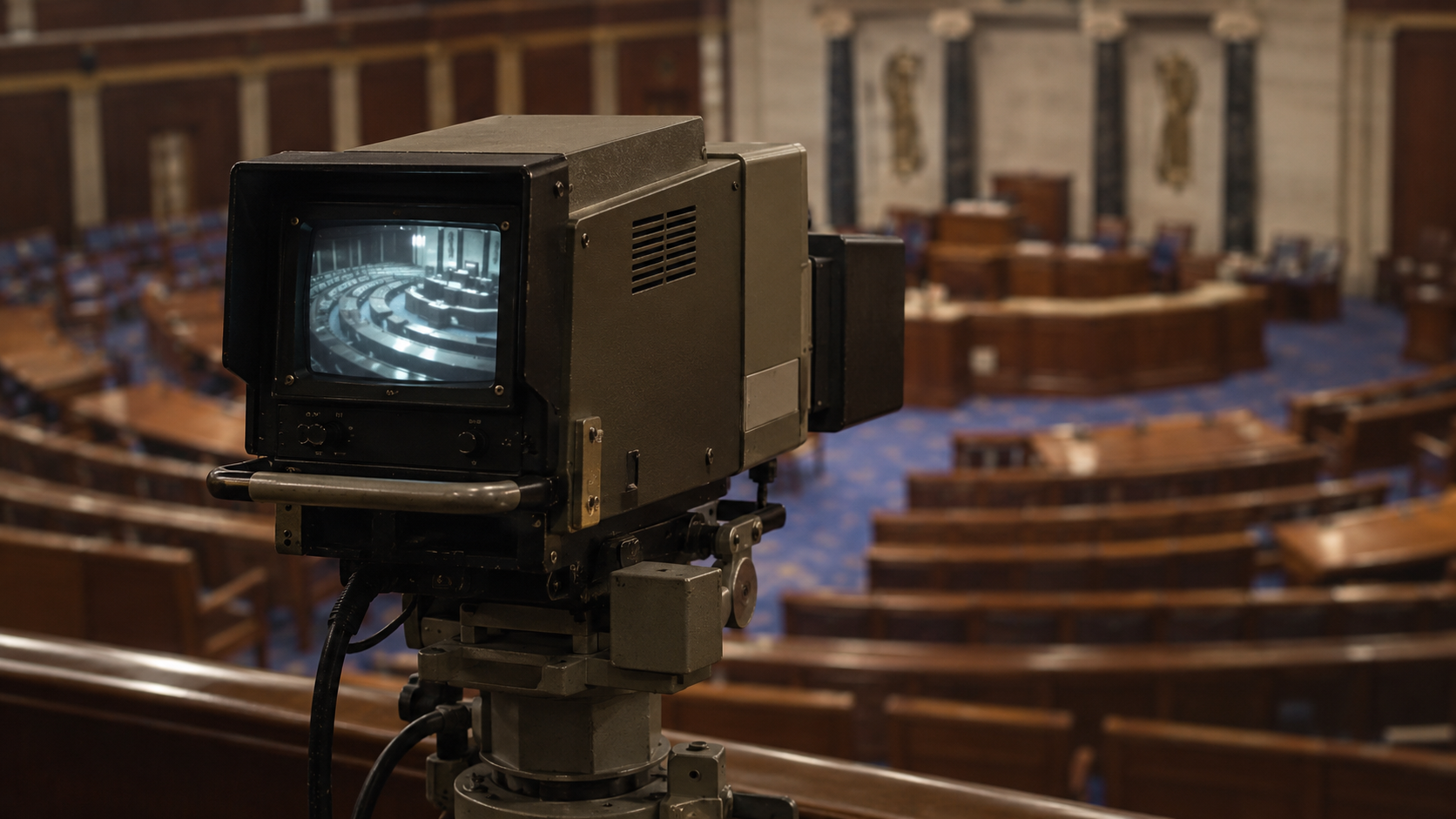
On March 19, 1979, the United States House of Representatives began live television coverage of its regular floor proceedings. C-SPAN carried the House’s video feed, bringing the chamber’s routine debates into viewers’ homes. Public television also used the new system. Representative Al Gore of Tennessee was the first member to deliver a brief speech during the inaugural broadcast, presenting television as a possible way to strengthen representative democracy. The occasion joined a technical change with a political decision: lawmakers were allowing the public to observe their ordinary floor work through a continuing broadcast, rather than seeing only selected ceremonial events.
Television cameras were already familiar in the House chamber for presidential addresses and other special occasions. Routine coverage had proved more controversial, and the change required testing, funding, and institutional approval. Under Speaker Thomas “Tip” O’Neill, the House began a closed-circuit experiment in March 1977. Members could assess the system before proceedings were transmitted to the public. The House subsequently approved its own television operation. The cameras and feed belonged to that congressional system, while broadcasters distributed the pictures. This arrangement is central to understanding the launch: C-SPAN provided access to House proceedings, but it did not independently control the chamber’s official television production.
The opening session lasted two hours and twenty minutes and included debate on restructuring House committees. Its subject was less spectacular than the historic arrival of television itself, which was part of the point. Viewers could encounter procedural exchanges, individual speeches, and the pace of legislative business instead of relying entirely on short reports afterward. Advocates linked that access to public confidence and accountability in the years after Watergate. A broadcast could let constituents hear representatives directly and observe how debate unfolded. It could not, however, reveal every negotiation or supply all the background needed to understand a bill, a committee decision, or a party’s strategy.
C-SPAN’s approach emphasized continuous coverage without its own running commentary or analysis. The network developed as a public service supported by the cable industry and later broadened its programming to hearings and other public affairs. Live Senate coverage followed in 1986, extending the model to the other chamber of Congress. The March 1979 beginning remains significant because it made routine legislative activity more accessible beyond Washington. The change did not guarantee that citizens would watch or that public trust would increase. It created a durable opportunity to inspect a visible part of government firsthand, while leaving viewers and journalists with the work of interpreting what appeared on the screen.
Regular live House floor coverage began on March 19, 1979, with C-SPAN and public television carrying the official feed.
Special events had been televised earlier; routine debate followed testing of a House-operated system.
Al Gore delivered the first brief member speech in the inaugural broadcast session.
The House controlled its television production, while broadcasters distributed the feed to viewers.
C-SPAN expanded its public-affairs programming, and live Senate coverage followed in 1986.
Television widened access to legislative proceedings, though understanding them still required context beyond the pictures.
Explore more of "On This Day ..."
Discover more events from the same date across news, politics, technology, sports, and other fields. Each link highlights significant moments that shaped history on different fronts.