

On This Day in Politics: March 27, 1794
On March 27, 1794, President George Washington signed legislation authorizing the acquisition of six frigates to protect American commerce. Known as the Naval Act of 1794, the measure reestablished a naval force for the United States after the Revolutionary era. It responded particularly to attacks on merchant shipping by the North African powers commonly described in American records as the Barbary powers. The decision committed the federal government to expensive ships and the personnel needed to operate them. It was a major step in developing national maritime protection, although the vessels were not ready immediately and a separate Department of the Navy still lay several years ahead.
American independence had not guaranteed safe passage for the country’s merchant vessels. Seizures of ships and the holding of sailors for ransom created economic pressure and a dispute over the proper response. Supporters of a navy argued that armed protection would defend trade and strengthen the country’s international position. Opponents worried about cost, centralized power, and the implications of a standing military establishment. Some favored paying ransom or negotiating arrangements instead. These disagreements made naval construction a political choice about the responsibilities of the new federal government. Congress had to decide whether protecting overseas commerce justified a continuing investment in force at sea.
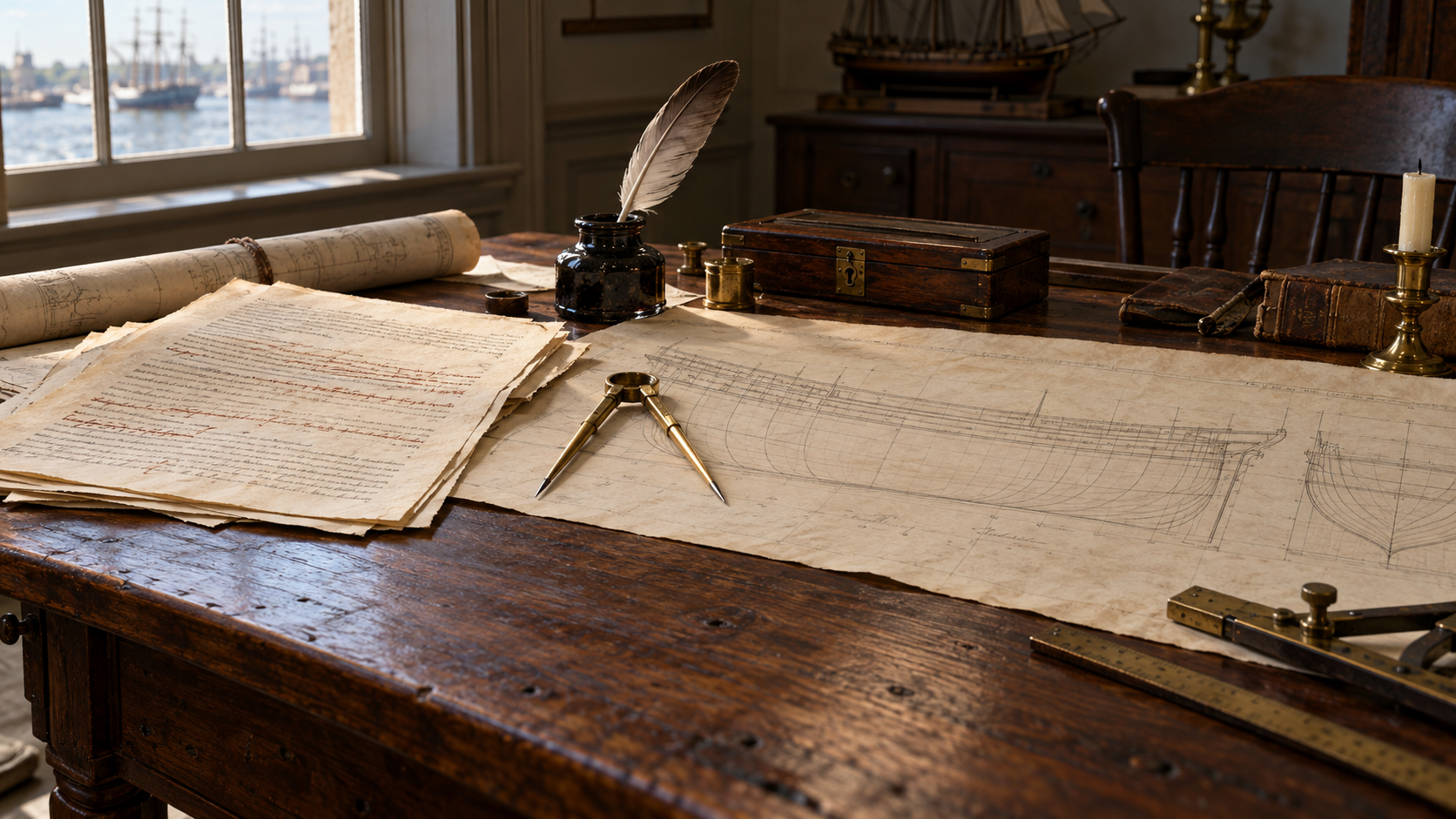
The legislation authorized four frigates rated for 44 guns and two rated for 36, to be acquired by purchase or other means. It also addressed practical matters such as crew numbers, pay, and daily rations. Designing and building the vessels required specialist knowledge as well as money. Joshua Humphreys and Josiah Fox were prominent in the design work, with William Doughty helping prepare plans for the shipyards. Construction took place in different ports. The preserved plans for Constellation and Congress illustrate how a congressional authorization became a detailed industrial undertaking, involving drawings, materials, skilled labor, contracts, and supervision rather than merely the announcement of a naval policy.
The act included a condition calling for construction to stop if peace with Algiers was secured. When peace came before the ships were finished, Washington urged Congress to continue part of the program. United States, Constellation, and Constitution were completed and launched in 1797. Their construction initially involved the War Department, while the Treasury handled related contracts and payments. The demands of naval administration and rising tensions with France helped build support for a separate department, established in 1798. March 27 thus marks the authorization that set this process in motion. The later launches and administrative changes show how a specific response to vulnerable shipping became an enduring part of the federal government’s capacity to act abroad.
Washington signed the Naval Act on March 27, 1794.
It authorized six frigates to protect American merchant shipping.
Debate centered on cost, trade protection, and the power of the federal government.
The law specified vessels, personnel, pay, and provisions, while construction required years of work.
Three of the frigates were launched in 1797 after Congress permitted their completion.
A separate Department of the Navy was established in 1798.
Explore more of "On This Day ..."
Discover more events from the same date across news, politics, technology, sports, and other fields. Each link highlights significant moments that shaped history on different fronts.