

On This Day in Politics: March 28, 1939
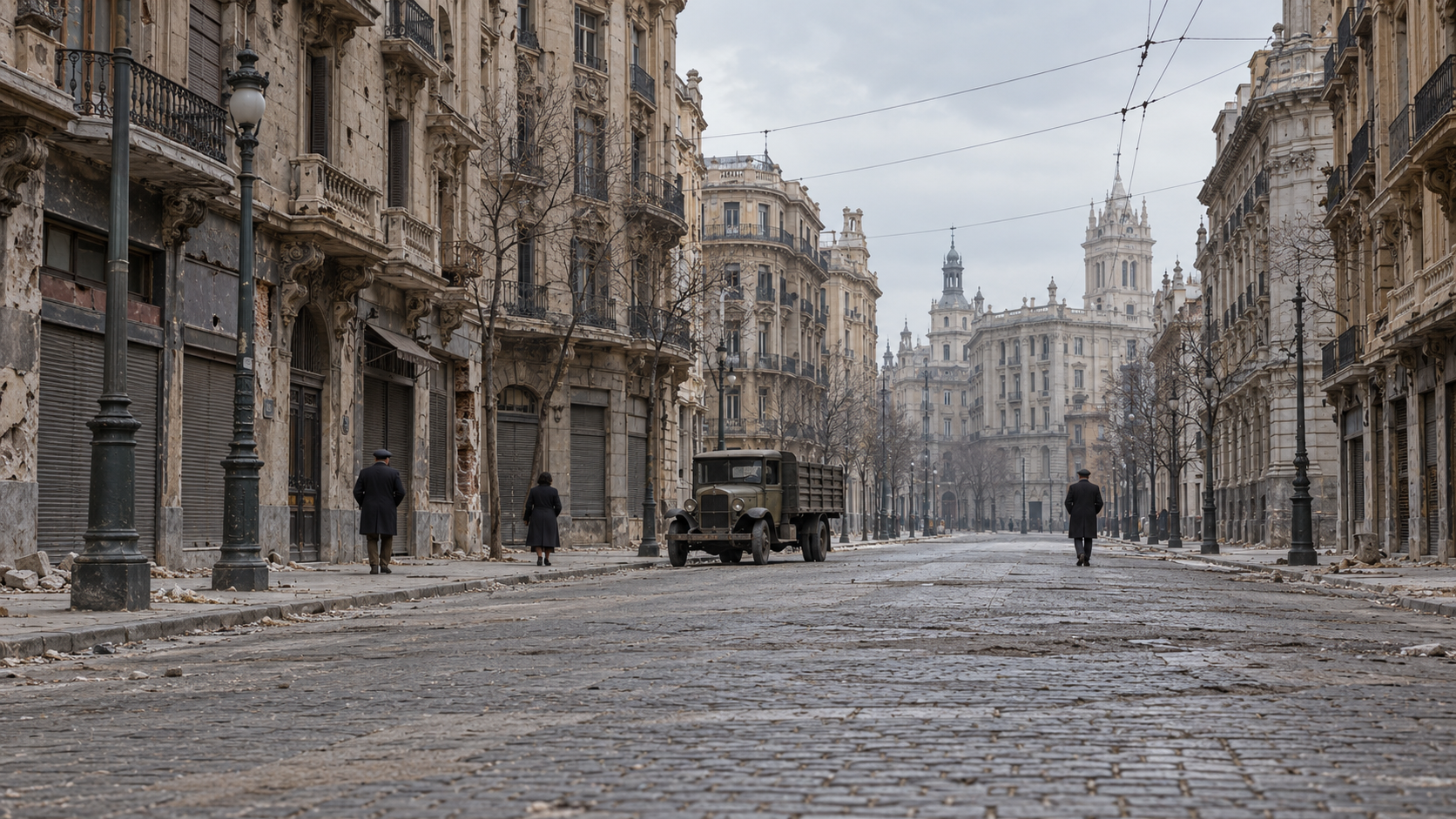
On March 28, 1939, forces loyal to General Francisco Franco entered Madrid, ending the capital’s long resistance during the Spanish Civil War. The city’s fall was a decisive moment in the collapse of the Spanish Republic’s remaining military position. It did not coincide exactly with Franco’s formal declaration that the war was over, which came on April 1. Keeping those dates separate clarifies what happened in Madrid and what followed across the remaining Republican territory. The capture brought the capital under the authority of the victorious Nationalists and made the defeat of the Republic unmistakable after nearly three years of civil conflict.
Madrid had resisted the military rebellion that began in July 1936 and had become a powerful symbol of the Republican cause. In November that year, the Republican government moved to Valencia while a defense council remained in the capital. A major Nationalist assault failed to take the city. The fighting around Madrid, along with bombardment and shortages, made the capital central to international attention. Foreign intervention also shaped the wider war: Nazi Germany and Fascist Italy supplied Franco’s side, while the Soviet Union aided the Republic and international volunteers joined its forces. Madrid’s survival mattered politically because it showed that the original rebellion had not achieved a swift victory.
By early 1939, the situation had changed sharply. Barcelona and the rest of Catalonia fell, weakening the Republic’s remaining prospects. In Madrid, Colonel Segismundo Casado led a coup against Prime Minister Juan Negrín in March, hoping to negotiate an end to the war on terms that would reduce reprisals. That effort deepened divisions within the Republican camp and failed to secure the conditional settlement its supporters sought. Franco’s forces advanced as organized resistance collapsed. The loss of Madrid therefore followed both military exhaustion and an internal political struggle over whether continued resistance or negotiation offered any remaining possibility of protecting those on the losing side.
The end of fighting did not bring reconciliation or safety for the defeated. Mass imprisonment and repression followed the Nationalist victory, while many Republicans faced exile or punishment. The fall of the capital was thus a transfer of political power with consequences far beyond the battlefield. Franco’s April 1 announcement marked the official conclusion of the war, but the new order was a dictatorship rather than a restored parliamentary settlement. March 28 remains a useful point from which to understand that transition. It connects the defeat of a city that had symbolized resistance with the destruction of the Republic’s remaining authority and the beginning of a postwar society shaped by the victors’ control.
Franco’s forces entered Madrid on March 28, 1939.
The capital had resisted Nationalist capture since the early stages of the civil war.
Military defeats and a Republican internal coup preceded the collapse.
Attempts to secure a conditional settlement failed.
Franco formally declared the war over on April 1.
Victory brought dictatorship and repression, rather than political reconciliation.
Explore more of "On This Day ..."
Discover more events from the same date across news, politics, technology, sports, and other fields. Each link highlights significant moments that shaped history on different fronts.