

On This Day in Politics: April 19, 1775
On April 19, 1775, British regulars and Massachusetts militiamen fought at Lexington, Concord, and along the road back toward Boston. The encounters opened the American Revolutionary War, transforming a prolonged argument over imperial authority into sustained armed conflict. The British expedition had marched out to seize colonial military supplies at Concord. Instead, an extensive alarm network brought local companies into the field, and the troops faced resistance across the countryside. The day did not produce an American declaration of independence. It created a military crisis in which both British officials and colonial political leaders had to decide how to exercise authority after blood had been shed.
The confrontation grew out of the struggle over Massachusetts government. British measures following the Boston Tea Party restricted the colony’s political institutions, while opponents organized a Provincial Congress and accumulated weapons and provisions. General Thomas Gage sent troops from Boston under Lieutenant Colonel Francis Smith to disrupt those preparations. Riders including Paul Revere and William Dawes helped spread warnings during the night, and Samuel Prescott carried the alarm onward to Concord. Near dawn, British soldiers encountered Captain John Parker’s militia company on Lexington’s common. Parker ordered his men to disperse. A shot rang out from an uncertain source, followed by British firing that left eight members of the Lexington company dead.
The surviving militiamen’s testimony became part of an immediate contest over responsibility. In a deposition dated April 25, several Lexington participants stated that they had first assembled after hearing reports of British officers on the roads and troops advancing toward Concord. They described dispersing temporarily on Parker’s orders, then returning when the company’s drum sounded around five in the morning. Their account maintained that British troops fired before anyone in their company had fired at the soldiers, and that some men were already moving away. This was sworn evidence from participants, but it was also one side’s account of a confused confrontation. British testimony differed, and the identity of the person who fired the first shot remains unresolved.
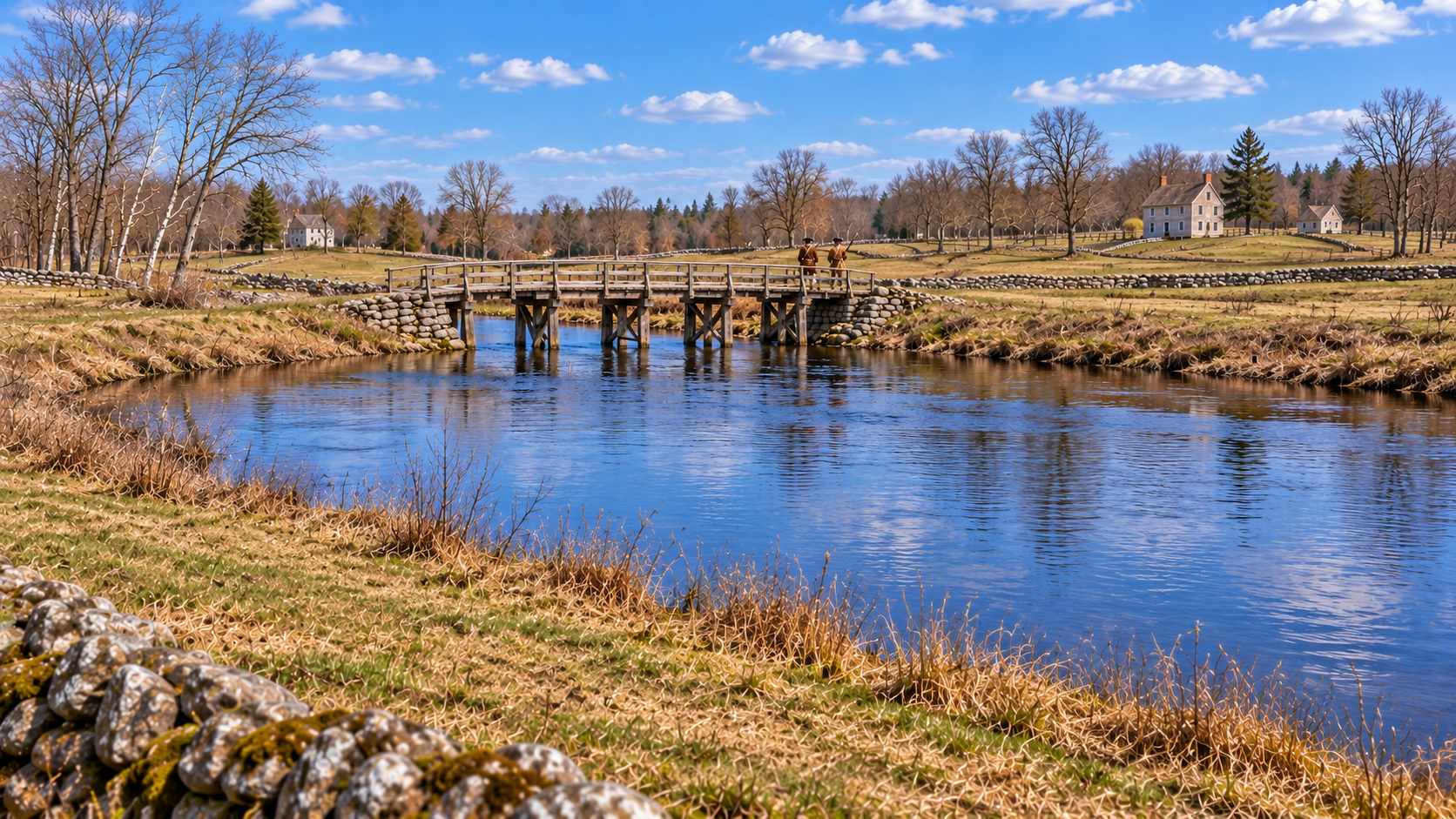
At Concord’s North Bridge, colonial militia returned British fire and forced the troops guarding the crossing to withdraw. Later, as the expedition headed back toward Boston, additional militia companies attacked along the route. British reinforcements helped the column reach safety, but the operation had failed to restore political control over the countryside. Armed men gathered around Boston, beginning a siege and widening the conflict beyond the original search for supplies. April 19 therefore marked more than a pair of local battles. It exposed the collapse of an imperial government’s ability to enforce its decisions peacefully and made organized military resistance a central instrument of the colonial struggle.
British troops set out to seize colonial military supplies at Concord.
An alarm network brought Massachusetts militia companies into action.
Eight Lexington militiamen died during the early confrontation.
The source of the first shot remains uncertain.
Colonial militia returned British fire at Concord’s North Bridge.
The day’s fighting opened the American Revolutionary War.
Explore more of "On This Day ..."
Discover more events from the same date across news, politics, technology, sports, and other fields. Each link highlights significant moments that shaped history on different fronts.