

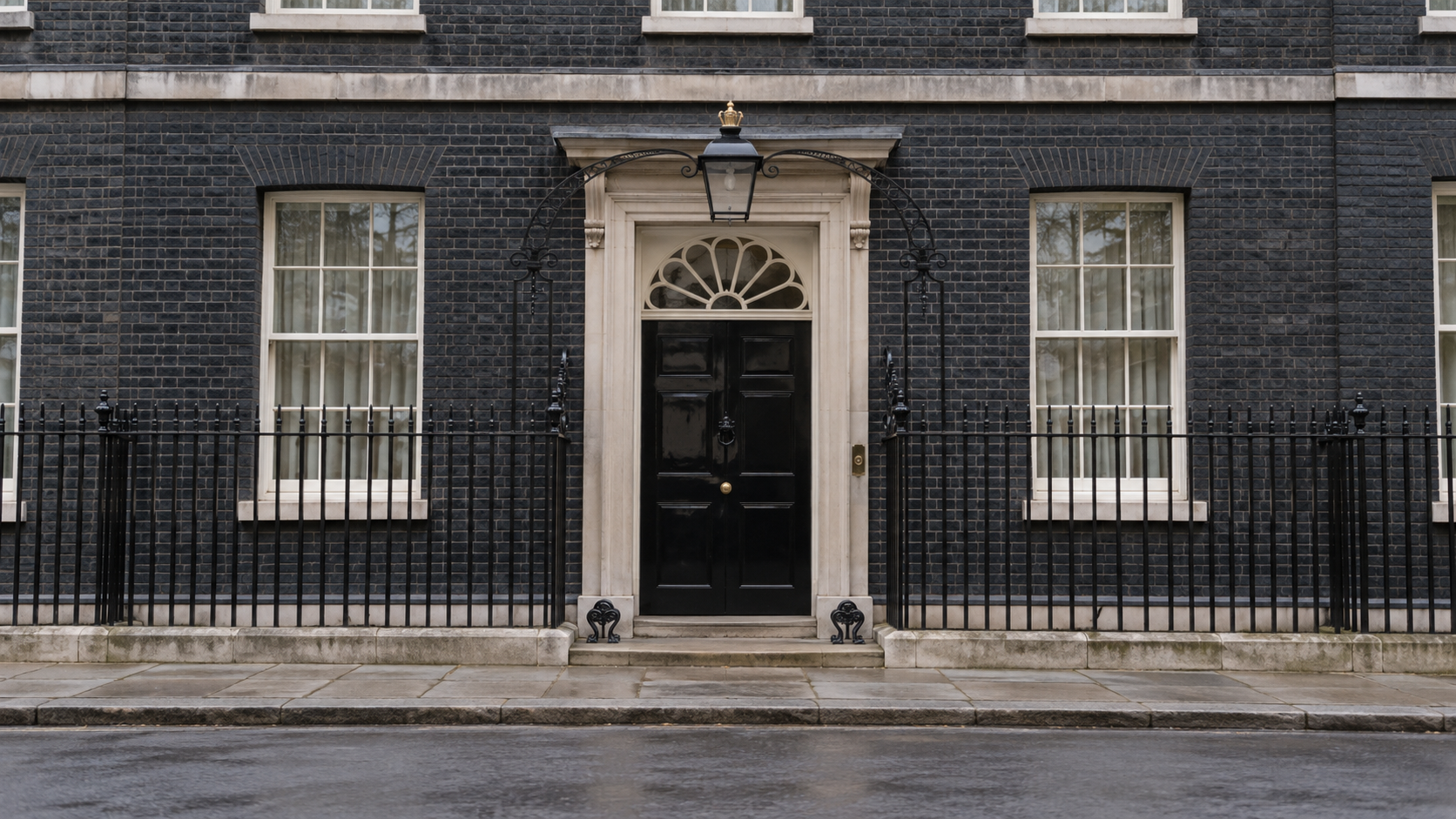
On This Day in Politics: May 4, 1979
On May 4, 1979, Margaret Thatcher became prime minister of the United Kingdom after Queen Elizabeth II invited her to form a government. The Conservative leader arrived at 10 Downing Street following her party’s victory in the general election held the previous day. She succeeded Labour’s James Callaghan and became the first woman to hold Britain’s highest political office. The change followed the country’s parliamentary process: voters elected members of the House of Commons, and the monarch appointed the leader able to form a government. May 4 was the transfer of office, not the date on which the public cast its ballots.
The election had followed the collapse of Callaghan’s parliamentary position. On March 28, his government lost a vote of no confidence by 311 votes to 310, and he announced that he would seek a dissolution and an election. Thatcher had led the Conservatives since defeating Edward Heath in the party’s leadership contest in 1975. Her earlier career included election as MP for Finchley in 1959 and service as education secretary. By the spring of 1979, she was offering an alternative to Labour after a period of economic difficulty and industrial conflict. The Conservative victory gave her the parliamentary basis for taking power and choosing a new administration.
Outside Downing Street, Thatcher acknowledged the Queen’s invitation and the responsibilities she was assuming. Her remarks combined a commitment to her political beliefs with an appeal for harmony and reconciliation, drawing on a prayer associated with St Francis. The occasion had two distinct meanings. It represented an ordinary constitutional transfer between rival parties, but it also broke a longstanding barrier in a political system whose premiership had always been held by men. Neither aspect should obscure the practical work still ahead. Ministers had to be appointed and policies developed through government and Parliament; the election result itself did not immediately change the country’s economic arrangements.
Thatcher remained prime minister until 1990 and won two further general elections, in 1983 and 1987. Over those years, her governments expanded privatization, changed trade-union law, and promoted a larger role for market competition. Those later developments made the administration a defining and deeply contested part of modern British politics. Supporters emphasized economic reform and a stronger assertion of national interests; opponents emphasized unemployment, inequality, and damage to industrial communities. The lasting importance of May 4 is therefore both constitutional and political. It began the tenure of Britain’s first woman prime minister and opened a period of substantial change, whose results cannot be reduced to the hopeful language of the arrival ceremony.
The public voted on May 3. The following day’s appointment and arrival at Downing Street completed the transition to a Conservative government.
Callaghan’s defeat in the Commons was exceptionally narrow: one vote separated the two sides on the no-confidence motion.
A prime minister is not elected in a separate nationwide presidential ballot. The ability to command support in the Commons is central to forming a British government.
Thatcher’s arrival remarks appealed to reconciliation, but they also affirmed her commitment to her own beliefs. The speech was a statement of intent, not a record of policies already enacted.
Her premiership lasted through the 1980s. Privatization and changes to industrial relations developed through later decisions rather than taking effect on her first day.
Her position as the first woman prime minister was a historic milestone. Assessments of that milestone can be distinguished from judgments about the policies of her governments.
Explore more of "On This Day ..."
Discover more events from the same date across news, politics, technology, sports, and other fields. Each link highlights significant moments that shaped history on different fronts.