

On This Day in Politics: May 5, 1949
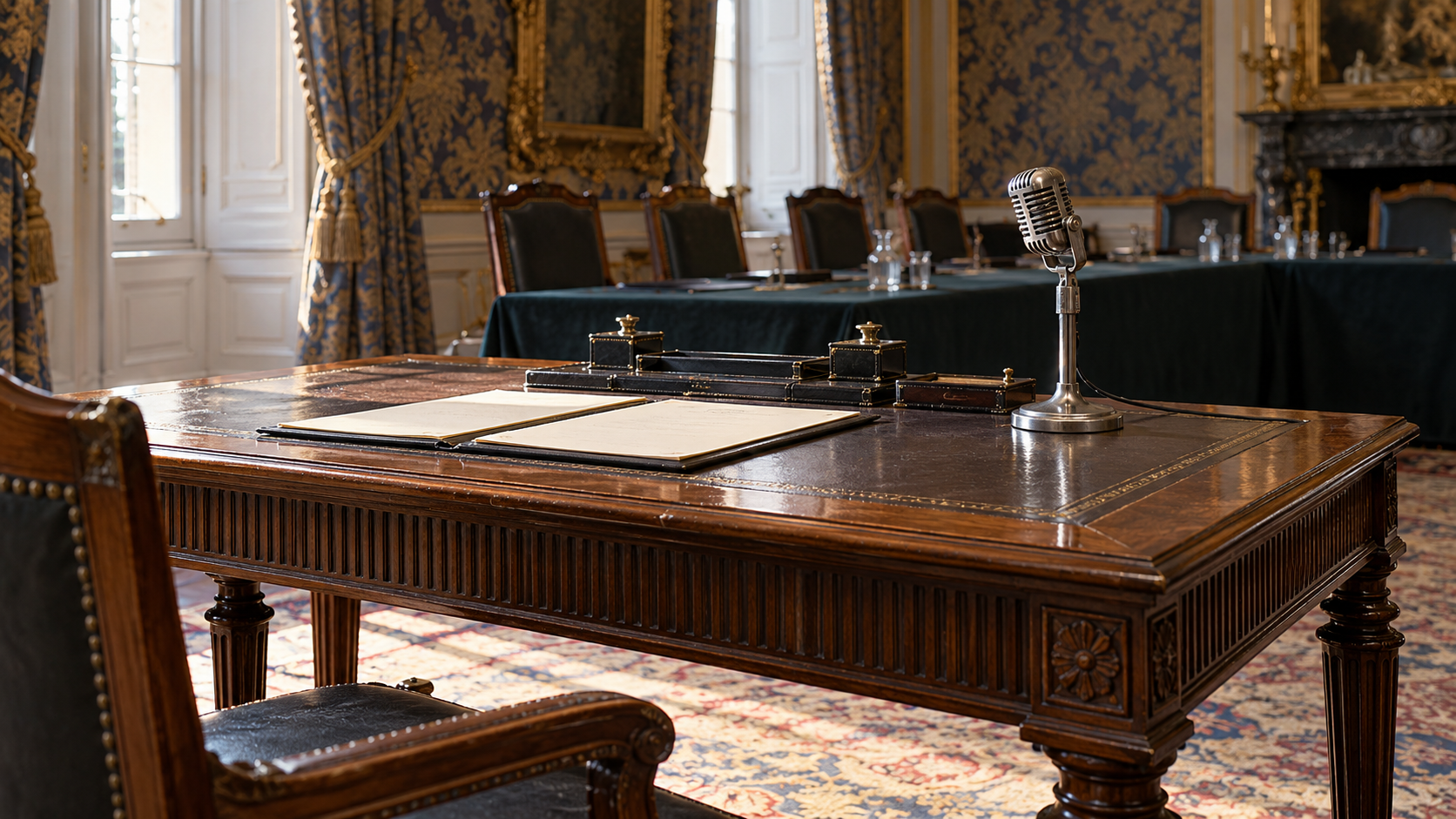
On May 5, 1949, representatives of ten countries signed the Statute of the Council of Europe at St James’s Palace in London. Belgium, Denmark, France, Ireland, Italy, Luxembourg, the Netherlands, Norway, Sweden, and the United Kingdom became the founding signatories. The agreement created a framework for closer political cooperation after the destruction of the Second World War. It committed the participating governments to shared principles of liberty, the rule of law, and human rights. The date is remembered as the Council’s founding, while the statute’s formal entry into force followed in August after the required ratifications had been deposited.
The new organization emerged from debate about how European countries should work together. Some advocates wanted a federal structure with strong common institutions; others preferred cooperation between governments that retained their national powers. The eventual arrangement combined a Committee of Ministers representing governments with a Consultative Assembly bringing parliamentarians together. British foreign secretary Ernest Bevin described the signing as the outcome of months of negotiations, including discussions in Paris and London. The institution offered a regular setting for common work without creating a European government. Its design reflected both the desire to move beyond wartime conflict and the limits of what participating states were prepared to agree.
The statute defined a broad field of cooperation, including economic, social, cultural, scientific, legal, and administrative matters, alongside human rights and fundamental freedoms. National defence was explicitly excluded. Strasbourg was designated as the organization’s seat, giving it a home associated with the history of conflict between France and Germany. The parliamentary body first met there in August 1949. These details show why the London signing mattered: it established lasting institutions and procedures rather than merely expressing goodwill. At the same time, membership did not mean that every national policy would be decided collectively, or that the Council could replace domestic parliaments and governments.
One of the organization’s most consequential later achievements was the European Convention on Human Rights, signed in Rome in November 1950 and entering into force in September 1953. That treaty was a subsequent development, not the document signed on May 5, 1949. The Council of Europe must also be distinguished from the European Union, which grew through a separate institutional history. Both distinctions prevent the founding anniversary from becoming a misleading shorthand for all European integration. The Council’s lasting contribution was to make cooperation around democratic standards, legal commitments, and human rights part of a continuing international process. Its founding paired ambitious principles with a practical organization through which governments and parliamentarians could pursue them.
The founding agreement is also known as the Treaty of London. Its signing took place at St James’s Palace rather than in Strasbourg.
France and Belgium favoured stronger integration, while Britain emphasized cooperation among governments. The resulting organization reflected a negotiated compromise.
The Committee of Ministers and the parliamentary assembly provided different forms of representation: national governments in one, parliamentarians in the other.
Defence lay outside the statute’s remit. The Council was not established as a military alliance or a substitute for national armed forces.
The human-rights convention came later, in 1950. Keeping the two treaties separate makes the sequence of institutional development clearer.
The Council of Europe and the European Union are separate organizations. Their overlapping commitments do not make their memberships, powers, or founding dates interchangeable.
Explore more of "On This Day ..."
Discover more events from the same date across news, politics, technology, sports, and other fields. Each link highlights significant moments that shaped history on different fronts.