

On This Day in Politics: May 22, 1964
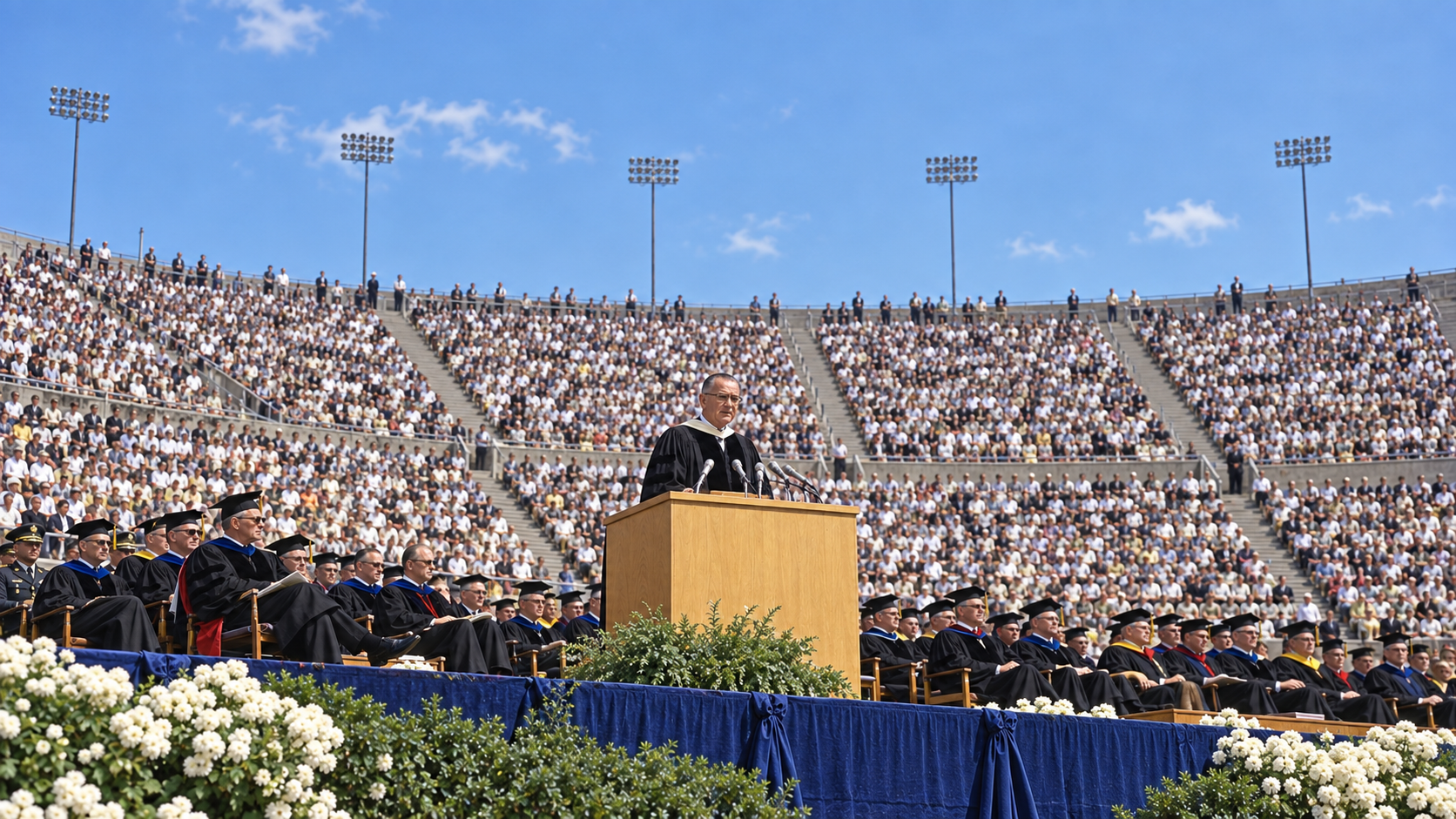
On May 22, 1964, President Lyndon B. Johnson used a commencement address at the University of Michigan to explain his vision of a Great Society. Speaking in Michigan Stadium, he argued that national wealth should improve the quality of people’s lives rather than serve as an achievement measured only by production and consumption. Poverty and racial injustice stood at the center of his challenge, alongside the condition of cities, the environment, and education. The address became one of the defining statements of his domestic presidency. It presented a direction for public action, while leaving the work of designing, passing, and administering particular programs still ahead.
The occasion placed a national political message inside a university ceremony. Johnson received an honorary Doctor of Civil Law degree and addressed a stadium filled with graduates, relatives, and other spectators. University president Harlan Hatcher had originally approached John F. Kennedy about speaking at the commencement. After Kennedy’s assassination, the invitation went to Johnson. When Johnson agreed, the university moved the ceremony forward one day to fit his schedule. It was also the university’s first televised commencement address. These details help explain the speech’s reach: a local graduation supplied a large public stage for a president outlining what he wanted the country to pursue.
Johnson organized the argument around cities, countryside, and classrooms. Urban growth, he said, should produce communities people could enjoy, while pollution and the loss of natural beauty required attention beyond economic expansion alone. Education needed better access and quality, not merely additional seats. He also called for cooperation between national and local leadership, and for working groups and conferences to develop ideas. The speech’s language was expansive, but its central question was practical: how should a prosperous society use its resources? By addressing graduating students, Johnson linked government policy to the choices of a generation entering professional and civic life.
The Great Society later became associated with a broad legislative record, including Medicare and Medicaid, education initiatives, housing and urban development programs, and measures addressing discrimination and poverty. Those policies were not enacted by the speech itself. They emerged through subsequent political decisions, funding choices, and administration. Their effects also varied, making the record more complicated than a single judgment of success or failure. Researchers have examined gains in health and education alongside problems involving cost and uneven results. May 22 remains significant as the moment when Johnson gave a memorable public account of the ambition behind that agenda: using American abundance to widen opportunity and improve the surroundings in which people lived.
Johnson delivered the address at Michigan Stadium on May 22, 1964.
The university moved commencement forward one day to accommodate his schedule.
The speech connected poverty and racial justice with education and quality of life.
It outlined a policy direction rather than enacting a set of laws that day.
The Great Society later encompassed major health, education, and social programs.
Its legacy includes continuing debate over results, costs, and the role of government.
Explore more of "On This Day ..."
Discover more events from the same date across news, politics, technology, sports, and other fields. Each link highlights significant moments that shaped history on different fronts.