

On This Day in Politics: May 23, 1949
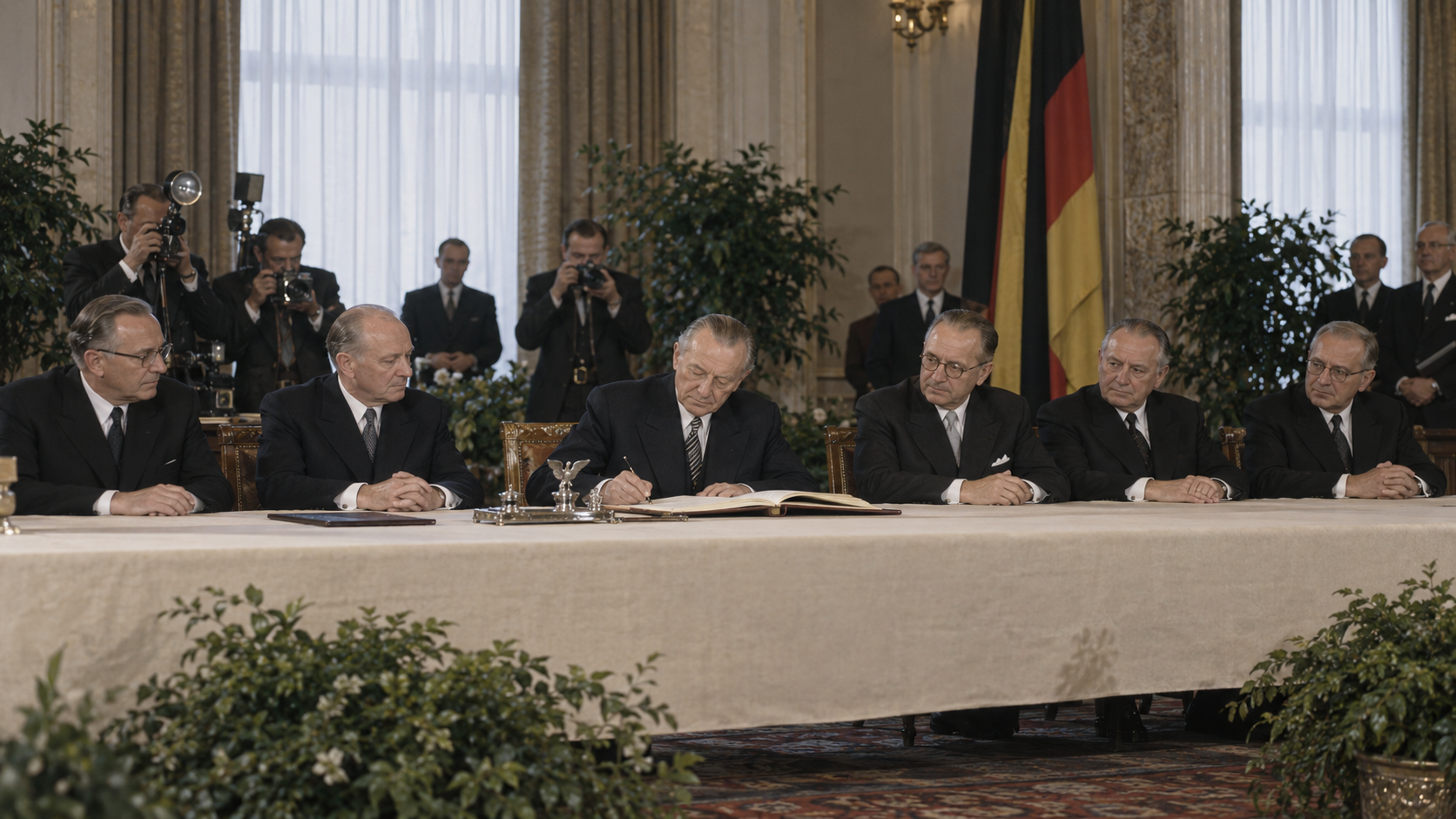
On May 23, 1949, the Basic Law for the Federal Republic of Germany was signed and proclaimed in Bonn. The ceremony completed a process of drafting and ratification that gave the new West German state its constitutional foundation. Konrad Adenauer presided over the Parliamentary Council, the body responsible for preparing the document. The date marked a major step in rebuilding political institutions after the defeat of Nazi Germany and the devastation of the Second World War. It did not unite the divided country or end every restriction associated with occupation, but it established the legal framework within which a new democratic government could take shape.
The text had already passed through several stages before the ceremony. The Parliamentary Council adopted it on May 8, and the military governors of the American, British, and French occupation zones approved it on May 12. Ratification by more than two thirds of the participating state parliaments followed during the week before proclamation. The formal announcement on May 23 recorded that requirement as fulfilled. This sequence matters because the founding document was not the decision of one leader acting alone. It emerged from negotiations among German representatives, approval within the western occupation framework, and action by the regional legislatures that would form part of the federal system.
The constitutional design gave the elected Bundestag a central role. Parliament would choose the chancellor, while the president’s powers were more limited than under the earlier Weimar arrangements. A chancellor could be removed through a vote of no confidence only if parliament also elected a successor. That rule was intended to connect the withdrawal of support to the formation of an alternative government. The Basic Law also recognized political parties as important participants in democratic life. Together, these arrangements aimed to combine political accountability with workable parliamentary majorities, drawing on experience of instability and the destruction of democratic government in Germany’s recent past.
The new institutions began operating later in 1949. The Bundestag and Bundesrat held their first constituent sittings in Bonn on September 7, giving practical form to the constitutional framework. The Basic Law initially served the western part of a divided Germany, and its reach changed with reunification in 1990. An all-German parliament was elected that December; parliament later decided to move its seat to Berlin. Those developments show how the document’s history extended beyond its original setting. May 23 is remembered as a founding date because it established durable rules for public authority, while the years that followed tested how those rules would guide elections, governments, and constitutional change.
The Basic Law was signed and proclaimed in Bonn on May 23, 1949.
The Parliamentary Council had adopted the text on May 8.
Western military governors approved it before ratification by state parliaments.
The constitution placed the elected Bundestag at the center of government.
A constructive vote of no confidence requires election of a replacement chancellor.
The Basic Law’s territorial reach expanded with German reunification in 1990.
Explore more of "On This Day ..."
Discover more events from the same date across news, politics, technology, sports, and other fields. Each link highlights significant moments that shaped history on different fronts.