

On This Day in Politics: July 19, 1848
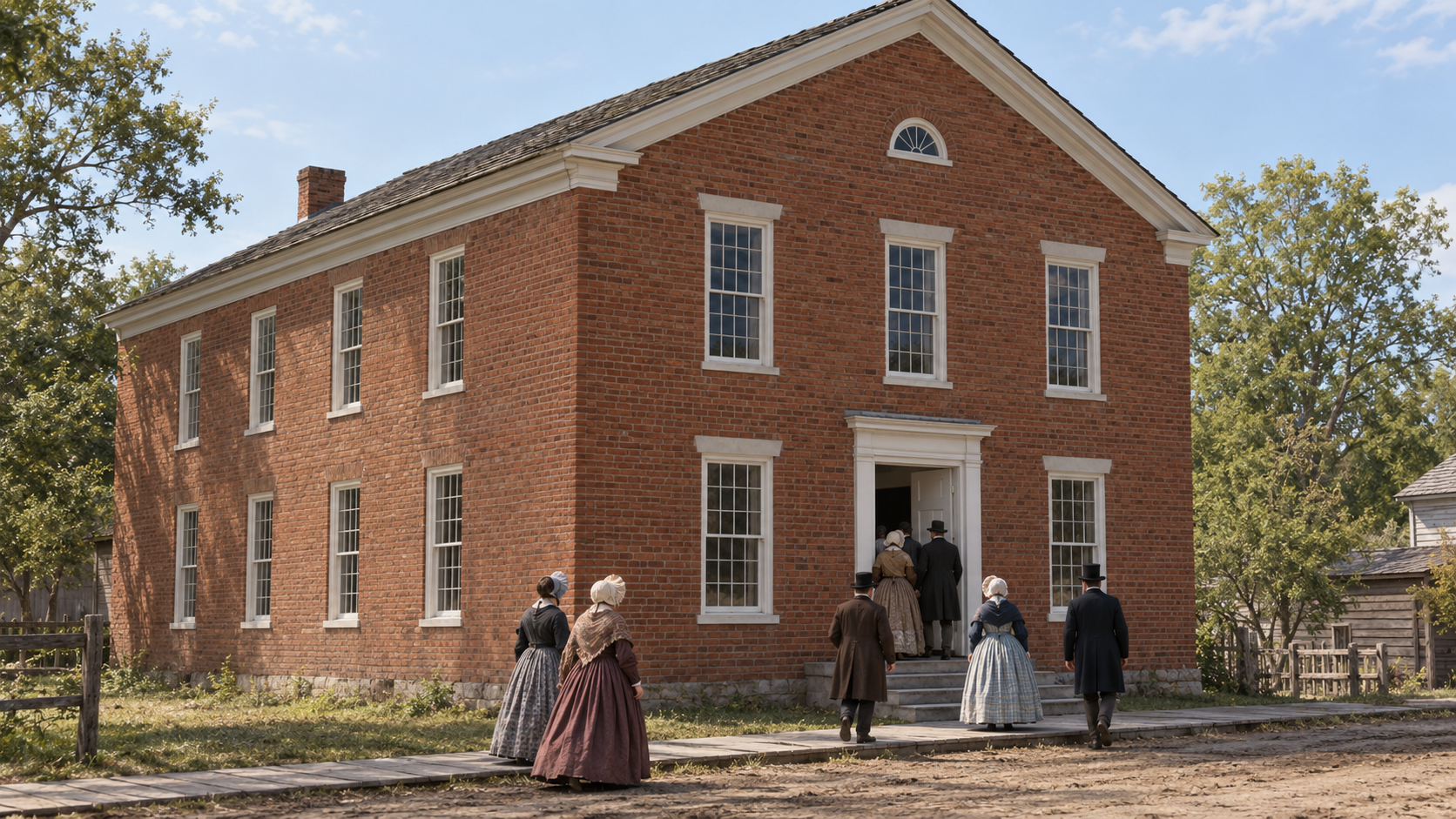
On July 19, 1848, a convention addressing women’s rights opened at the Wesleyan Chapel in Seneca Falls, New York. The meeting brought questions about law, education, religious participation and political representation before a public gathering. It continued through July 20, when participants adopted the Declaration of Sentiments. The opening date therefore marks the start of deliberations rather than every decision made during the two-day event. Seneca Falls became a prominent landmark in the American women’s rights movement, but it was not the first occasion on which women had challenged unequal treatment. Its importance lay in organizing those challenges into a public program and a document meant to circulate.
The convention grew from a July 9 gathering of five women in nearby Waterloo and a call published in the local press. Elizabeth Cady Stanton and Lucretia Mott were among the central organizers and speakers. Existing networks of reformers, friends and relatives helped bring people together. The chapel itself belonged to a Wesleyan Methodist congregation shaped by antislavery convictions, placing the event within a wider culture of reform. Participants did not arrive with legislative authority. Their tools were discussion, resolutions, signatures and publicity, ways of building a movement that could press institutions to change. The gathering drew roughly three hundred people over its two days.
The first morning opened at eleven o’clock, according to the convention’s published report. Stanton explained the purpose of the meeting and read the proposed Declaration of Sentiments, which participants examined and revised. Modeled on the Declaration of Independence, it challenged the exclusion of women from rights associated with citizenship. Its concerns extended beyond voting to property, earnings, education, employment and family law. Men participated in the deliberations on the second day, and the final document carried the signatures of sixty-eight women and thirty-two men. Frederick Douglass supported the cause at the convention and helped publicize it through his newspaper, the North Star.
The convention changed no statute by itself. Its immediate achievement was to present demands collectively and give them a form that could be printed, discussed and used in later organizing. Newspaper responses included both favorable reporting and ridicule, demonstrating that publicity did not mean consensus. Further conventions and campaigns followed, while changes in voting rights and other laws required prolonged political work. Remembering Seneca Falls solely as a sudden beginning can obscure earlier efforts and the diverse people who continued the struggle. July 19 is better understood as an opening session that helped turn grievances into an organized public challenge, with consequences built through many subsequent years.
The gathering lasted July 19 and 20. Its opening session and the next day’s adoption of the Declaration of Sentiments are related but distinct events.
A planning meeting in Waterloo and a newspaper call preceded the convention. Existing reform networks helped draw an audience to Seneca Falls.
The demands included property, education, earnings and family law as well as voting. The declaration presented inequality as a connected set of civic concerns.
The published proceedings describe debate and revision of the proposed text. The event was a working convention, rather than a single speech or proclamation.
Sixty-eight women and thirty-two men signed the declaration. Frederick Douglass was among its supporters and helped spread the movement’s arguments through print.
The convention could not directly amend the law. Its influence depended on publicity, further organizing and the long political campaigns that followed.
Explore more of "On This Day ..."
Discover more events from the same date across news, politics, technology, sports, and other fields. Each link highlights significant moments that shaped history on different fronts.