

On This Day in Politics: July 31, 1991
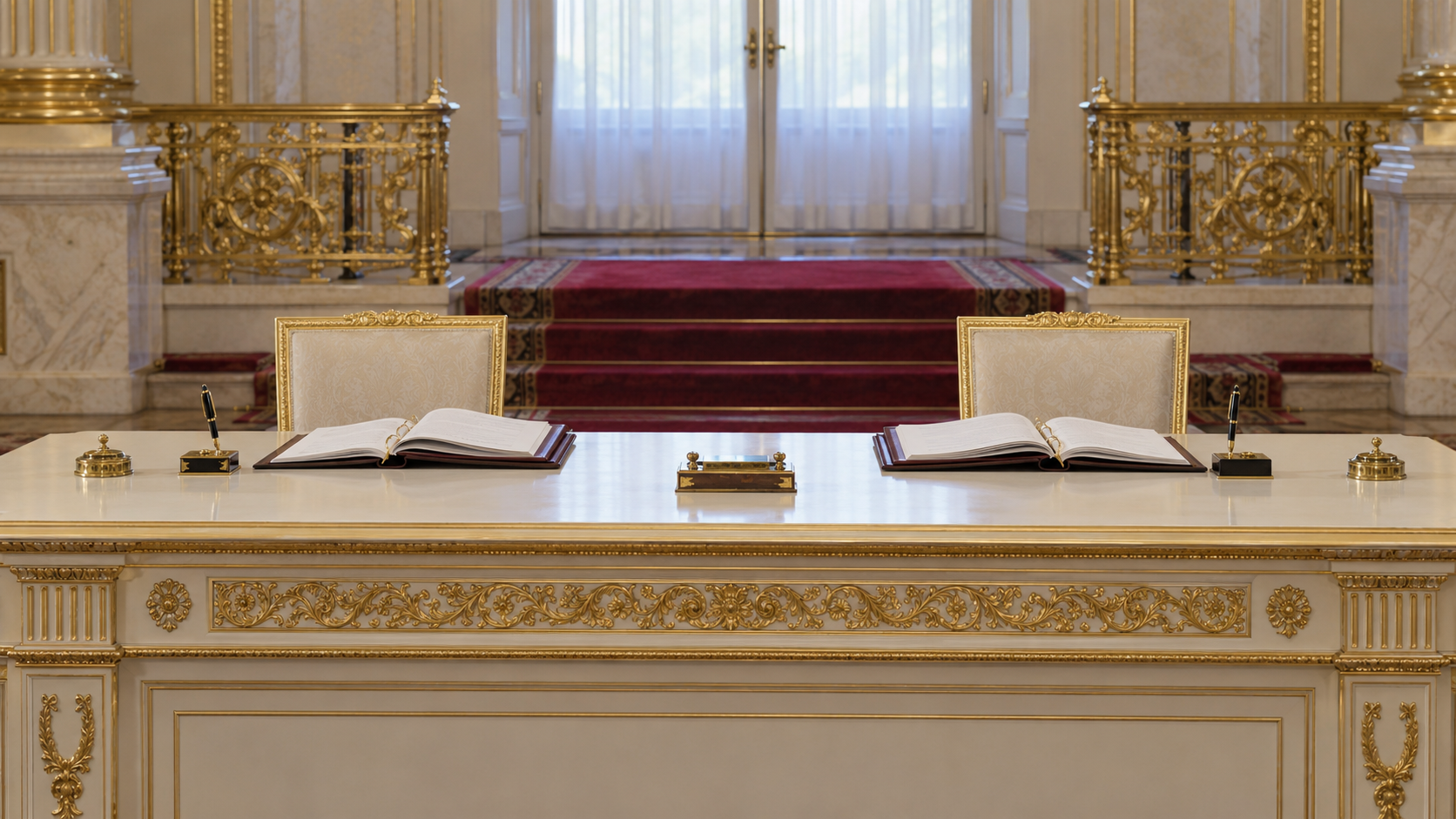
On July 31, 1991, United States President George H. W. Bush and Soviet President Mikhail Gorbachev signed the Strategic Arms Reduction Treaty in Moscow. Later known as START I, the agreement committed the two countries to reducing and limiting strategic offensive nuclear forces. The ceremony took place in St. Vladimir’s Hall in the Kremlin, closing a long negotiating process while opening a demanding implementation phase. It was a significant moment in the changing relationship between the superpowers. The signatures did not remove weapons immediately, but they recorded a detailed agreement about reductions, limits and the ways each side could check the other’s compliance.
The talks had begun almost a decade earlier, during the presidency of Ronald Reagan, and continued through major changes in United States–Soviet relations. At the signing, Bush emphasized reductions rather than merely stopping further growth in strategic arsenals. Gorbachev also described the treaty as the beginning of a process that would require ratification and further work. Their remarks acknowledged that domestic criticism and practical difficulties remained. The agreement therefore reflected both improving diplomatic conditions and sustained negotiation over security concerns. It rested on the proposition that countries with important differences could still share an interest in reducing nuclear risks through specific, reciprocal commitments.
The treaty’s central ceilings included 1,600 deployed strategic delivery systems and 6,000 accountable warheads, with additional limits for particular categories. Accountable warheads were defined through treaty counting rules, so that figure should not be confused with a simple total of every nuclear weapon in national stockpiles. Verification was equally important to the bargain. The agreement provided for inspections, information exchanges, notifications and other monitoring arrangements. These procedures made reductions something that could be assessed through records and observation, rather than accepted solely on political assurances. The complexity of the documents reflected the need to define covered equipment, establish consistent counting and specify how systems would be converted or eliminated.
The Soviet Union’s breakup later in 1991 added another challenge before the treaty could operate. The 1992 Lisbon Protocol brought Belarus, Kazakhstan, Russia and Ukraine into the arrangement as successors to the Soviet Union for treaty purposes. START entered into force on December 5, 1994, after ratification, and reductions then proceeded under its timetable. In the United States, implementation included the retirement of Minuteman II missiles and the elimination of associated facilities, with some sites preserved for historical interpretation. July 31 marks the signing of the agreement, not its later entry into force. Its political importance lies in pairing negotiated reductions with verification and sustained implementation across a rapidly changing international landscape.
Bush and Gorbachev signed START in Moscow on July 31, 1991. The agreement addressed strategic offensive nuclear forces.
Signing concluded years of negotiations. Ratification and implementation still lay ahead.
The treaty set ceilings for delivery systems and accountable warheads. Its counting rules were more specific than a total stockpile count.
Inspections and data exchanges supported verification. Compliance would be checked through defined procedures.
The Lisbon Protocol addressed the Soviet Union’s successor states. START entered into force in December 1994.
The anniversary marks a negotiated commitment to reductions. Its results depended on the work that followed the signatures.
Explore more of "On This Day ..."
Discover more events from the same date across news, politics, technology, sports, and other fields. Each link highlights significant moments that shaped history on different fronts.