

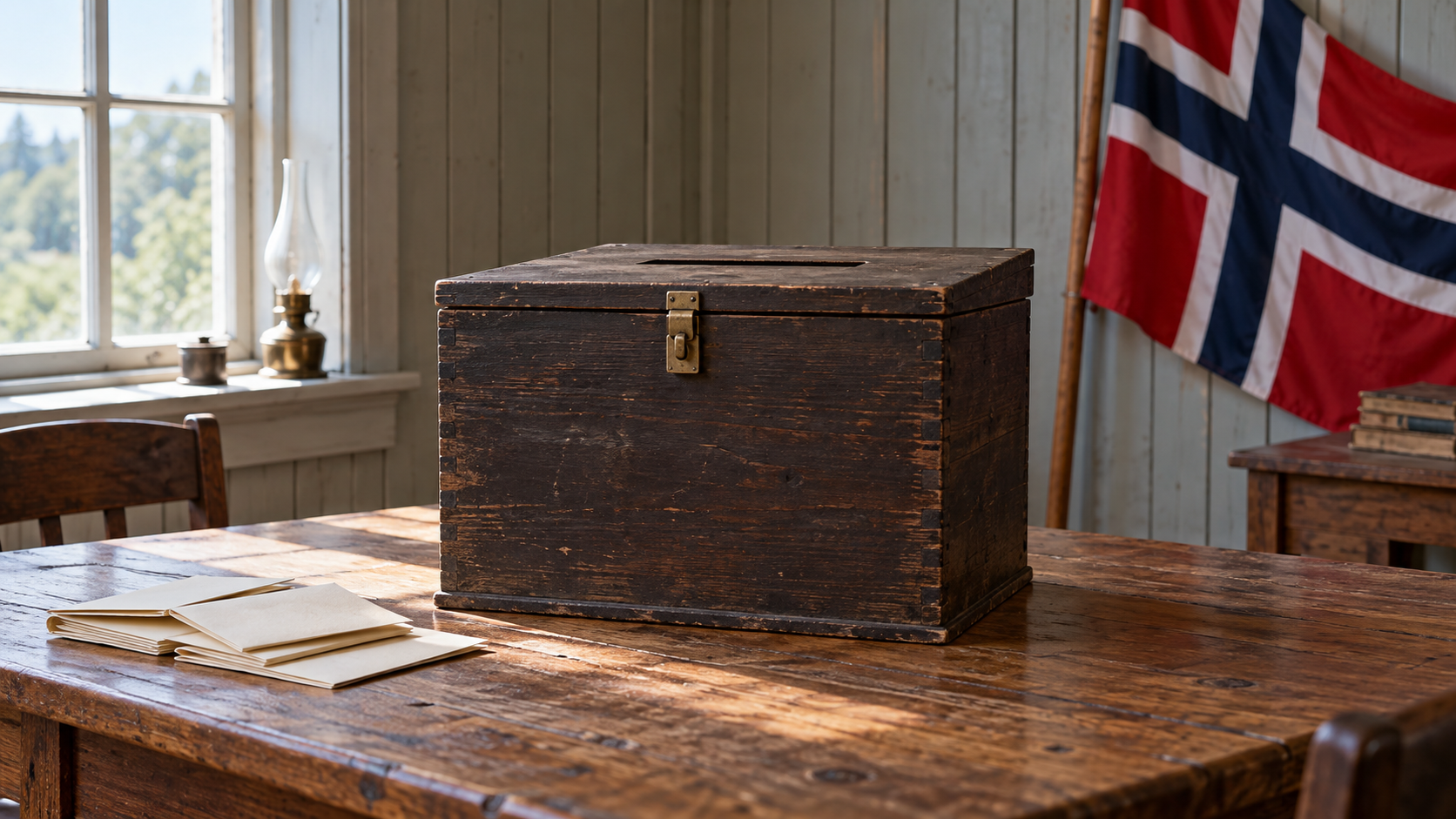
On This Day in Politics: August 13, 1905
On August 13, 1905, Norwegian voters overwhelmingly endorsed the dissolution of their country's union with Sweden in a national referendum. Prime Minister Christian Michelsen's government and the Storting, Norway's parliament, sought a public mandate for the decision parliament had already taken on June 7. The result was striking: 368,208 votes supported dissolution and 184 opposed it. The ballot took place across Norway, turning a constitutional confrontation involving King Oscar II and the government into a demonstration of popular support. It strengthened Norway's negotiating position, but did not by itself settle every diplomatic and constitutional issue separating the two kingdoms.
The dispute had developed around Norway's demand for a separate consular service, an important concern for a country with extensive shipping and overseas trade. When Oscar II refused to approve the consular legislation in May, Michelsen's cabinet resigned. The king declined to accept the resignation because he could not form another government. On June 7, the Storting argued that the king's inability to provide a functioning Norwegian government meant he had ceased to act as Norway's king, and declared the union dissolved. Sweden challenged the unilateral action. A referendum offered evidence that the parliamentary decision represented a much wider political movement.
The voting figures showed extraordinary agreement among participating men, but the circumstances deserve careful description. Women could not cast formal ballots in this referendum. Instead, they organized a nationwide signature campaign supporting dissolution, gathering hundreds of thousands of names and presenting a separate demonstration of political commitment. The ballot also occurred amid a forceful independence campaign supported by government, political organizations, newspapers, and churches. Accounts of pressure on known opponents complicate any picture of a neutral atmosphere. The overwhelming result remains central to the story, while the excluded electorate and intense mobilization help explain how that result was produced and represented.
Negotiations with Sweden followed rather than ending on referendum day. Oscar II formally relinquished his claim to the Norwegian throne in October, completing an essential part of the separation. A different referendum in November addressed whether independent Norway should retain a monarchy, leading to the accession of Haakon VII. Those later decisions were distinct from the August vote on the union. The women's petition also became part of Norway's wider struggle over political participation; universal parliamentary suffrage for women arrived in 1913. August 13 therefore marks a powerful act of national self-determination whose democratic meaning included both the people permitted to vote and those who had to make their voices heard through other means.
The immediate constitutional dispute concerned a Norwegian consular service. Control of overseas representation mattered to Norway's maritime economy and political autonomy.
The Storting's June declaration preceded the August ballot. Voters were asked to support an action already taken by their elected parliament.
The yes total dwarfed the no vote, giving the government a compelling public mandate. That mandate supported negotiations rather than replacing them.
Women participated through petitioning instead of voting. Their mobilization demonstrated political influence while exposing the limits of the formal electorate.
Swedish recognition and the king's October renunciation completed later stages of separation. They should not be dated to the referendum itself.
The November monarchy vote posed a different constitutional question. Norway's independence decision and its choice of state form were separate acts.
Explore more of "On This Day ..."
Discover more events from the same date across news, politics, technology, sports, and other fields. Each link highlights significant moments that shaped history on different fronts.