

On This Day in Politics: August 14, 1935
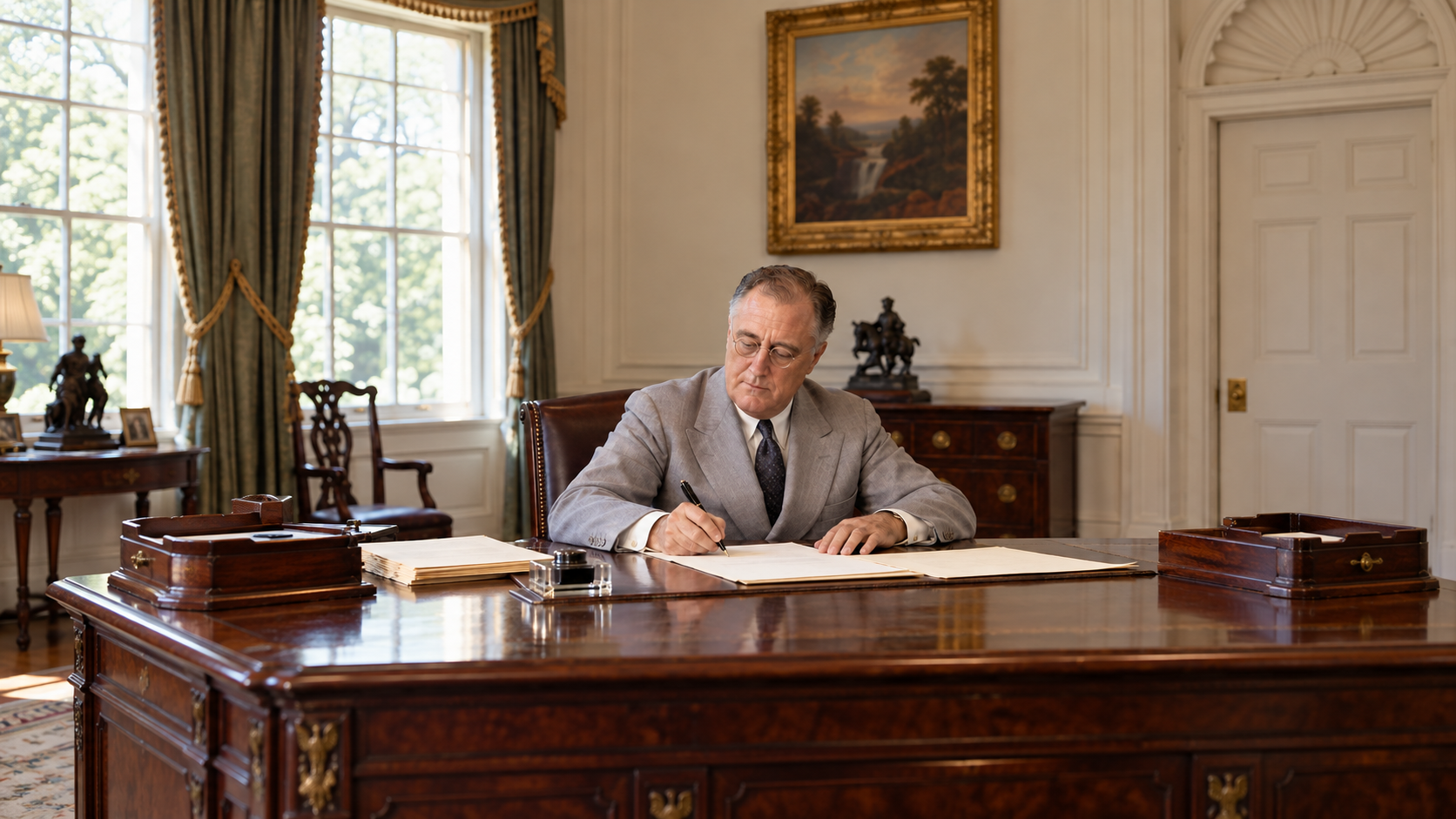
On August 14, 1935, President Franklin D. Roosevelt signed the Social Security Act at the White House in Washington, D.C., turning a major New Deal proposal into federal law. The legislation created a national system of old-age insurance alongside other measures addressing unemployment and economic hardship. Secretary of Labor Frances Perkins had helped lead the administration's work on economic security, while Congress negotiated the bill's final terms. The signing established a framework that would reshape the relationship between Americans and their government. It did not mean that retirees immediately began receiving the monthly benefit checks now associated with Social Security.
The Great Depression had revealed how quickly unemployment, depleted savings, and business failures could destroy household security. Older people often had few dependable resources once paid work ended, and existing assistance varied considerably between communities and states. Roosevelt's administration sought a more durable response through the Committee on Economic Security, whose work helped shape the legislation. The resulting act combined different approaches rather than creating one uniform benefit. Contributory insurance tied future retirement payments to covered employment, while federal grants helped states provide assistance to needy older people and other specified groups. That combination reflected both practical concerns and the political compromises necessary to pass the measure.
The law also established a federal and state framework for unemployment compensation and supported aid for dependent children, blind people, and public health activities. Its scope therefore extended beyond retirement insurance, though it did not create universal medical coverage. Administration required new institutions and detailed arrangements before the system could operate. The Social Security Board was organized after the signing, and payroll contributions began later, in 1937. These steps show why enactment should be distinguished from implementation. The act created commitments and machinery for future protection while leaving governments, employers, and workers to carry out responsibilities that would develop over subsequent years.
Coverage was limited at the outset. Agricultural and domestic employment were among the excluded categories, leaving many workers outside the original old-age insurance system and disproportionately affecting Black workers. Later legislation expanded coverage and changed benefits. The 1939 amendments added protection for workers' dependents and survivors and brought the start of monthly benefits forward to 1940. Those changes belonged to a continuing political process rather than the original signing ceremony. August 14 marks the establishment of a lasting federal role in economic security, but the law's importance is clearest when its promises and exclusions are considered together. The program that emerged was built through administration, amendments, and debates over who should receive protection.
Perkins helped organize the administration's economic-security proposals. The act also depended on congressional negotiations, making it a legislative achievement as well as a presidential initiative.
The law combined insurance and assistance. Covered workers would earn retirement protection, while separate grant programs supported state-administered aid.
Signing created the legal framework before the benefit system was fully operational. New administrative bodies and contribution arrangements followed.
The original retirement program excluded important employment categories. These exclusions limited protection and affected groups whose work was concentrated in those occupations.
The 1939 amendments broadened family protection through dependent and survivor benefits. Monthly retirement payments began in 1940 rather than on the 1935 anniversary date.
The act's wider provisions connected retirement policy with unemployment and assistance programs. Its legacy extends beyond the monthly retirement check.
Explore more of "On This Day ..."
Discover more events from the same date across news, politics, technology, sports, and other fields. Each link highlights significant moments that shaped history on different fronts.