

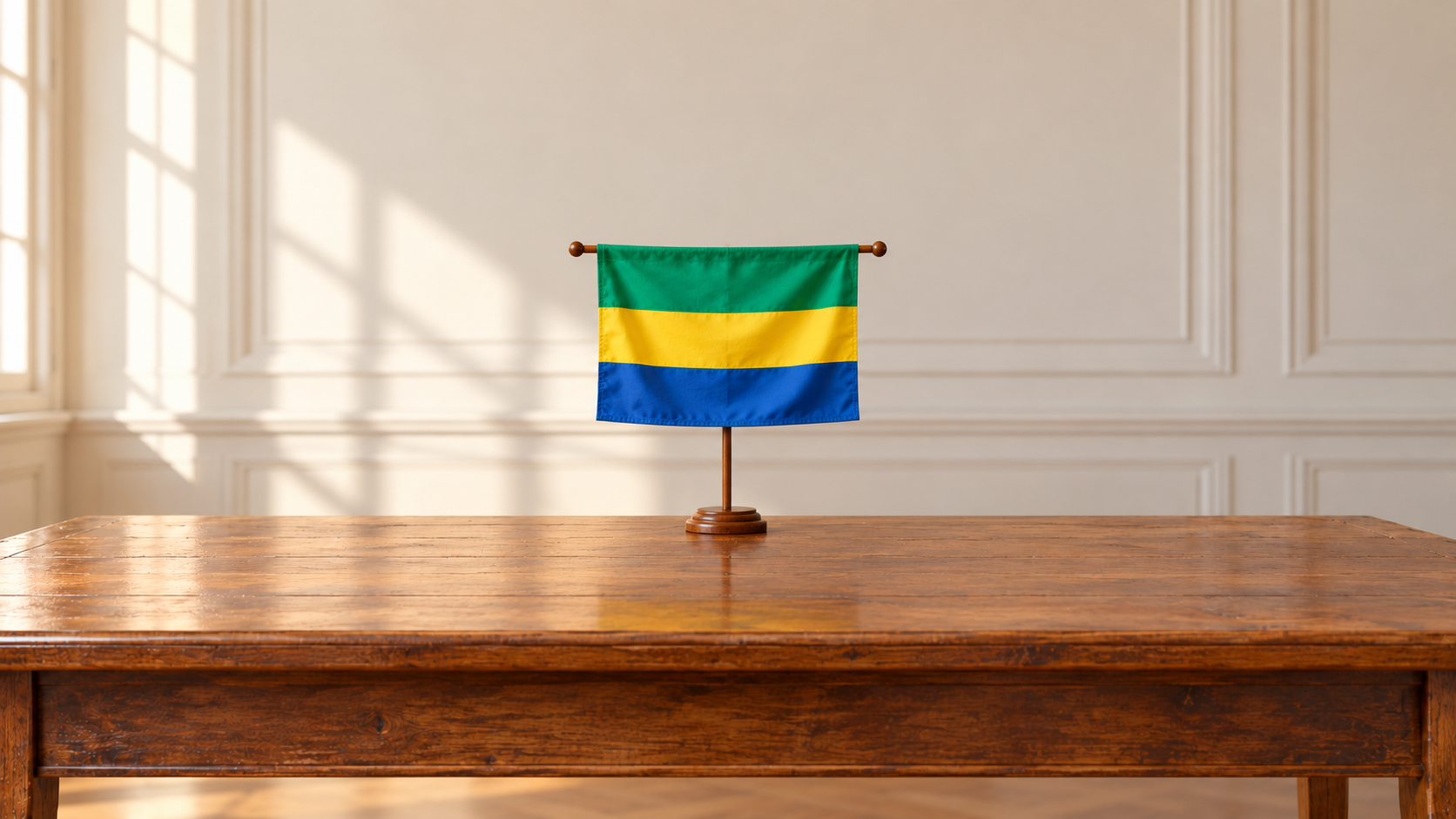
On This Day in Politics: August 17, 1960
On August 17, 1960, Gabon proclaimed its independence in Libreville, with Prime Minister Leon M'ba leading the new state's government. The proclamation marked a major transition from French colonial administration to international sovereignty during Africa's rapid decolonization. The United States recognized Gabon that day through a congratulatory message from President Dwight D. Eisenhower to M'ba. Diplomatic relations also began on August 17, when Alan W. Lukens, based in Brazzaville, presented his credentials. These actions made Gabon's new international standing concrete, while the celebrations in its capital gave a public form to a transfer negotiated through several earlier political and legal steps.
Gabon had been part of French Equatorial Africa, a colonial federation established in 1910. After the Second World War, its status became that of a French overseas territory, with institutions gradually providing more opportunities for local political participation. The constitutional changes of the late 1950s accelerated that development. Following France's 1958 referendum, Gabon became a member state of the French Community, and the Gabonese republic was proclaimed in November. A constitution followed in February 1959. These stages created a government and legislature before full independence, so August 17 did not begin with an entirely new set of institutions assembled from nothing.
The transfer of sovereignty also involved agreements with France. An agreement signed in Paris on July 15, 1960, provided for the transfer of the Community's powers to Gabon. The accompanying diplomatic documents distinguish the transfer's legal effect from the public independence proclamation: the transfer agreement entered into force on August 16. Further agreements signed in Libreville on August 17 set out continued participation and cooperation within the French Community. Independence therefore changed the basis of the relationship without ending all connections between the two countries. Decisions about diplomacy, defense, money, and education continued to matter alongside the ceremonial declaration, illustrating how decolonization could combine sovereignty with negotiated forms of ongoing cooperation.
Important developments still lay ahead. M'ba became Gabon's first president after elections in 1961; describing him as prime minister on independence day keeps that chronology clear. The American embassy in Libreville opened on March 20, 1961, rather than on the day diplomatic relations began. Gabon's subsequent political disputes and changes of leadership belonged to the history of the independent republic, not to the proclamation itself. August 17 is significant because it identifies the public establishment of Gabon's sovereign position within a wider African transformation. Understanding the earlier constitutional stages and the continuing agreements with France makes that achievement more precise than treating independence as a single instant when every inherited relationship disappeared.
The republic proclaimed in 1958 remained within the French Community. Its existence preceded the full transfer of sovereign responsibilities in 1960.
M'ba led the government as prime minister at independence. His later presidency was a separate stage in the development of the republic.
The public proclamation occurred on August 17. The transfer agreement's recorded entry into force on August 16 describes a different legal step.
Continued cooperation with France qualified the nature of the transition. Sovereignty did not require every diplomatic or administrative connection to end immediately.
U.S. recognition and diplomatic relations began on the anniversary date. A resident embassy in Libreville followed in March 1961.
The Gabonese case illustrates negotiated decolonization: local institutions, transferred powers, international recognition, and cooperation agreements developed together.
Explore more of "On This Day ..."
Discover more events from the same date across news, politics, technology, sports, and other fields. Each link highlights significant moments that shaped history on different fronts.