

On This Day in Politics: November 14, 1990
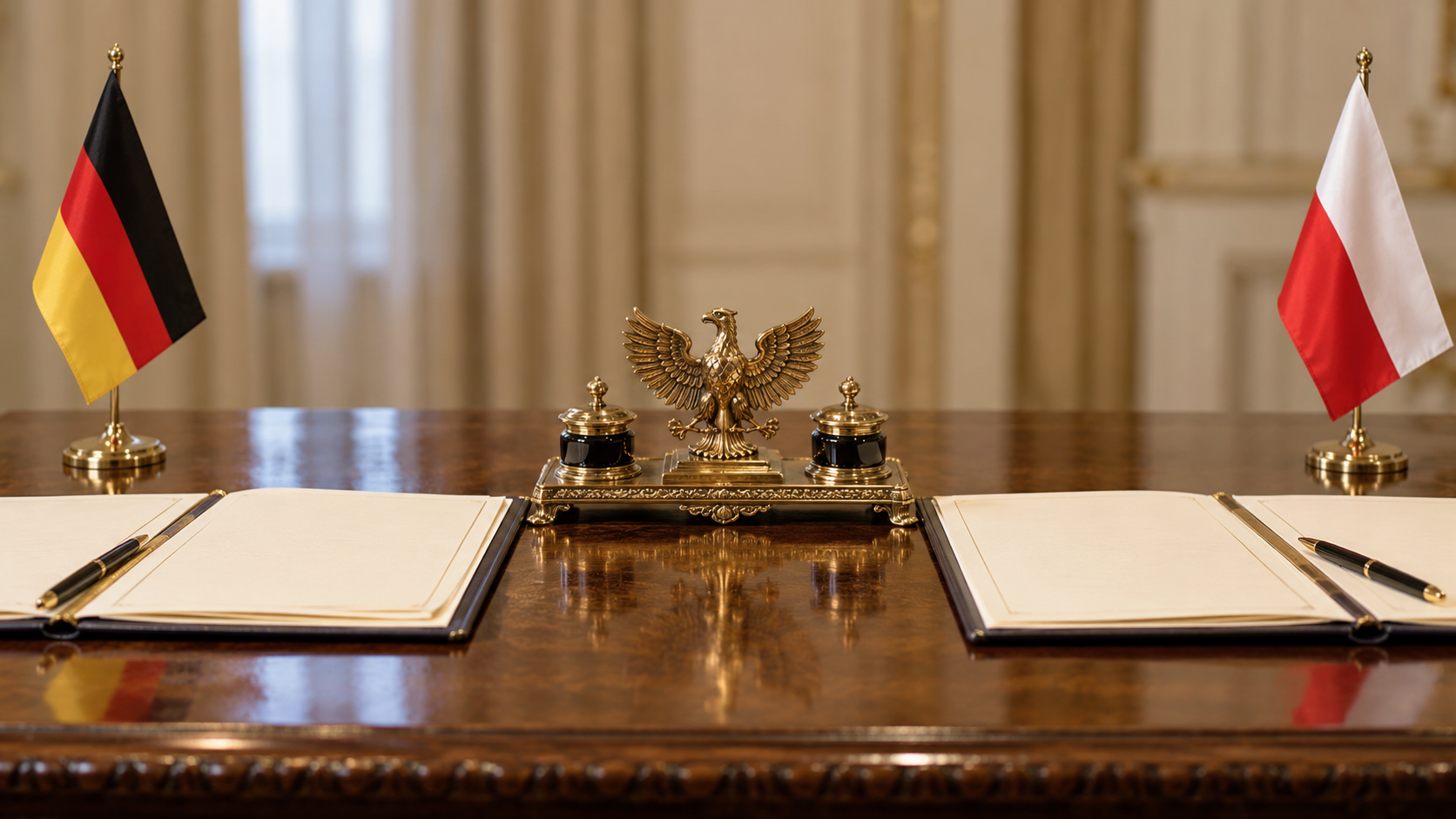
On November 14, 1990, German Foreign Minister Hans-Dietrich Genscher and Polish Foreign Minister Krzysztof Skubiszewski signed a treaty in Warsaw confirming the existing border between their countries. The agreement followed German reunification and addressed one of the most sensitive territorial questions left by the Second World War. Germany and Poland committed themselves to the frontier's inviolability and to respect for each other's sovereignty and territorial integrity. The signature was a diplomatic milestone, but the treaty still required ratification. It entered into force in January 1992, rather than becoming fully operative at the signing ceremony.
The border along the Oder and Lusatian Neisse had emerged from the postwar settlement, profoundly changing the territorial relationship between Germany and Poland. The German Democratic Republic had recognized it in 1950, and West Germany's 1970 Warsaw Treaty had also addressed recognition of the existing frontier. Nevertheless, questions about a final settlement remained connected to the division of Germany and the unresolved international arrangements surrounding it. Reunification made definitive confirmation especially important for Poland. The issue concerned security and legal certainty, as well as the historical experience of invasion, occupation, displacement and the redrawing of borders.
The 1990 agreement confirmed the frontier by reference to earlier instruments defining its course. It did not announce the drawing of a new boundary through an ordinary territorial bargain. The parties pledged to respect the existing border and declared that they had no territorial claims against each other and would raise none in the future. Those commitments gave the document significance beyond a statement of friendly intentions. They set out explicit obligations for the two states as Germany became united and Poland moved away from Communist rule. The treaty therefore helped connect the transformation of the European political order with a concrete legal assurance about national territory.
A broader treaty on good-neighborliness, friendship and cooperation followed in June 1991. That later agreement should be distinguished from the border confirmation signed in November. Together, the instruments became foundations for a new period of German-Polish relations, even though they did not settle every historical dispute or guarantee agreement on future policy. The border treaty's importance lay in removing a major source of uncertainty through a clear bilateral commitment. Its subsequent ratification completed the legal process begun by the signature. The anniversary records a specific act of postwar settlement: two neighboring states formally confirming the frontier between them as part of a wider European transition from division toward cooperation.
The treaty confirmed an existing frontier. It did not create an entirely new border or reopen the map for negotiation.
Earlier agreements by East Germany and West Germany formed part of the background. Reunification made a definitive bilateral confirmation particularly important.
Genscher and Skubiszewski signed in Warsaw on November 14. Parliamentary ratification and entry into force followed.
The parties pledged respect for sovereignty and territorial integrity and rejected present and future territorial claims against one another.
The June 1991 good-neighborliness treaty was a separate agreement with a broader cooperative agenda. It should not be substituted for the November border treaty.
A legal settlement can establish firm obligations while leaving other political and historical disagreements unresolved. The treaty's scope was specific and consequential.
Explore more of "On This Day ..."
Discover more events from the same date across news, politics, technology, sports, and other fields. Each link highlights significant moments that shaped history on different fronts.