

On This Day in Politics: November 22, 2004
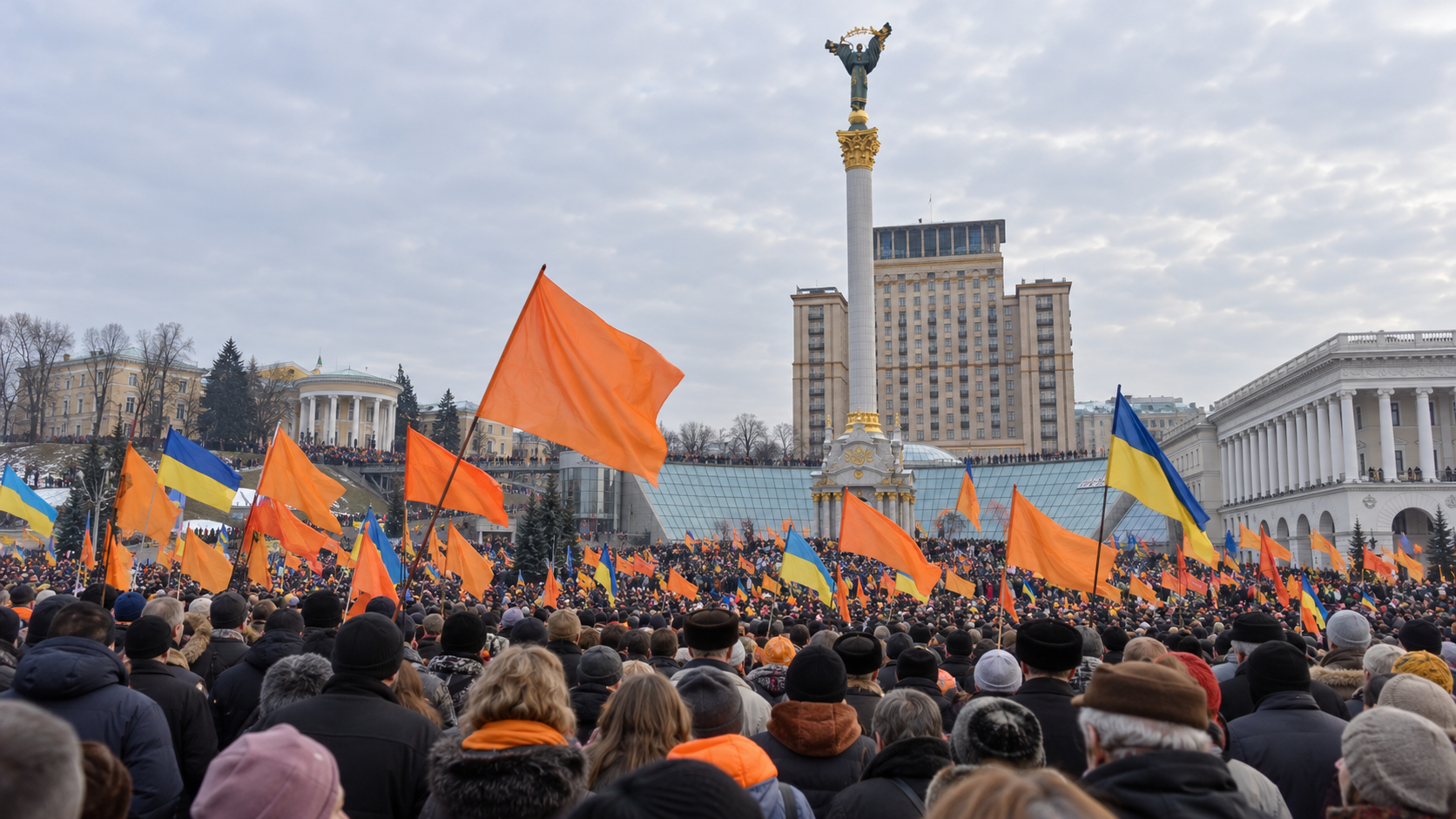
On November 22, 2004, large protests against Ukraine's disputed presidential runoff gathered force in Kyiv and other cities, beginning the movement known as the Orange Revolution. Supporters of opposition candidate Viktor Yushchenko challenged the conduct and emerging results of the previous day's vote against Prime Minister Viktor Yanukovych. Independence Square became the movement's most visible gathering place. Demonstrators used orange, the color associated with Yushchenko's campaign, to express solidarity. The date marks the opening of sustained mass mobilization, rather than a completed transfer of the presidency or a court judgment that had already settled the election dispute.
The runoff followed an earlier round in October and a campaign marked by deep mistrust of the authorities. International observers reported serious shortcomings, including problems with transparency and the handling of the second round. The dispute involved more than disagreement over which candidate should govern. It raised questions about whether electoral institutions had accurately recorded and honestly counted citizens' choices. Opposition organizers called people into public spaces to press for a credible result. The protests drew on campaign networks and civic activism, while their size gave the challenge influence beyond ordinary party competition. Maintaining a visible presence became a way to contest the legitimacy of the process.
In Kyiv, demonstrators occupied central streets and established an enduring gathering around Independence Square. Speeches, organization, supplies and participation from outside the capital helped sustain the movement through cold weather. Orange banners became a recognizable symbol, but the legal dispute still required action by public institutions. Street mobilization did not itself create a valid final election result. The confrontation consequently unfolded through several channels: demonstrations, parliamentary debate, international mediation and court proceedings. The interaction among those channels distinguished pressure for a fair electoral process from an immediate replacement of government by the crowd. Political authority remained contested while negotiations and institutional decisions continued.
In December, Ukraine's Supreme Court invalidated the runoff result and ordered a repeat second round. That vote took place on December 26 and was won by Yushchenko, who became president in January 2005. These later events should not be folded into the first day of the protests. Nor did the outcome permanently resolve Ukraine's political divisions or guarantee the success of every reform promised by the movement. November 22 remains significant as the moment a contested election became a sustained public demand for accountable government. It illustrates how civic organization can bring electoral legitimacy to the center of national politics while still depending on legal procedures to establish a new, recognized result.
The runoff was held on November 21. November 22 marks the expansion of the protests, rather than a separate polling day.
International observers reported serious electoral shortcomings. Their findings contributed to concern about the process's credibility.
Orange was associated with Yushchenko's campaign. It became the movement's most visible symbol.
Demonstrations and legal challenges developed together. Occupying the square did not itself determine an official election result.
The Supreme Court ordered a repeat runoff in December. Yushchenko's inauguration followed in January 2005.
The successful challenge did not eliminate later political conflict. Its immediate achievement concerned the disputed election and a new vote.
Explore more of "On This Day ..."
Discover more events from the same date across news, politics, technology, sports, and other fields. Each link highlights significant moments that shaped history on different fronts.