

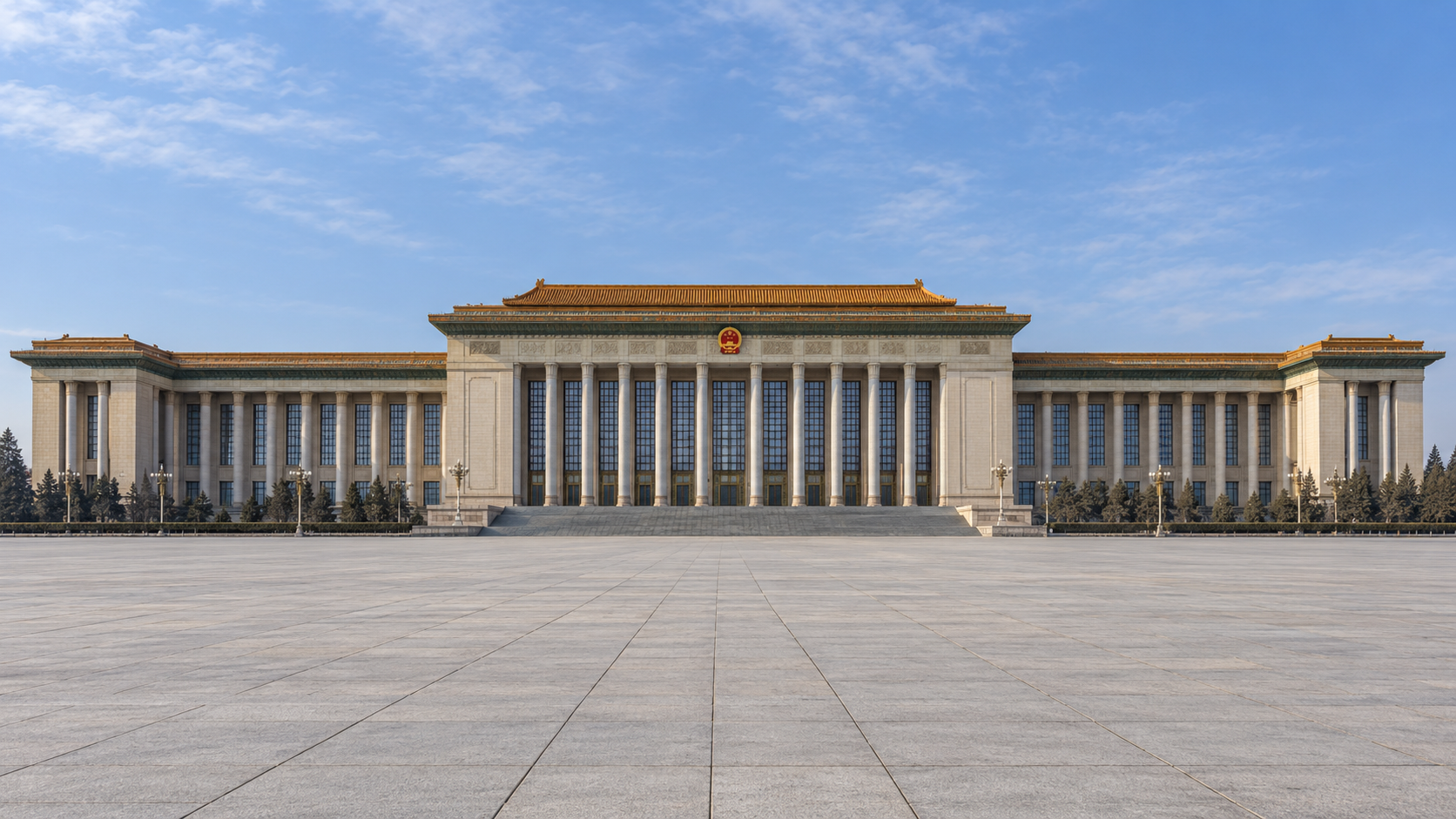
On This Day in Politics: December 4, 1982
On December 4, 1982, the Fifth National People's Congress adopted a new constitution for the People's Republic of China at its fifth session in Beijing. The document set out the structure of the state, the rights and duties of citizens, and the principles governing national institutions. It emerged during the reform period associated with Deng Xiaoping, as China's leadership sought a more regular framework for government after years of political upheaval. The constitution retained the country's socialist system and the leadership of the Communist Party. Its adoption was consequently an effort to reorganize and define state authority within that political order, rather than a transition to competitive national elections between rival parties.
The text placed socialist modernization at the center of the state's future work. It described a constitutional hierarchy linking the National People's Congress, its Standing Committee, the State Council, courts, procuratorates, and local organs of government. The congress was identified as the highest organ of state power, while the State Council served as the highest organ of state administration. These distinctions assigned functions to institutions whose names could otherwise conceal very different responsibilities. The document also provided for a president and vice president elected by the congress. Its original rules limited them to two consecutive terms, part of a broader effort to give leadership positions defined institutional arrangements.
A substantial chapter addressed citizens' rights and duties. It included equality before the law, freedom of speech and religious belief, protection of personal dignity, and provisions concerning work and education. Citizens were also given a stated right to criticize state organs and make complaints about official misconduct. These commitments sat alongside obligations to uphold the country's political and social system and other constitutional restrictions. The presence of rights in the text should therefore be distinguished from the practical means of enforcing them. Adoption did not create a constitutional court or transfer ultimate political authority away from the existing party-led structure. The document's promises and its institutional limits formed part of the same settlement.
The constitution became the foundation for later changes, but its subsequent versions should not be confused with the text adopted that December. Amendments in 1988, 1993, 1999, 2004, and 2018 altered important provisions as policy and leadership priorities developed. The presidential term limit, for example, was removed in 2018; that was a later revision, not an original feature of the 1982 arrangement. December 4 marks the establishment of the constitutional framework within which those revisions occurred. Its lasting significance is visible in the continuing relationship between formal state institutions, declared rights, economic change, and Communist Party authority. Understanding that relationship requires examining both what the constitution says and how the political system gives its provisions effect.
The National People's Congress adopted the constitution at the fifth session of its fifth term. The December 4 date belongs to adoption and promulgation, rather than a later annual commemoration.
Modernization provided a central organizing aim. The constitutional framework assigned functions to national and local bodies within a continuing socialist political system.
The text distinguishes the legislature from the State Council's administrative responsibilities. It also defines the presidency separately from the offices through which day-to-day government is directed.
Rights provisions must be read alongside constitutional duties and political institutions. Their inclusion in a written constitution alone does not establish how effectively an individual can enforce them.
The original two-consecutive-term rule for the president and vice president was later removed. Keeping the 2018 amendment separate avoids projecting a later constitutional choice back into 1982.
The document's history illustrates continuity through amendment. Its institutional structure endured while provisions changed in response to successive political and economic priorities.
Explore more of "On This Day ..."
Discover more events from the same date across news, politics, technology, sports, and other fields. Each link highlights significant moments that shaped history on different fronts.