

On This Day in Pop: January 2, 1921
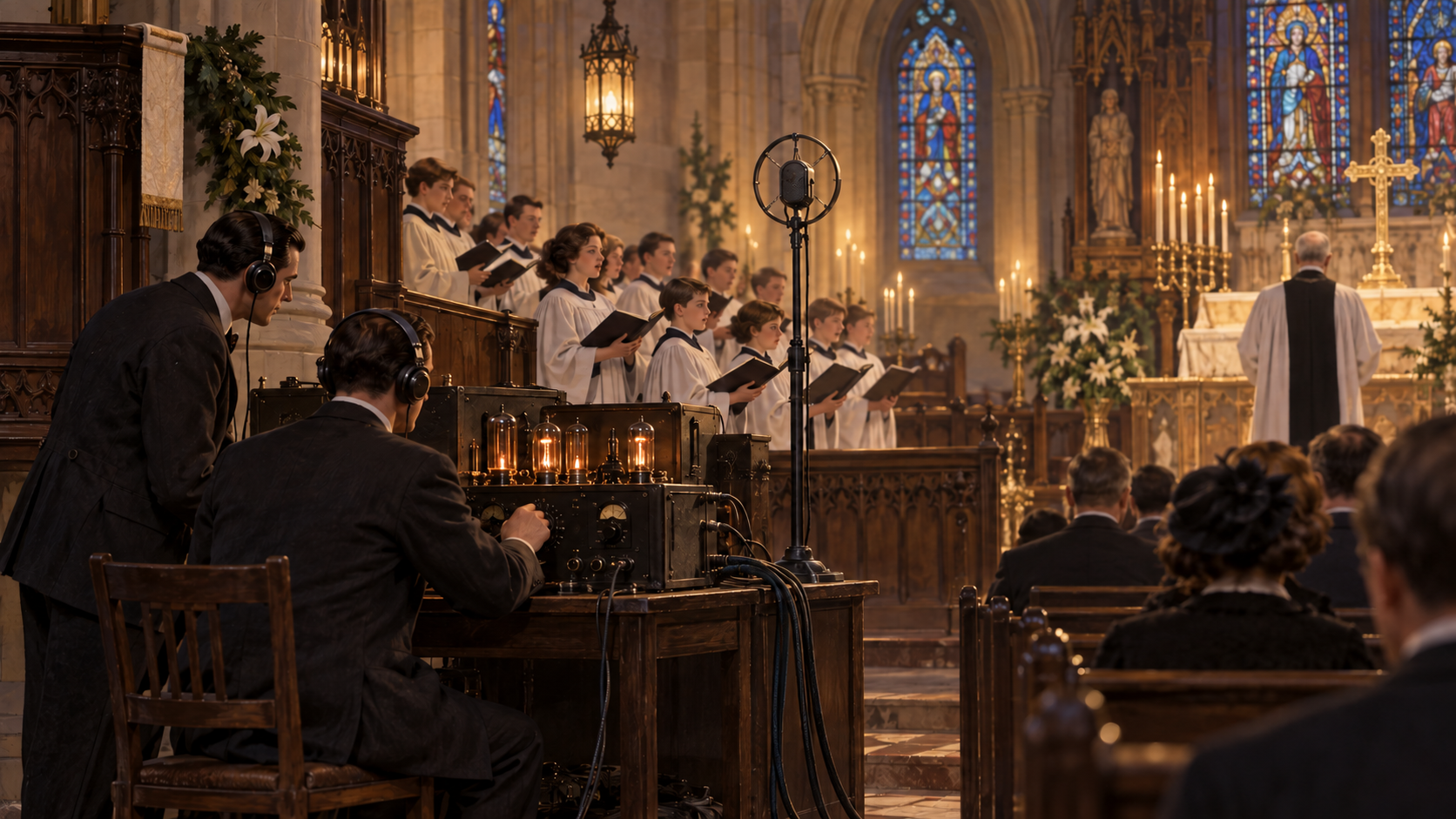
On January 2, 1921, Pittsburgh radio station KDKA carried an evening service from Calvary Episcopal Church in the city’s Shadyside neighborhood. Engineers connected the church to the station’s transmitting facilities so listeners with early radio receivers could hear the service beyond the sanctuary. The program included spoken worship and music from the church’s large male choir. It is widely described as the first religious service broadcast by a commercially licensed radio station and was also an early demonstration of remote broadcasting: the live event happened outside the station rather than inside a purpose-built studio.
Commercial broadcasting was only beginning to take shape. KDKA had attracted national attention two months earlier by reporting the results of the 1920 presidential election. Radio receivers were still uncommon, programming schedules were experimental, and stations were learning what kinds of content could hold an audience. A church service offered a ready-made live program with voices, music, and a familiar structure. It also showed institutions that radio could extend participation to people who were distant, homebound, or simply curious about an event they could not attend in person.
The January 2 transmission required more than placing a microphone near the pulpit. Early remote broadcasts depended on telephone lines or other wired connections to carry sound from the venue to the transmitter, while engineers monitored levels with equipment far less forgiving than modern digital systems. Contemporary accounts and later station histories identify the service as a milestone, but broad claims about the absolute first radio broadcast remain contested because experimental stations had transmitted speech and music before federal licensing categories and regular schedules were firmly established. The narrower description—an early licensed remote broadcast of a church service—is better supported.
Calvary’s services became a regular feature on KDKA and continued for decades. Religious broadcasting soon expanded across American radio, joined by sermons, choirs, educational talks, drama, news, and live entertainment. Families could organize part of their evening around a schedule rather than waiting for a newspaper or traveling to a venue. The significance of the 1921 service therefore reaches beyond religion. It helped establish the idea that a station could bring a public gathering into private homes in real time, a format later central to concerts, sports, ceremonies, and breaking news. The technology has changed from wireless sets to television and online streaming, but the cultural promise demonstrated that evening—the ability to share a live communal moment with an unseen audience—remains a foundation of mass media.
KDKA began regular operations during a period when radio was moving from technical experimentation toward scheduled public programming. Its 1920 election-night broadcast had already shown the medium’s ability to deliver timely information.
Calvary Episcopal Church provided voices, choral music, and a complete live event. The program offered stations a practical model for filling airtime while giving listeners access to an experience beyond the studio.
The broadcast demonstrated remote production by carrying sound from the church to KDKA’s transmitter. Listeners could experience a service as it happened rather than hearing a later description or recording.
The potential audience was limited by the small number of receivers and inconsistent reception. Claims of an absolute broadcasting first also require caution because earlier experimental transmissions operated before licensing and scheduling practices were standardized.
Calvary services became a long-running KDKA program, and religious broadcasting developed into a major radio genre. Churches and ministries used the medium to reach audiences far beyond a single building.
Remote live coverage also became fundamental to popular media. Concerts, sports, civic ceremonies, and news events all built on the same basic idea of transporting a shared public moment into private homes.
Explore more of "On This Day ..."
Discover more events from the same date across news, politics, technology, sports, and other fields. Each link highlights significant moments that shaped history on different fronts.