

On This Day in Pop: January 3, 1993
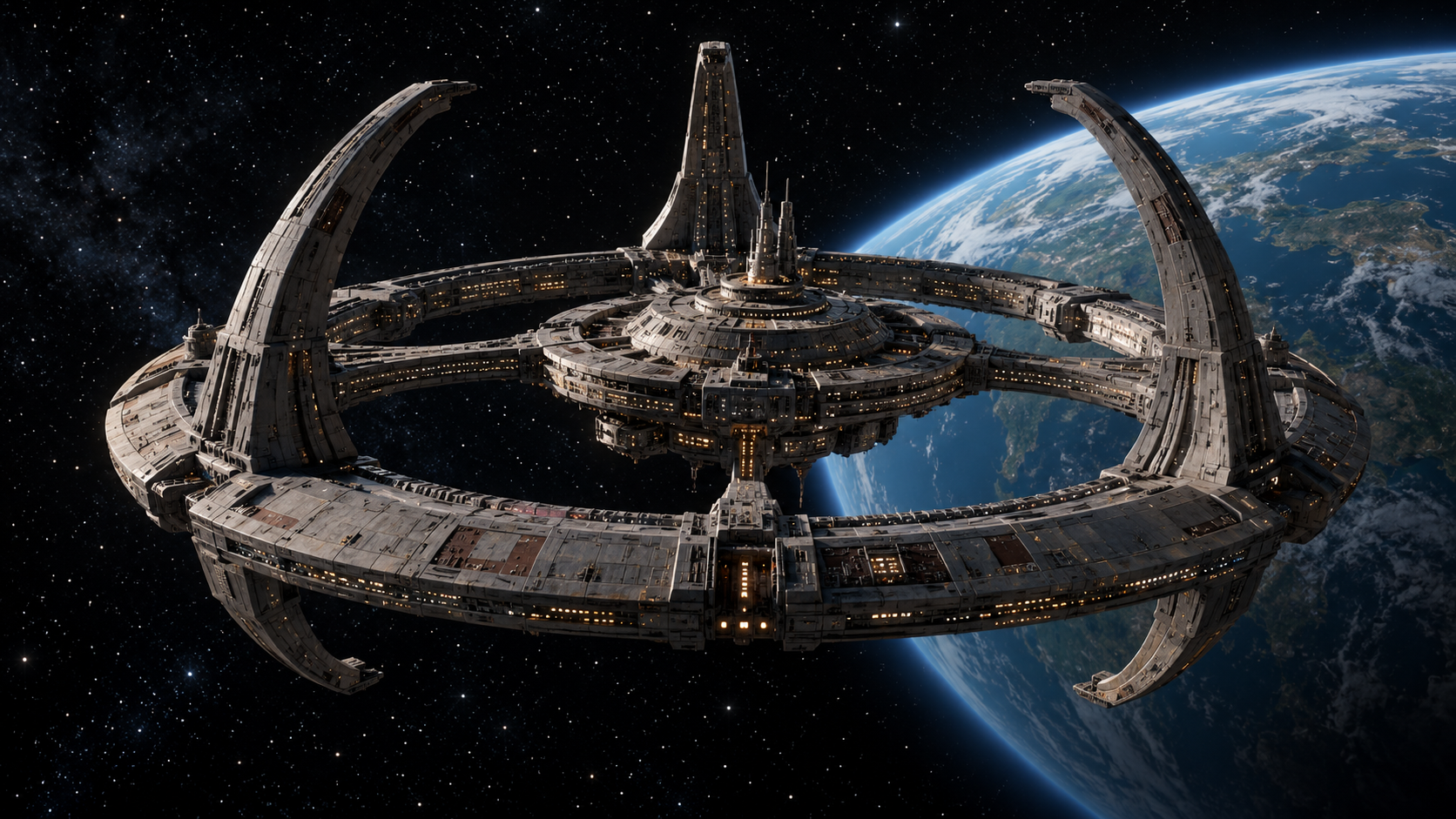
On January 3, 1993, Star Trek: Deep Space Nine began its first-run syndicated run with “Emissary,” a two-hour premiere that introduced television viewers to a very different corner of the franchise. Created by Rick Berman and Michael Piller, the series was centered not on a starship exploring new worlds but on a damaged space station positioned near the planet Bajor. Commander Benjamin Sisko, played by Avery Brooks, arrived to take charge as Bajor recovered from a long Cardassian occupation. Patrick Stewart appeared as Jean-Luc Picard, linking the new program to Star Trek: The Next Generation while making clear that Sisko carried painful memories of the Battle of Wolf 359.
That fixed setting changed the dramatic possibilities. Deep Space Nine sat beside a newly discovered stable wormhole leading to the distant Gamma Quadrant, making the station a crossroads for merchants, diplomats, refugees, soldiers, and travelers. Its ensemble mixed Starfleet officers with Bajoran, Ferengi, Cardassian, and shape-shifting characters whose loyalties and histories did not fit neatly together. Production on the premiere had begun in August 1992, while The Next Generation was still one of syndicated television’s strongest performers. Launching another Star Trek series at the same time was a major expansion of the franchise and a test of whether audiences would follow a story built around community, political recovery, and recurring conflict rather than constant travel.
The premiere drew unusually broad attention for syndicated drama. StarTrek.com later reported that “Emissary” reached an 18.8 percent syndicated audience and ranked first in major markets during its debut week. The episode established the wormhole, Sisko’s relationship with the Bajoran spiritual figure Kai Opaka, and the station’s precarious post-occupation order. It also placed a Black commander at the center of a Star Trek series, with Brooks leading a large ensemble. The debut was not the fully serialized wartime drama that later defined the program; it was a foundation, introducing tensions and institutions the writers would deepen over subsequent seasons.
Deep Space Nine ultimately ran for seven seasons, from 1993 through 1999. Its long arcs about the Dominion War, Bajoran faith, occupation, family, and moral compromise helped demonstrate that Star Trek could sustain a darker and more continuous kind of storytelling without abandoning its interest in cooperation and ethical choice. The premiere also broadened what a television franchise could be: familiar enough to inherit an audience, yet structurally distinct enough to develop its own identity. What began on January 3 as a risky stationary spinoff became one of the era’s most ambitious ensemble science-fiction dramas and a durable part of popular culture.
The new series opened while Star Trek: The Next Generation was still in production, using Patrick Stewart’s guest appearance to connect the programs without copying the earlier show’s traveling-starship format.
Designers made the former Cardassian station feel worn, layered, and politically unsettled. Its location beside Bajor and the Gamma Quadrant wormhole gave the writers a believable reason for new visitors and recurring disputes.
“Emissary” introduced Sisko’s command, Bajor’s rebuilding effort, and the wormhole in one feature-length story. Its strong syndicated audience gave the new series an immediate foothold.
The pilot could only sketch the ensemble and its conflicts. The more serialized political and wartime storytelling most associated with Deep Space Nine developed gradually across later seasons.
The station setting let consequences persist. Characters who might have appeared once on a traveling series could return, change alliances, and participate in stories that unfolded over years.
Avery Brooks’s central role and the show’s wide ensemble expanded the range of perspectives represented in Star Trek, while its sustained moral ambiguity influenced later serialized genre television.
Explore more of "On This Day ..."
Discover more events from the same date across news, politics, technology, sports, and other fields. Each link highlights significant moments that shaped history on different fronts.