

On This Day in Pop: January 8, 1993
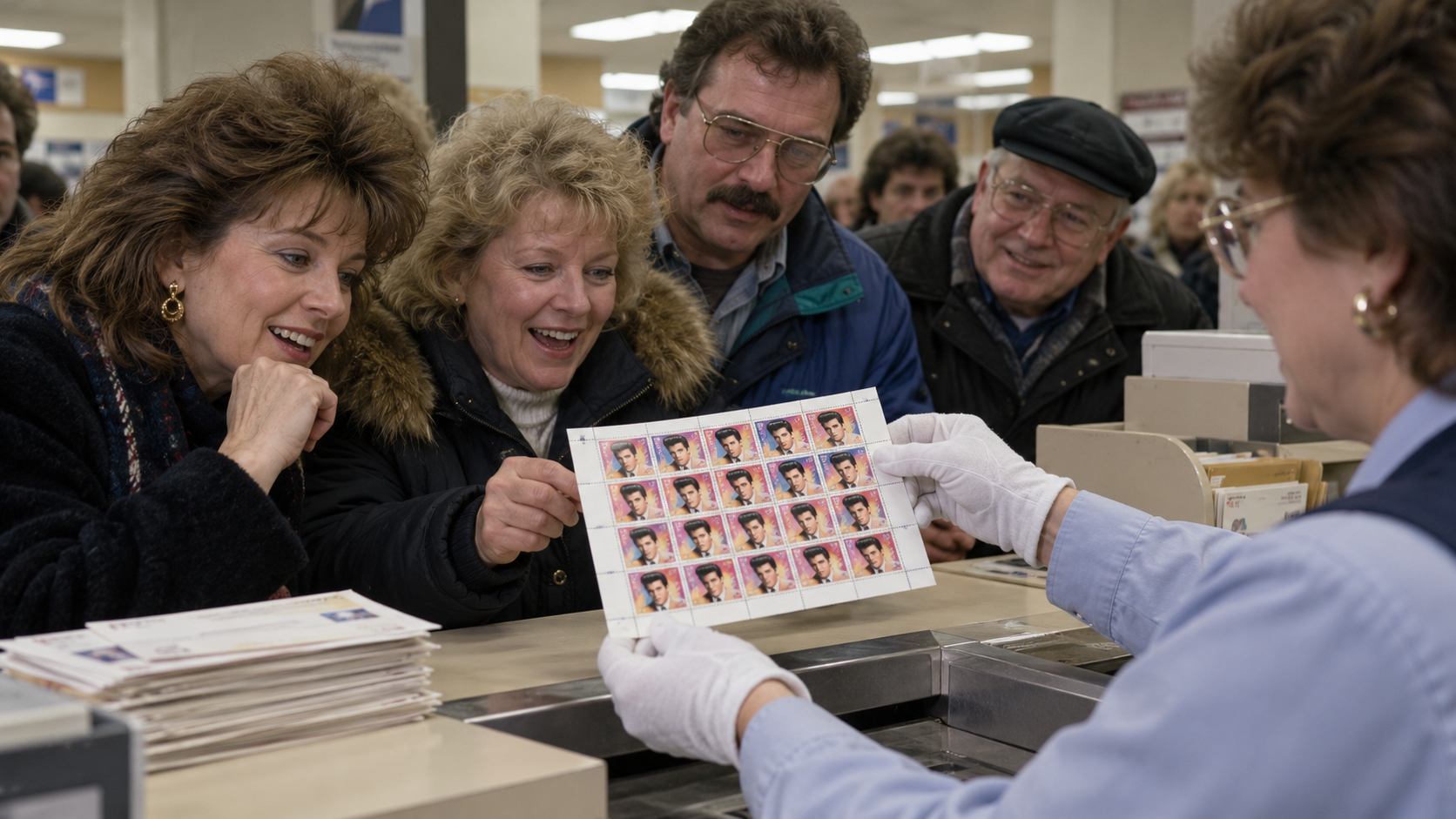
The United States Postal Service put its 29-cent Elvis Presley commemorative stamp on sale on January 8, 1993, beginning with a midnight dedication at Graceland in Memphis, Tennessee. The issue turned a routine postal release into a national popular-culture event. Elvis had been eligible for a U.S. stamp because more than ten years had passed since his death, but postal officials went further than simply commissioning a design. They asked Americans to choose between two portraits: a youthful image based on Presley at the start of his career and a later depiction of the mature Las Vegas performer. Nearly 1.2 million ballots came back, and more than three quarters favored the younger Elvis. Artist Mark Stutzman’s winning portrait presented the singer in the style most closely associated with the first explosion of rock and roll.
The sale completed a campaign that had unfolded through post offices, news coverage and a ballot printed in People magazine. The voting was unprecedented for a U.S. stamp design and made the public part of a debate about memory, celebrity and official honor. Presley had reshaped American popular music in the 1950s by blending country, rhythm and blues, gospel and a magnetic television presence. Yet his image had also been contested during his lifetime, when critics treated his movement and sound as dangerous to conventional taste. By 1993, the Postal Service could place that once-disruptive performer alongside presidents, writers and national symbols. Fans lined up at postal counters, collectors bought panes as keepsakes, and the Graceland ceremony linked the government issue directly to a place of musical pilgrimage.
The stamp’s importance was not only commercial, although it became the best-selling U.S. commemorative stamp of its era. It showed how thoroughly rock and roll had moved from youth rebellion into the country’s shared public history. The choice of young Elvis also fixed a particular version of the singer in circulation: confident, glamorous and forever associated with the period before the excesses and complications of his later career. A stamp cannot summarize a life, and the popularity of this issue did not settle arguments about appropriation, race or the entertainment business surrounding Presley. What it did accomplish was strikingly visible. Millions of envelopes carried a former cultural outsider through the ordinary machinery of American communication, making the stamp both a collectible object and a small, repeatable act of remembrance.
The Postal Service commissioned many preliminary images before narrowing the public ballot to a young and an older Elvis portrait.
Voting through post offices and a national magazine gave fans an unusually direct role in selecting federal stamp artwork.
The winning stamp was dedicated at Graceland shortly after midnight and went on sale nationwide that day.
Its official status honored Presley, but a single youthful portrait could only simplify a complicated career and cultural legacy.
The issue became the most popular U.S. commemorative stamp of its time and expanded expectations for celebrity subjects.
Its enormous circulation marked rock and roll’s transition from disputed youth culture to an accepted part of national memory.
Explore more of "On This Day ..."
Discover more events from the same date across news, politics, technology, sports, and other fields. Each link highlights significant moments that shaped history on different fronts.