

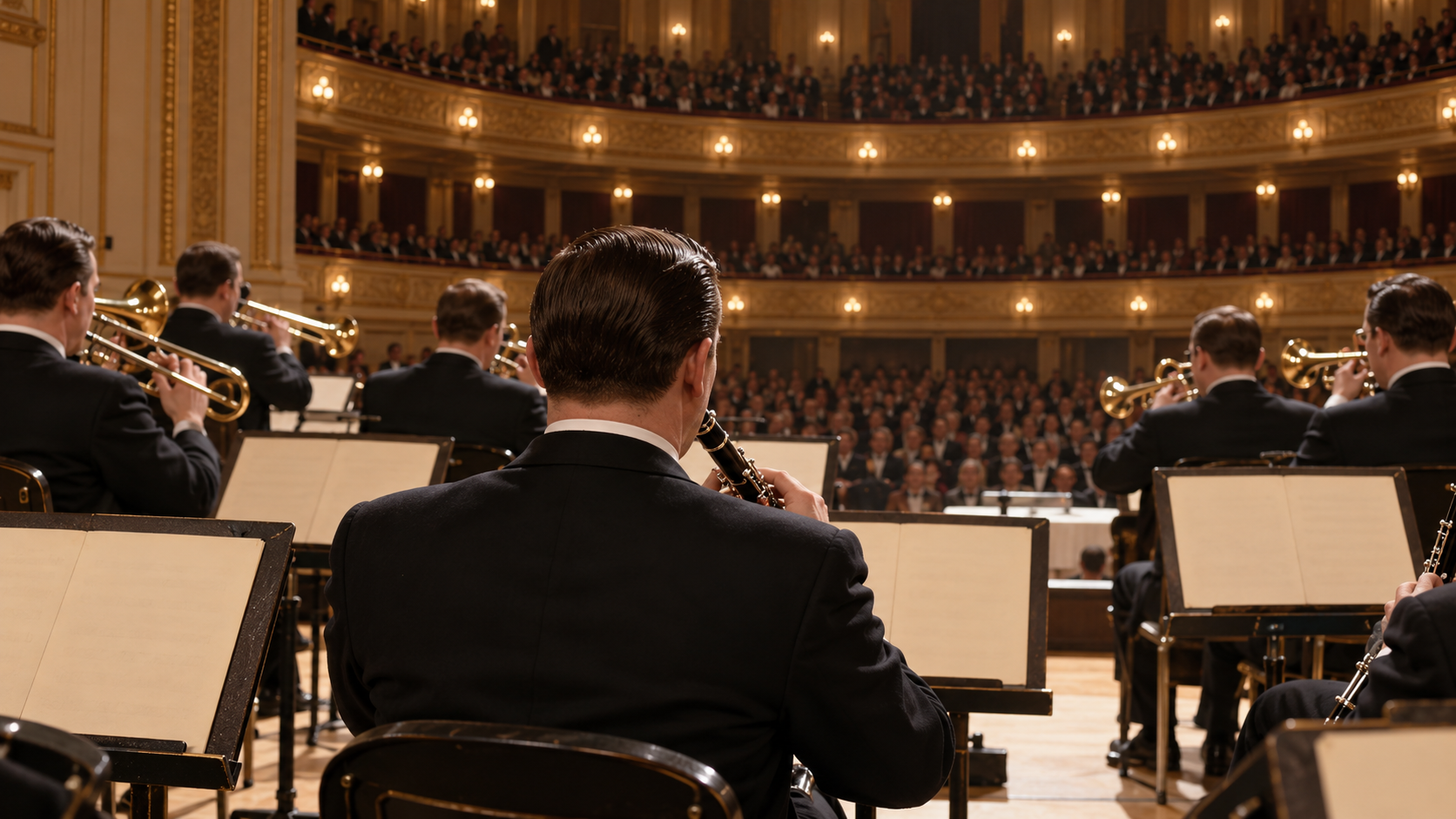
On This Day in Pop: January 16, 1938
Benny Goodman and his orchestra performed at Carnegie Hall in New York on January 16, 1938, in a concert that placed swing music on one of the country’s most prestigious stages. Goodman was already celebrated as the “King of Swing,” and his band had helped turn a developing jazz style into a national dance craze. Publicist Wynn Nathanson proposed the Carnegie appearance, an idea that initially seemed risky because the hall was associated with European concert music and formal recitals. Tickets sold briskly. Goodman prepared a program that moved beyond a standard dance-band set, presenting current arrangements, a survey of jazz history and extended performances that allowed individual musicians to step forward.
The lineup included trumpeters Harry James and Ziggy Elman, drummer Gene Krupa and pianist Jess Stacy, along with guests from the bands of Duke Ellington and Count Basie. The appearance of Black and white musicians on the same stage was significant in an entertainment industry and society structured by segregation. Goodman had already worked publicly with artists such as pianist Teddy Wilson and vibraphonist Lionel Hampton, choices that did not erase discrimination but challenged a common commercial barrier. The evening built toward “Sing, Sing, Sing,” a long, propulsive performance powered by Krupa’s drums, and Stacy’s unexpected piano solo became one of the recording’s most admired passages. The formal setting did not tame the music; it made the intensity of a working swing band audible in a room designed for close listening.
The concert’s reputation expanded after the event. Acetate recordings survived, and a 1950 album release introduced the performance to a much larger postwar audience. It has sometimes been described as the first jazz concert at Carnegie Hall, an oversimplification because jazz-related performers had appeared there earlier. Its real distinction lies in scale, visibility and the way it framed swing as music worthy of sustained attention as well as dancing. The program also reflected the limits of its time: integration onstage did not mean equal treatment in hotels, travel or the music business. Nevertheless, the concert helped weaken the artificial boundary between “serious” concert music and popular jazz. It preserved a major band at full strength and gave later listeners evidence of how improvisation, arrangement and crowd excitement could coexist inside a formal institution. The concert’s afterlife grew further when the rediscovered recordings became a hit album decades later, allowing a new generation to hear both the band’s precision and the audience’s excitement.
Carnegie Hall carried elite cultural prestige, making a full evening by a popular swing orchestra a bold booking in 1938.
Goodman organized the program as a history and demonstration of jazz rather than simply repeating a ballroom dance set.
The sold-out concert strengthened swing’s legitimacy and showcased musicians from several leading bands.
Calling it the first jazz performance in the hall is inaccurate; its importance comes from prominence and influence, not absolute priority.
The surviving recordings allowed the concert’s reputation to grow far beyond the audience that heard it in person.
Its integrated collaborations were culturally important while remaining exceptions within a segregated industry and country.
Explore more of "On This Day ..."
Discover more events from the same date across news, politics, technology, sports, and other fields. Each link highlights significant moments that shaped history on different fronts.