

On This Day in Pop: January 22, 1968
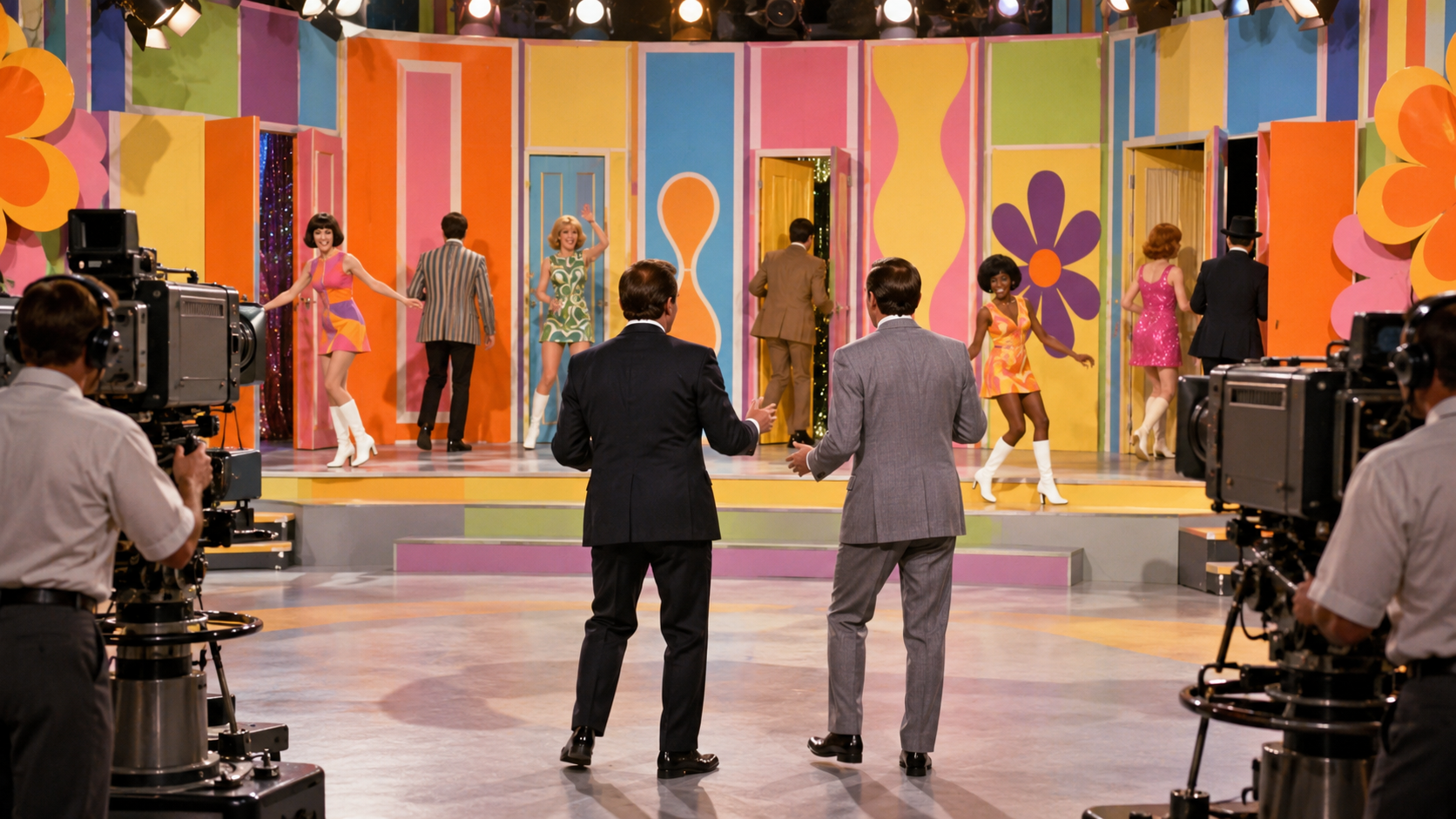
Rowan & Martin’s Laugh-In began its regular weekly run on NBC on January 22, 1968, after a successful special had tested the format the previous September. Hosts Dan Rowan and Dick Martin supplied the straight-man and playboy banter, but the show’s real engine was a barrage of short sketches, blackouts, music, animation and brightly painted bodies. Producer George Schlatter and his team treated the television screen like a collage. Jokes arrived from trapdoors, a cocktail-party set, a joke wall and quick filmed inserts, often disappearing before an audience could decide whether they were sophisticated, corny or deliberately both.
The pace fit a turbulent year. Laugh-In borrowed the visual energy and irreverence associated with youth culture while packaging it for a national network audience. “Sock it to me,” “Here come da judge” and “You bet your sweet bippy” became catchphrases, and performers including Ruth Buzzi, Arte Johnson, Goldie Hawn, Jo Anne Worley and Henry Gibson turned brief recurring characters into familiar personalities. Political figures recognized the show’s reach. During the 1968 presidential campaign, Richard Nixon delivered a famously puzzled “Sock it to me?” cameo, while Hubert Humphrey declined an invitation. The appearance did not decide the election, but it demonstrated that candidates were beginning to treat entertainment programs as useful political stages.
Laugh-In ran for six seasons and influenced sketch comedy, music television, advertising and the editing language of later youth-oriented programming. Its rapid cuts anticipated the expectation that television could shift tone every few seconds, and its ensemble allowed new performers to become stars without carrying a conventional plot. The show also had limits: its version of rebellion was filtered through sponsors, network standards and humor that sometimes relied on stereotypes now recognized as dated or harmful. Even so, it made topical comedy feel visually adventurous and proved that a variety show did not need the orderly rhythm of a nightclub revue. January 22 marks the moment when an experimental special became a weekly institution, translating the noise of late-1960s America into color, catchphrases and jokes that collided at television speed. That format would echo through Saturday-night sketch shows, short-form video and any screen comedy that assumes the audience can keep up with a restless stream of ideas. The series also treated the studio audience as part of the performance, using laughter, signs and direct address to make the broadcast feel like a live gathering even when individual pieces were prerecorded and tightly edited.
A 1967 special established the concept before NBC ordered the weekly series.
The show combined vaudeville blackout comedy with psychedelic color, animation and rapid editing.
Its topical material reached a mass audience but remained bounded by sponsors and network standards.
Some recurring jokes and stereotypes have aged poorly even as the format remains influential.
Catchphrases and ensemble performers moved quickly from television bits into national culture.
Its compressed visual rhythm helped shape later sketch comedy, music television and short-form media.
Explore more of "On This Day ..."
Discover more events from the same date across news, politics, technology, sports, and other fields. Each link highlights significant moments that shaped history on different fronts.