

On This Day in Pop: January 25, 1961
One Hundred and One Dalmatians premiered on January 25, 1961, bringing Dodie Smith’s 1956 novel to the screen as Walt Disney’s seventeenth animated feature. The story followed Pongo and Perdita across England as they tried to rescue their puppies from Cruella de Vil, whose desire for a spotted fur coat made her one of the studio’s most memorable villains. The film balanced suspense with comedy, moving from London apartments and snowy roads to a crowded final escape. Its contemporary settings, angular backgrounds and jazzy score distinguished it from the fairy-tale grandeur of Sleeping Beauty, released two years earlier.
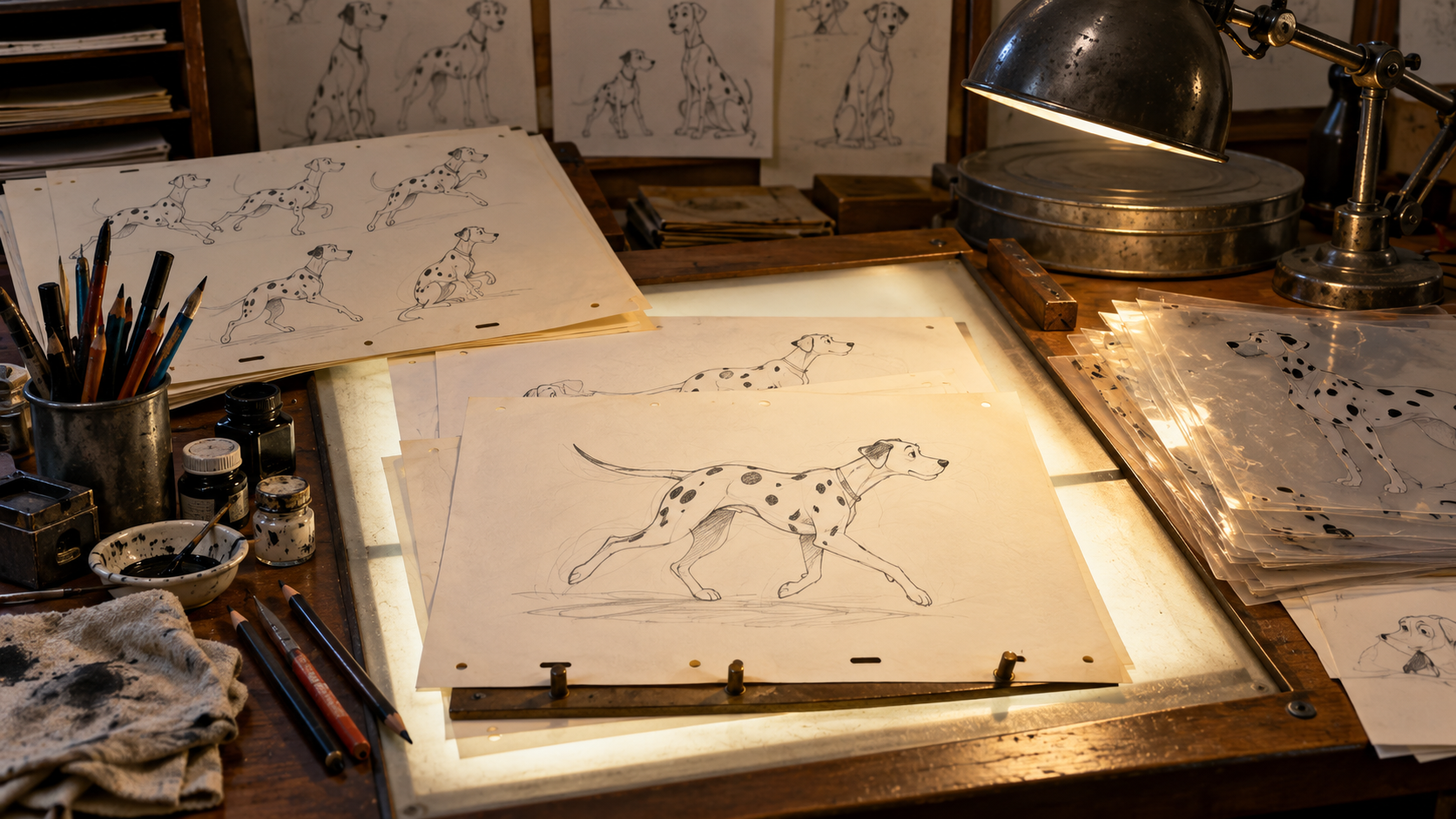
The visual difference came partly from necessity. Traditional Disney production required animators’ drawings to be traced by hand in ink before painting, an expensive process made especially daunting by dozens of dogs covered in spots. Ub Iwerks helped adapt xerography so drawings could be transferred directly to animation cels. The process preserved the animators’ pencil lines, including a lively roughness that earlier films usually polished away. It reduced labor and made the enormous population of Dalmatians practical, though the machines initially produced dark outlines rather than the varied colors favored in previous features. Art director Ken Anderson embraced that limitation, matching sketch-like characters with graphic backgrounds and repeated patterns.
The film was a major commercial success and helped restore confidence after the high cost of Sleeping Beauty. Xerography became standard at the studio for years, shaping the appearance of films from The Sword in the Stone through the 1970s. Some artists missed the elegance of hand-inked lines, while others valued the direct connection between an animator’s drawing and the image audiences saw. That tension between efficiency and expression has followed every major technological change in animation. One Hundred and One Dalmatians also proved unusually adaptable: Cruella, the dogs and the rescue plot returned in television, live-action films and merchandise. January 25 marks a creative and industrial turning point, when a story about an overwhelming number of spotted puppies pushed Disney to adopt a process that permanently altered the studio’s visual language. The result looked leaner and more modern because the solution to a production problem became an artistic style. That visual identity remains immediately recognizable, linking the motion of individual pencil strokes to an industrial process designed to handle scale. It showed that saving time did not have to mean erasing personality when artists shaped the tool around the story.
The film adapted Dodie Smith’s novel into a contemporary London adventure rather than a distant fairy tale.
Animating dozens of spotted dogs made the old hand-inking process especially impractical.
Xerography lowered costs and preserved pencil energy but initially limited the color of character outlines.
The technique divided artists who valued either polished ink lines or greater fidelity to original drawings.
Its commercial success helped stabilize Disney feature animation after an expensive earlier production.
The film turned a technical compromise into the defining look of a new studio era.
Explore more of "On This Day ..."
Discover more events from the same date across news, politics, technology, sports, and other fields. Each link highlights significant moments that shaped history on different fronts.