

On This Day in Pop: January 29, 1959
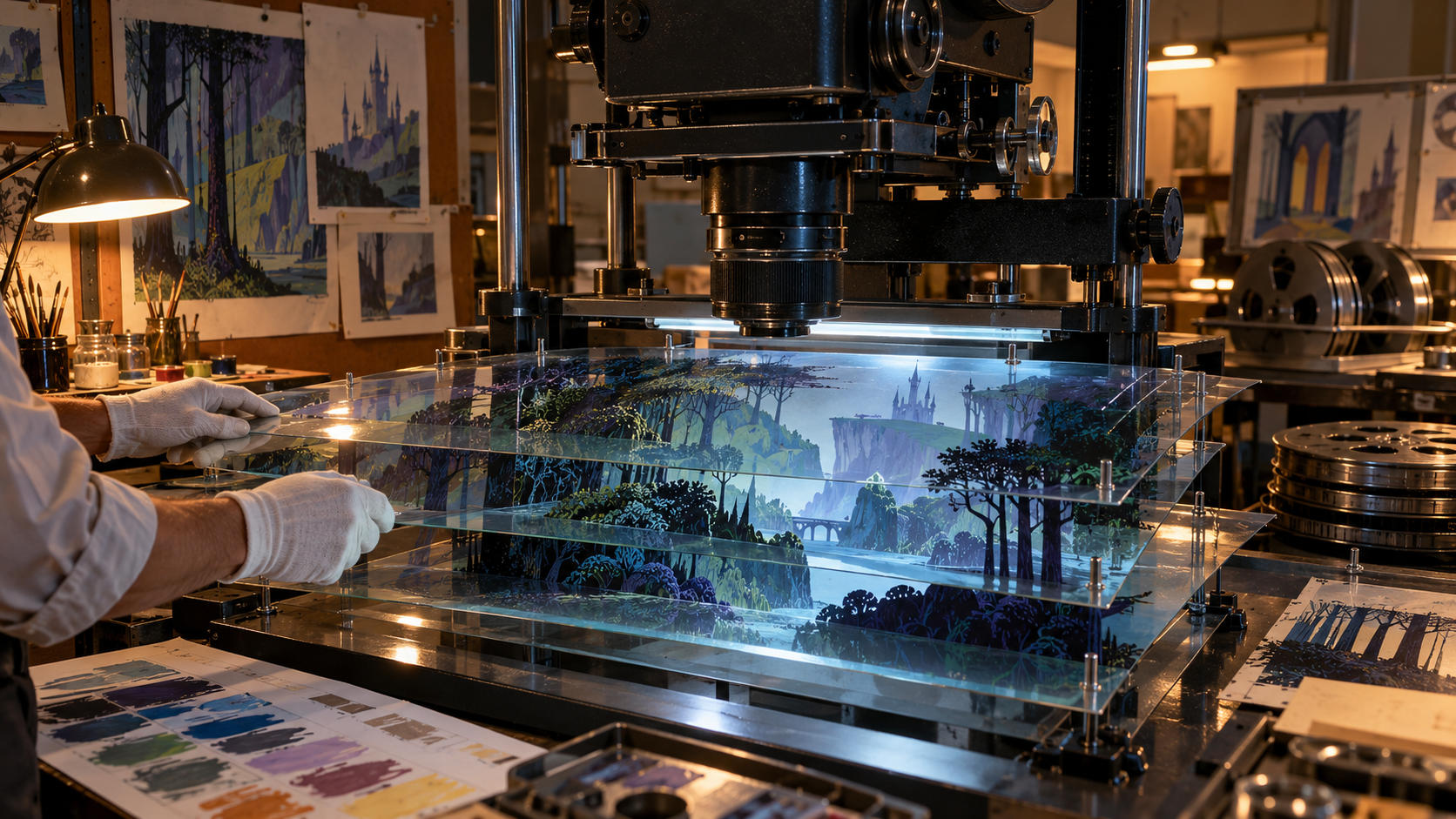
Walt Disney’s Sleeping Beauty premiered on January 29, 1959, presenting Charles Perrault’s fairy tale as one of the studio’s most ambitious animated productions. Princess Aurora, the three good fairies and the villain Maleficent moved through a world designed less like the rounded storybooks of earlier Disney films than a series of medieval tapestries. Production designer Eyvind Earle established the film’s vertical trees, angular castles and dense decorative surfaces, giving background art unusual authority over the entire visual style. The film also adapted themes from Pyotr Ilyich Tchaikovsky’s ballet, reshaping nineteenth-century music for songs, underscoring and dramatic action.
Disney photographed the film in the widescreen Technirama process and prepared a limited number of large-format presentations, hoping scale and detail would distinguish theatrical animation from television. That ambition required years of work and a very large budget. Artists had to fit expressive character movement into Earle’s controlled geometry, a creative tension that produced images unlike anything else in the studio catalog. Maleficent’s transformation into a dragon provided a spectacular climax, while Mary Costa’s classically trained voice helped link Aurora to the ballet tradition. The picture’s marketing emphasized romance and spectacle, yet the three fairies carry much of the action and comedy, protecting Aurora and confronting evil while the princess herself spends long stretches isolated or asleep.
Initial box-office returns did not immediately cover the high production cost, and Disney did not release another animated fairy-tale feature for decades. The studio reduced staff as its methods shifted toward less expensive production. Reissues gradually changed the film’s reputation, allowing new generations to encounter it on large screens, television and home video. Maleficent became an especially durable character, eventually supporting reinterpretations that reconsidered the villain’s motives. The film now stands as both a peak of painstaking hand-crafted spectacle and evidence of how difficult that model was to sustain. January 29 marks the debut of a work whose commercial caution outlasted its opening but whose graphic beauty ultimately became central to Disney’s identity. Its castle influenced park iconography, its music connected animation with ballet, and its restoration history demonstrates how audience judgment can change when a costly disappointment survives long enough to be seen again. The production therefore sits at a crossroads between the luxury of the studio’s classical era and the streamlined methods that followed. Its survival rewards close viewing, because decorative detail designed for giant screens continues to disclose new patterns and colors.
Earle’s medieval, graphic backgrounds governed the film’s design more strongly than in earlier Disney features.
Tchaikovsky’s ballet supplied musical themes that the filmmakers adapted for cinematic storytelling.
Widescreen scale and painstaking artwork produced extraordinary images at an unsustainable cost.
The initial financial result encouraged the studio to avoid another animated fairy tale for years.
Reissues and restoration transformed the film’s reputation and introduced it to new audiences.
Its castle, villain and visual style became enduring elements of the larger Disney identity.
Explore more of "On This Day ..."
Discover more events from the same date across news, politics, technology, sports, and other fields. Each link highlights significant moments that shaped history on different fronts.