

On This Day in Pop: January 28, 1985
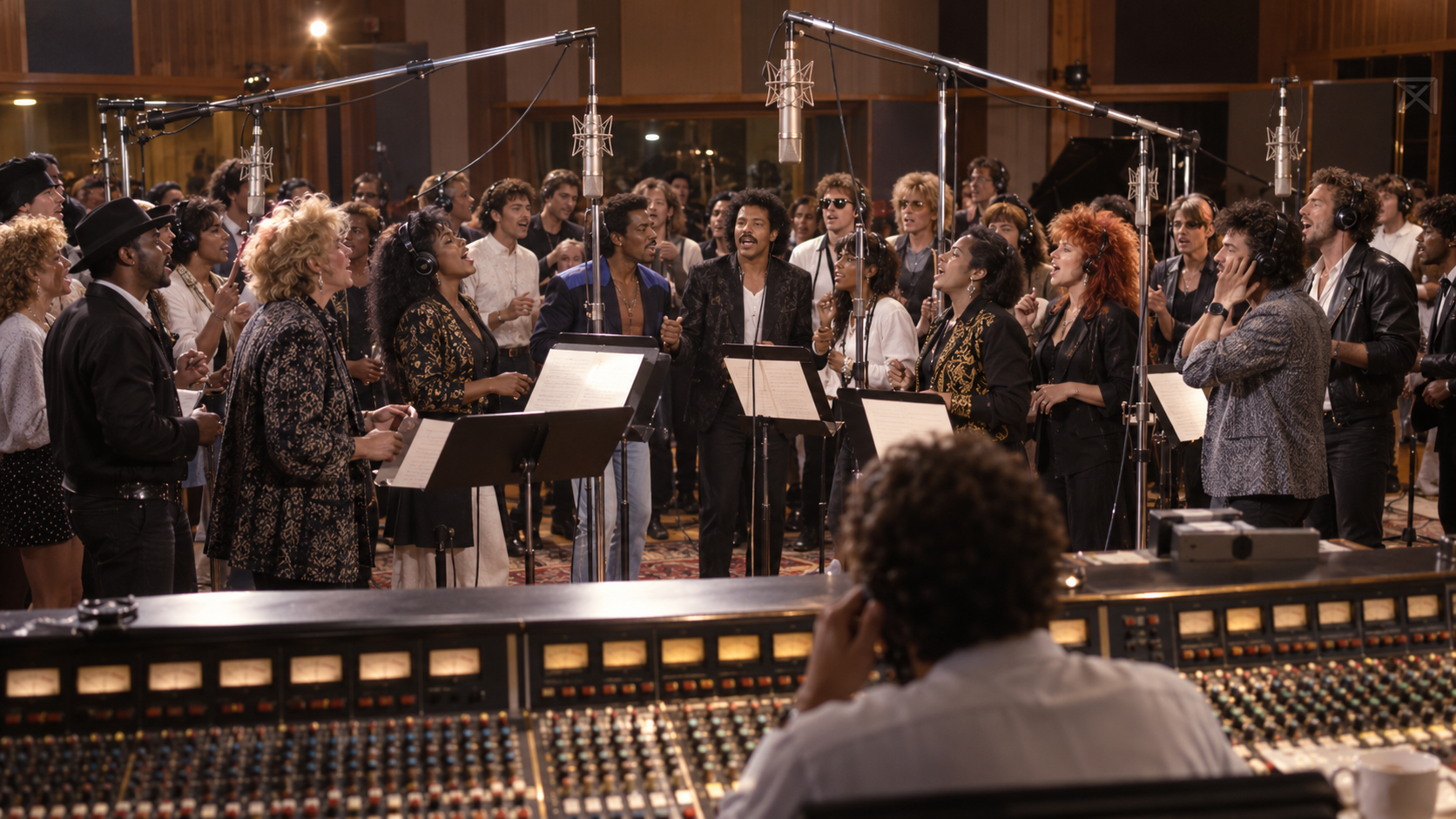
More than forty prominent musicians gathered at A&M Recording Studios in Hollywood on the night of January 28, 1985, to record “We Are the World.” The session began after the American Music Awards, when many performers were already in Los Angeles, and continued into the early morning. Harry Belafonte had encouraged manager and fundraiser Ken Kragen to organize an American response to the Ethiopian famine, following the success of Britain’s Band Aid single. Lionel Richie and Michael Jackson wrote the song, Quincy Jones produced it, and arranger-conductor Michael Omartian helped turn a huge roster of distinctive voices into one workable performance.
A sign at the entrance reportedly reminded the stars to leave their egos at the door. The room included Ray Charles, Stevie Wonder, Diana Ross, Bruce Springsteen, Tina Turner, Bob Dylan, Cyndi Lauper, Willie Nelson and many others, with solo lines assigned to exploit recognizable vocal contrasts. Jones first recorded the chorus as an ensemble, then worked through individual passages while the participants remained through a long night. The concentration of fame was itself part of the event: television footage and photographs allowed audiences to see normally separate genres, generations and public images crowded around the same microphones. USA for Africa released the single in March, and it became a worldwide commercial success.
The project raised substantial money for humanitarian relief and established a model for celebrity charity records, televised benefits and cross-industry campaigns. It also attracted criticism. A sentimental anthem could simplify the political causes of famine, present Africa as a single helpless place and center Western celebrities more visibly than the people receiving aid. Questions about how relief money moves through governments and organizations cannot be answered by record sales alone. Those cautions belong beside the achievement, because popular compassion is most useful when it leads to informed, accountable action. “We Are the World” nevertheless showed the organizing power of music at a pre-internet scale: radio, television, record stores and famous voices could coordinate global attention within weeks. January 28 marks the unusually disciplined studio night when a temporary supergroup converted celebrity access into a mass fundraising event whose ambitions and limitations still shape benefit culture. The recording further revealed the logistical side of collaboration. Artists with competing schedules and styles had to follow one arrangement, share limited solo space and accept Jones’s authority so the charity message could outweigh individual branding for a night.
Belafonte’s initiative and the earlier Band Aid project helped inspire the American recording.
Richie and Jackson wrote the song, while Jones organized an exceptionally crowded studio session.
The single raised major relief funds but could not explain or solve the political causes of famine.
Its imagery has been criticized for flattening African experiences into a Western rescue narrative.
The session became a template for celebrity charity recordings and globally televised benefits.
Its legacy joins real fundraising power with continuing questions about representation and accountability.
Explore more of "On This Day ..."
Discover more events from the same date across news, politics, technology, sports, and other fields. Each link highlights significant moments that shaped history on different fronts.