

On This Day in Pop: March 9, 1959
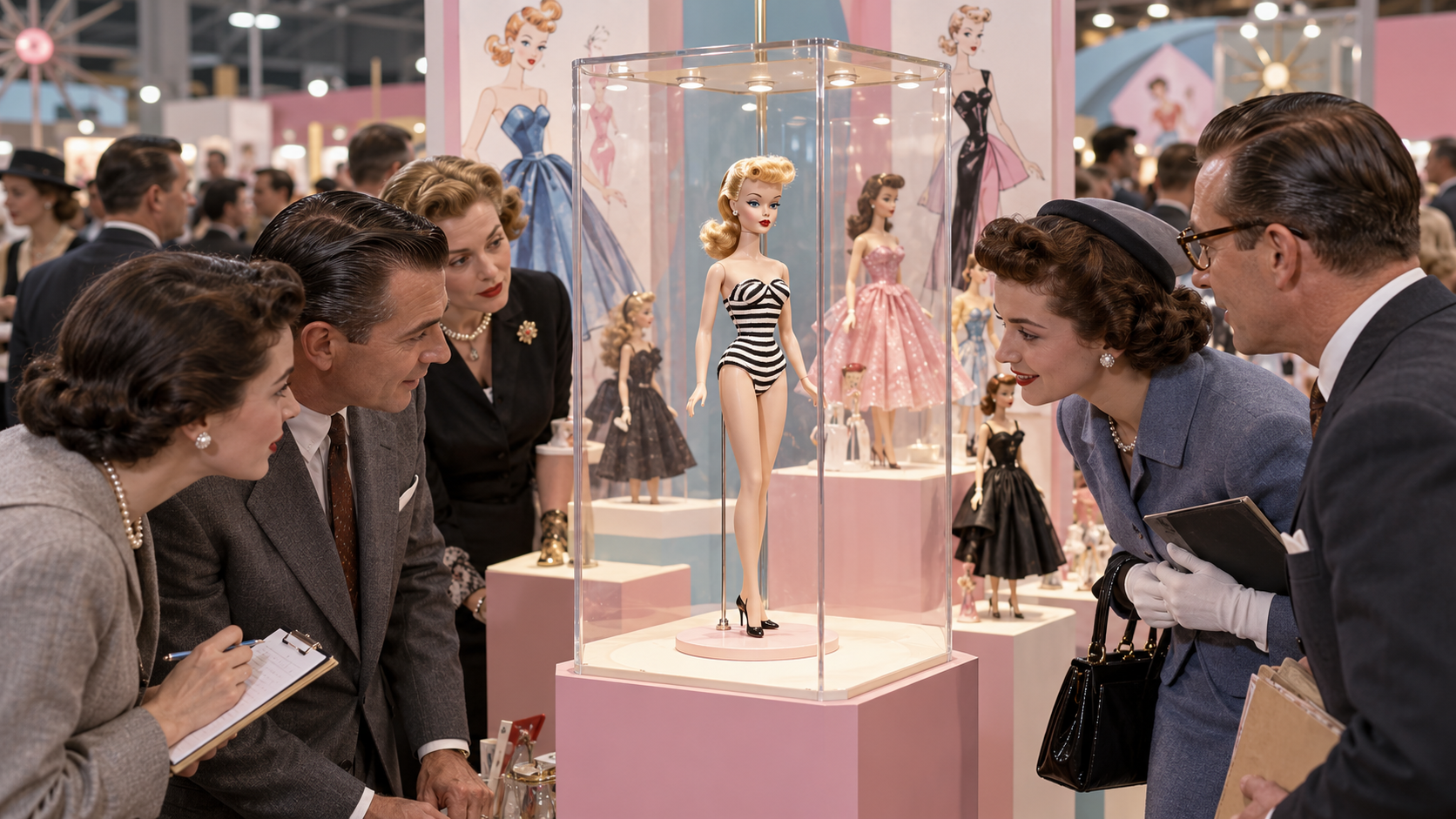
On March 9, 1959, Mattel introduced Barbie at the American International Toy Fair in New York. Created under Ruth Handler’s leadership and named for her daughter Barbara, the eleven-and-a-half-inch fashion doll appeared in a black-and-white striped swimsuit with a ponytail. Unlike the baby dolls that dominated girls’ play, Barbie represented an adult figure with a wardrobe, occupations and a consumer world built around imagined futures. Seen in its own time, the occasion was more than a tidy calendar entry. It emerged from choices by performers, writers, technicians, executives and audiences, each working within the opportunities and constraints of the period. Restoring that setting keeps the story human and specific instead of treating a complicated cultural shift as inevitable.
Toy buyers were not immediately convinced, but television advertising helped Mattel speak directly to children and turn desire into store demand. Barbie’s proportions, fashion emphasis and carefully marketed lifestyle generated enthusiasm as well as criticism. Supporters saw open-ended role play and evolving careers; critics pointed to unrealistic beauty standards, narrow early representations and the commercial pressure of an endless accessory system. The debate became inseparable from the product’s success. The reaction also shows how popular culture gathers momentum. A premiere, broadcast, release or public appearance can feel self-contained on the day, yet its meaning expands through reviews, radio, television, sales, conversation and imitation. Those channels reach people unevenly, but together they can turn one event into a reference point that later work follows, revises or rejects.
Across decades, Barbie expanded through new careers, bodies, skin tones, collaborators and stories while remaining a powerful brand. Collectors preserved early editions, artists appropriated the image and scholars used the doll to examine gender, race, labor and consumption. The Toy Fair introduction matters because it marks the arrival of a cultural object able to absorb changing ideals while provoking arguments about who gets represented in play. That longer view is why the date still matters. It opens a door onto changes involving many contributors, including people whose labor was less visible than the headline names. Recordings, films, photographs and documents allow later audiences to reconsider both the achievement and its limits. Pop history is strongest when celebration is paired with context, and this anniversary leaves room for both. Its afterlife also shows that cultural memory is active: anniversaries, restorations, reissues and fresh criticism keep changing which details receive attention and which assumptions are questioned. Looking back does not mean pretending everyone experienced the moment alike; it means noticing the distance between a public milestone, the industry around it and the private reactions beyond the spotlight. The tension between the immediate event and the story later told about it is part of what makes this episode worth revisiting instead of merely listing.
Mattel presented the first Barbie as a teenage fashion model wearing a striped swimsuit at New York’s annual toy fair.
The setting and sequence matter because they show how Barbie’s Toy Fair debut reached the public on this particular date.
Television advertising and an expanding wardrobe helped the unfamiliar adult-shaped doll become a rapid commercial success.
The immediate response traveled through the era’s available channels, from press and broadcast coverage to ticket buyers, listeners and viewers.
Barbie grew into a global icon and a continuing argument about aspiration, beauty, representation and the business of childhood.
Its reputation has kept developing through preservation, scholarship, revival and the interpretations of later audiences.
Explore more of "On This Day ..."
Discover more events from the same date across news, politics, technology, sports, and other fields. Each link highlights significant moments that shaped history on different fronts.