

On This Day in Pop: March 8, 1979
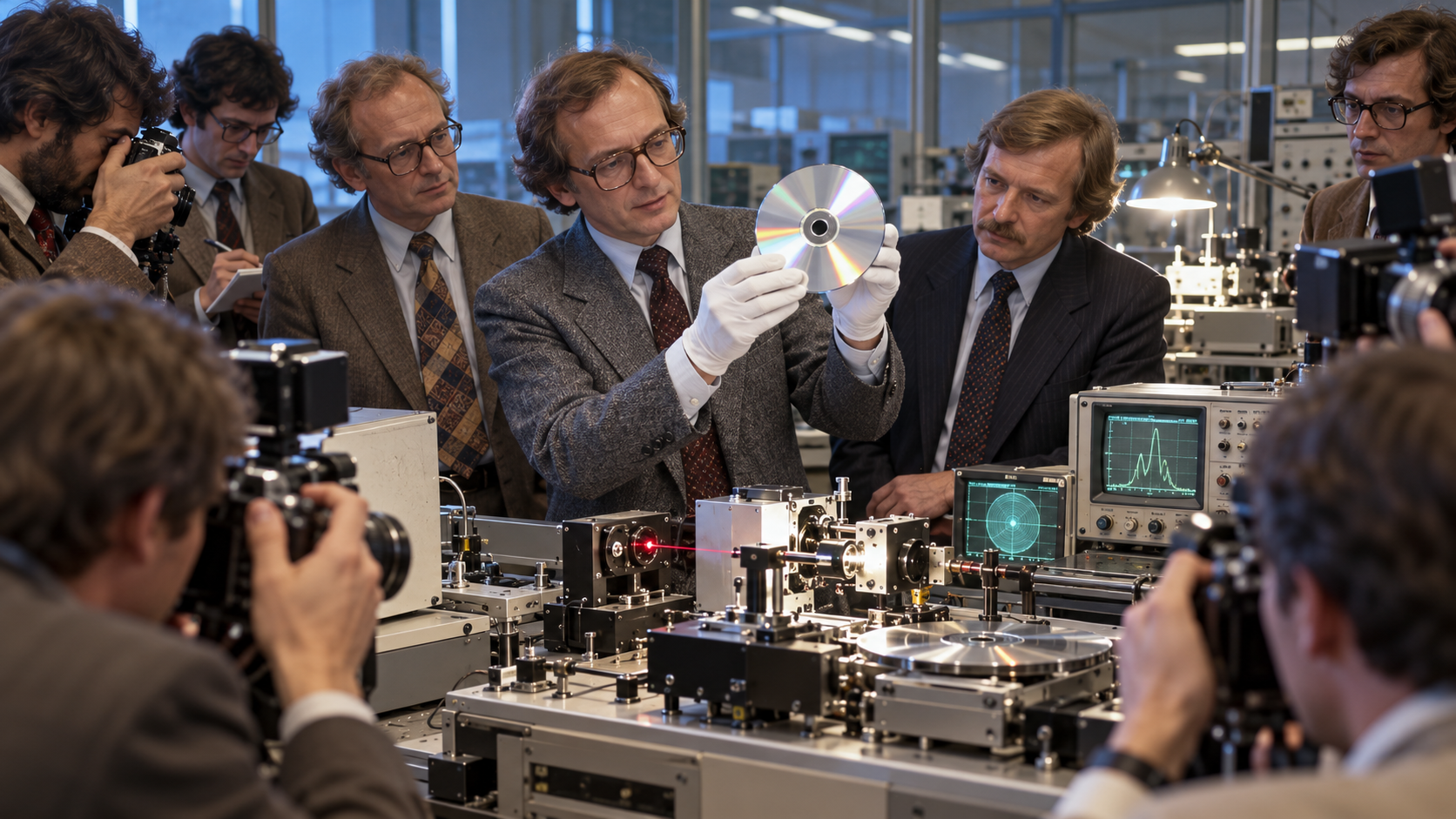
On March 8, 1979, Philips invited journalists to Eindhoven and publicly demonstrated a prototype optical audio disc. The silver object promised digital sound read by a laser without a needle touching the surface. It was not yet the standardized compact disc consumers would buy, but the presentation made a developing laboratory idea visible and tangible. Engineers were trying to fit high-quality recorded music into a durable, convenient format suitable for mass manufacture. Seen in its own time, the occasion was more than a tidy calendar entry. It emerged from choices by performers, writers, technicians, executives and audiences, each working within the opportunities and constraints of the period. Restoring that setting keeps the story human and specific instead of treating a complicated cultural shift as inevitable.
Philips soon worked with Sony to agree on shared technical standards, including disc dimensions, sampling specifications and error correction. Collaboration mattered because rival formats could have fractured the market. The first commercial players and discs arrived in 1982, initially at premium prices. As manufacturing scaled up, record companies resold familiar catalogs in a new package, while listeners embraced track access, portability and the promise—sometimes overstated—of perfect sound forever. The reaction also shows how popular culture gathers momentum. A premiere, broadcast, release or public appearance can feel self-contained on the day, yet its meaning expands through reviews, radio, television, sales, conversation and imitation. Those channels reach people unevenly, but together they can turn one event into a reference point that later work follows, revises or rejects.
The compact disc transformed how music was recorded, mastered, distributed and collected, then eventually ceded convenience to compressed files and streaming. Its rise also generated plastic waste and encouraged repeated catalog purchases, reminders that technological progress carries material and commercial costs. The Eindhoven demonstration stands at the beginning of a format cycle that changed listening rooms, automobiles, record stores and the economics of recorded music. That longer view is why the date still matters. It opens a door onto changes involving many contributors, including people whose labor was less visible than the headline names. Recordings, films, photographs and documents allow later audiences to reconsider both the achievement and its limits. Pop history is strongest when celebration is paired with context, and this anniversary leaves room for both. Its afterlife also shows that cultural memory is active: anniversaries, restorations, reissues and fresh criticism keep changing which details receive attention and which assumptions are questioned. Looking back does not mean pretending everyone experienced the moment alike; it means noticing the distance between a public milestone, the industry around it and the private reactions beyond the spotlight.
Philips showed journalists an optical digital-audio disc and player at its Eindhoven research center in the Netherlands.
The setting and sequence matter because they show how the compact disc’s public demonstration reached the public on this particular date.
The prototype made contactless laser playback public and accelerated talks with Sony that produced a common consumer standard.
The immediate response traveled through the era’s available channels, from press and broadcast coverage to ticket buyers, listeners and viewers.
Compact discs reshaped the record business and listening habits before digital files and streaming displaced the format’s dominance.
Its reputation has kept developing through preservation, scholarship, revival and the interpretations of later audiences.
Explore more of "On This Day ..."
Discover more events from the same date across news, politics, technology, sports, and other fields. Each link highlights significant moments that shaped history on different fronts.