

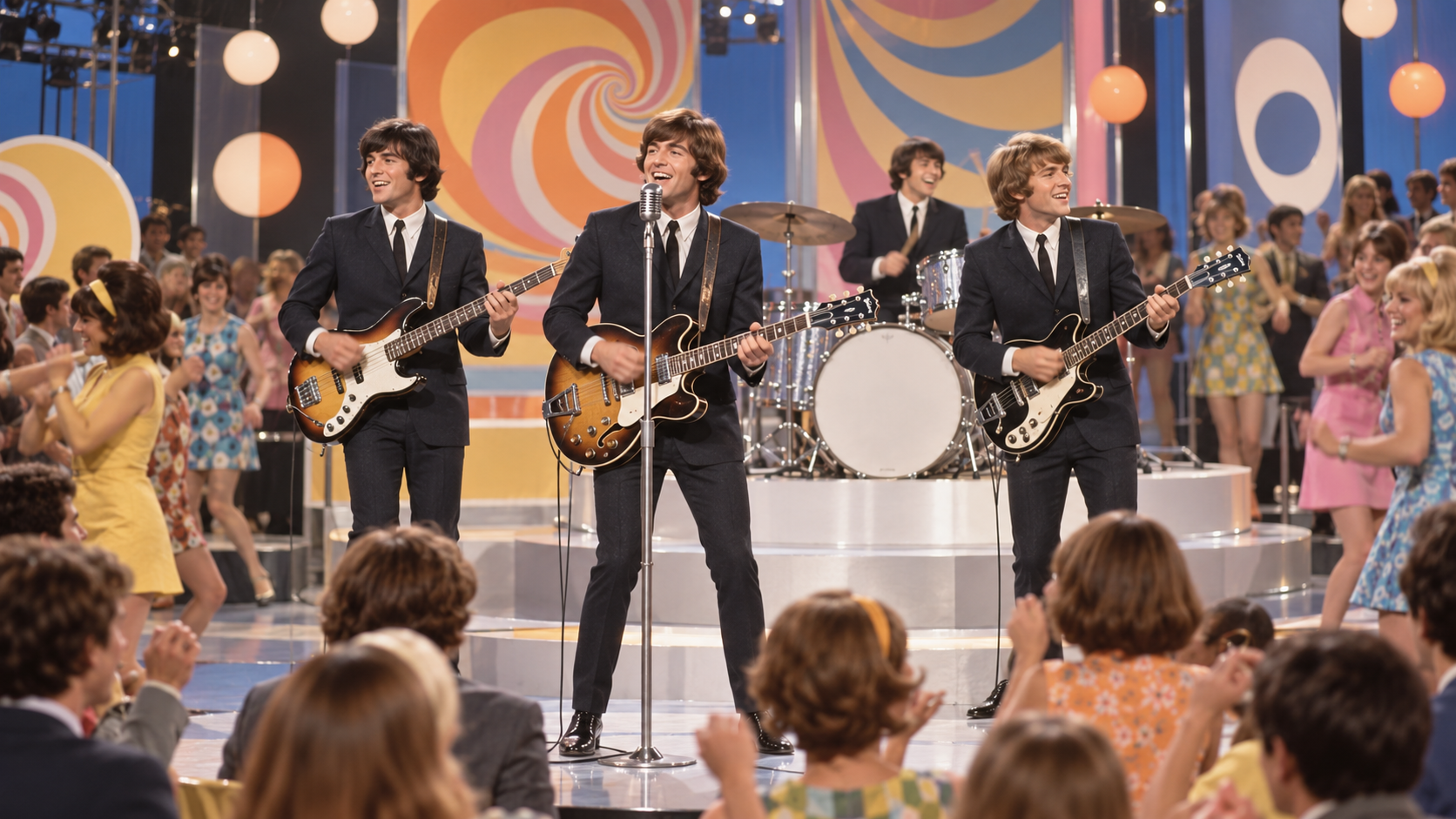
On This Day in Pop: March 25, 1967
On March 25, 1967, the Turtles’ “Happy Together” reached No. 1 on the Billboard Hot 100, replacing the Beatles’ “Penny Lane.” Written by Garry Bonner and Alan Gordon, the song had reportedly been rejected by other performers before the Turtles heard its possibilities. A hushed verse, bright harmonies and a chorus that seems to burst open turned romantic imagination into one of sunshine pop’s most durable recordings. Seen in its own time, the occasion was more than a tidy calendar entry. It emerged from choices by performers, writers, technicians, executives and audiences, each working within the opportunities and constraints of the period. Restoring that setting keeps the story human and specific instead of treating a complicated cultural shift as inevitable.
Lead singer Howard Kaylan begins with almost conversational restraint, allowing the arrangement to build through bass movement, horns and stacked voices. The lyric is less a report of secure love than a daydream—“imagine me and you”—which gives the happiness a slight ache. That ambiguity helped the record work beyond novelty, while the group’s playful public image made it a natural fit for radio and television during pop’s rapidly changing 1967 landscape. The reaction also shows how popular culture gathers momentum. A premiere, broadcast, release or public appearance can feel self-contained on the day, yet its meaning expands through reviews, radio, television, sales, conversation and imitation. Those channels reach people unevenly, but together they can turn one event into a reference point that later work follows, revises or rejects.
“Happy Together” spent three weeks at No. 1 and became the Turtles’ signature song. Covers, commercials, film soundtracks and reunion performances carried the melody across generations, sometimes obscuring the careful dynamics behind its apparent ease. The chart date represents a perfect match of song, arrangement and voice, and it reminds listeners that the era’s psychedelic experimentation still left room for immaculate three-minute pop. That longer view is why the date still matters. It opens a door onto changes involving many contributors, including people whose labor was less visible than the headline names. Recordings, films, photographs and documents allow later audiences to reconsider both the achievement and its limits. Pop history is strongest when celebration is paired with context, and this anniversary leaves room for both. Its afterlife also shows that cultural memory is active: anniversaries, restorations, reissues and fresh criticism keep changing which details receive attention and which assumptions are questioned. Looking back does not mean pretending everyone experienced the moment alike; it means noticing the distance between a public milestone, the industry around it and the private reactions beyond the spotlight.
The Turtles transformed a frequently rejected composition into a carefully building single with rich harmonies and a huge chorus.
The setting and sequence matter because they show how Happy Together reaching number one reached the public on this particular date.
The song displaced the Beatles at No. 1 and gave the Los Angeles group its defining commercial success.
The immediate response traveled through the era’s available channels, from press and broadcast coverage to ticket buyers, listeners and viewers.
Its mix of joy and longing made it a standard repeatedly revived in recordings, films, advertising and live performance.
Its reputation has kept developing through preservation, scholarship, revival and the interpretations of later audiences.
Explore more of "On This Day ..."
Discover more events from the same date across news, politics, technology, sports, and other fields. Each link highlights significant moments that shaped history on different fronts.