

On This Day in Pop: March 29, 1959
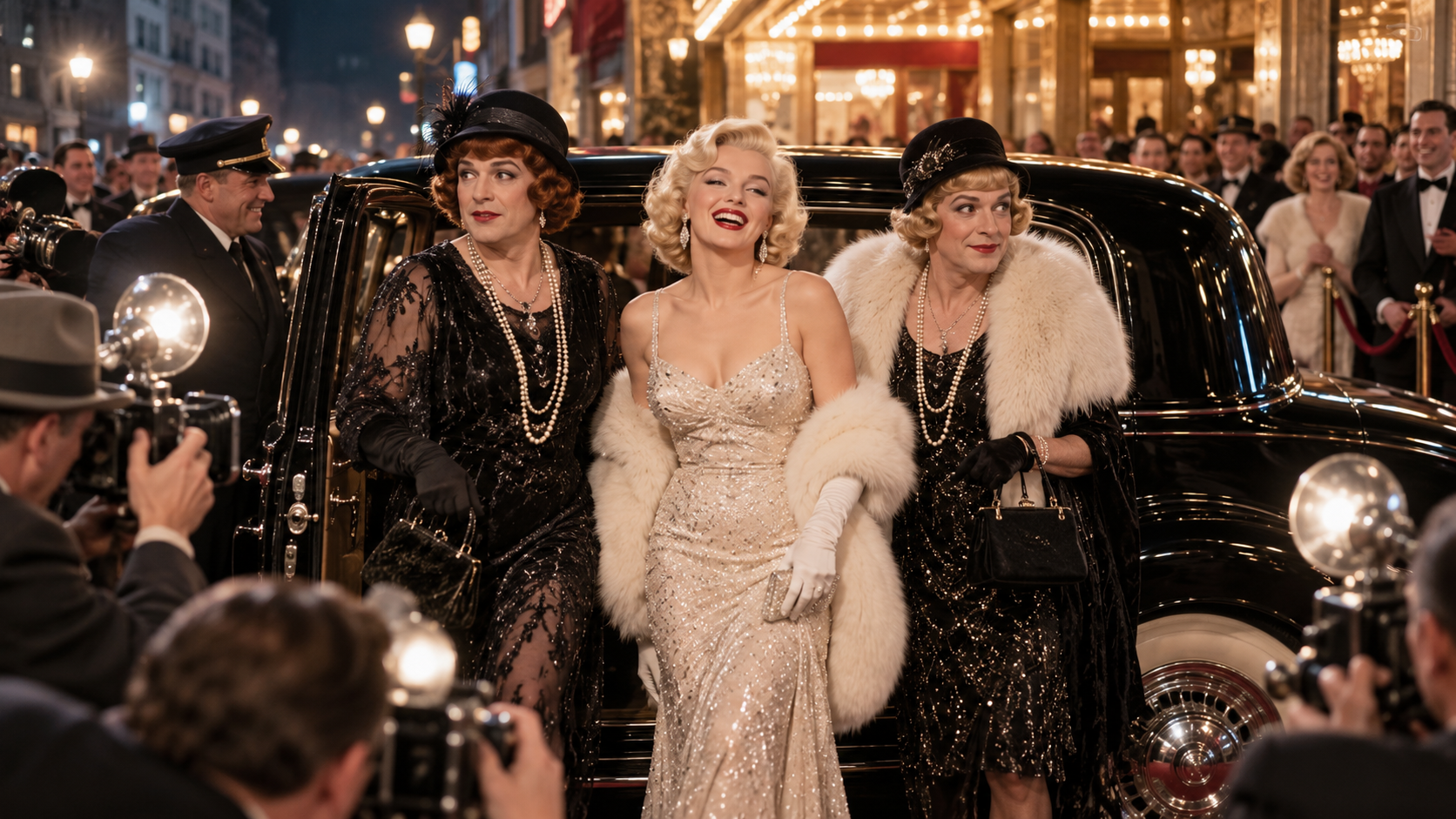
On March 29, 1959, Billy Wilder’s Some Like It Hot opened in New York. Tony Curtis and Jack Lemmon play musicians who witness a mob killing, disguise themselves as women and join an all-female band featuring Marilyn Monroe’s Sugar Kane. Set during Prohibition, the film combines gangster danger, romantic deception and escalating farce, moving from wintry Chicago to a sunlit Florida hotel. Seen in its own time, the occasion was more than a tidy calendar entry. It emerged from choices by performers, writers, technicians, executives and audiences, each working within the opportunities and constraints of the period. Restoring that setting keeps the story human and specific instead of treating a complicated cultural shift as inevitable.
The disguises allow the screenplay by Wilder and I.A.L. Diamond to test gender performance and heterosexual certainty while never slowing the jokes. Monroe gives Sugar vulnerability and comic timing beyond the role’s stereotype; Lemmon’s Daphne discovers unexpected freedom and receives the film’s perfect final response; Curtis shifts among identities with gleeful artifice. The picture was released without approval from the restrictive Production Code, helping weaken that system’s authority. The reaction also shows how popular culture gathers momentum. A premiere, broadcast, release or public appearance can feel self-contained on the day, yet its meaning expands through reviews, radio, television, sales, conversation and imitation. Those channels reach people unevenly, but together they can turn one event into a reference point that later work follows, revises or rejects.
Some Like It Hot grew from a successful comedy into a frequent choice on lists of the greatest films ever made. Its treatment of gender remains debated, but the ending’s acceptance continues to feel startlingly generous for 1959. The New York opening marks the public arrival of a movie whose precision can make social disruption seem effortless, even though every disguise, cut and line depends on exact construction. That longer view is why the date still matters. It opens a door onto changes involving many contributors, including people whose labor was less visible than the headline names. Recordings, films, photographs and documents allow later audiences to reconsider both the achievement and its limits. Pop history is strongest when celebration is paired with context, and this anniversary leaves room for both. Its afterlife also shows that cultural memory is active: anniversaries, restorations, reissues and fresh criticism keep changing which details receive attention and which assumptions are questioned. Looking back does not mean pretending everyone experienced the moment alike; it means noticing the distance between a public milestone, the industry around it and the private reactions beyond the spotlight. The tension between the immediate event and the story later told about it is part of what makes this episode worth revisiting instead of merely listing.
Wilder’s Prohibition-era comedy mixed mob danger, musical performance and gender disguise around three finely matched stars.
The setting and sequence matter because they show how Some Like It Hot’s New York opening reached the public on this particular date.
Audiences embraced the speed and daring of a film released without Production Code approval, adding pressure to a weakening censorship system.
The immediate response traveled through the era’s available channels, from press and broadcast coverage to ticket buyers, listeners and viewers.
The comedy became a critical landmark whose final line and flexible treatment of identity continue to invite new readings.
Its reputation has kept developing through preservation, scholarship, revival and the interpretations of later audiences.
Explore more of "On This Day ..."
Discover more events from the same date across news, politics, technology, sports, and other fields. Each link highlights significant moments that shaped history on different fronts.