

On This Day in Pop: March 27, 1973
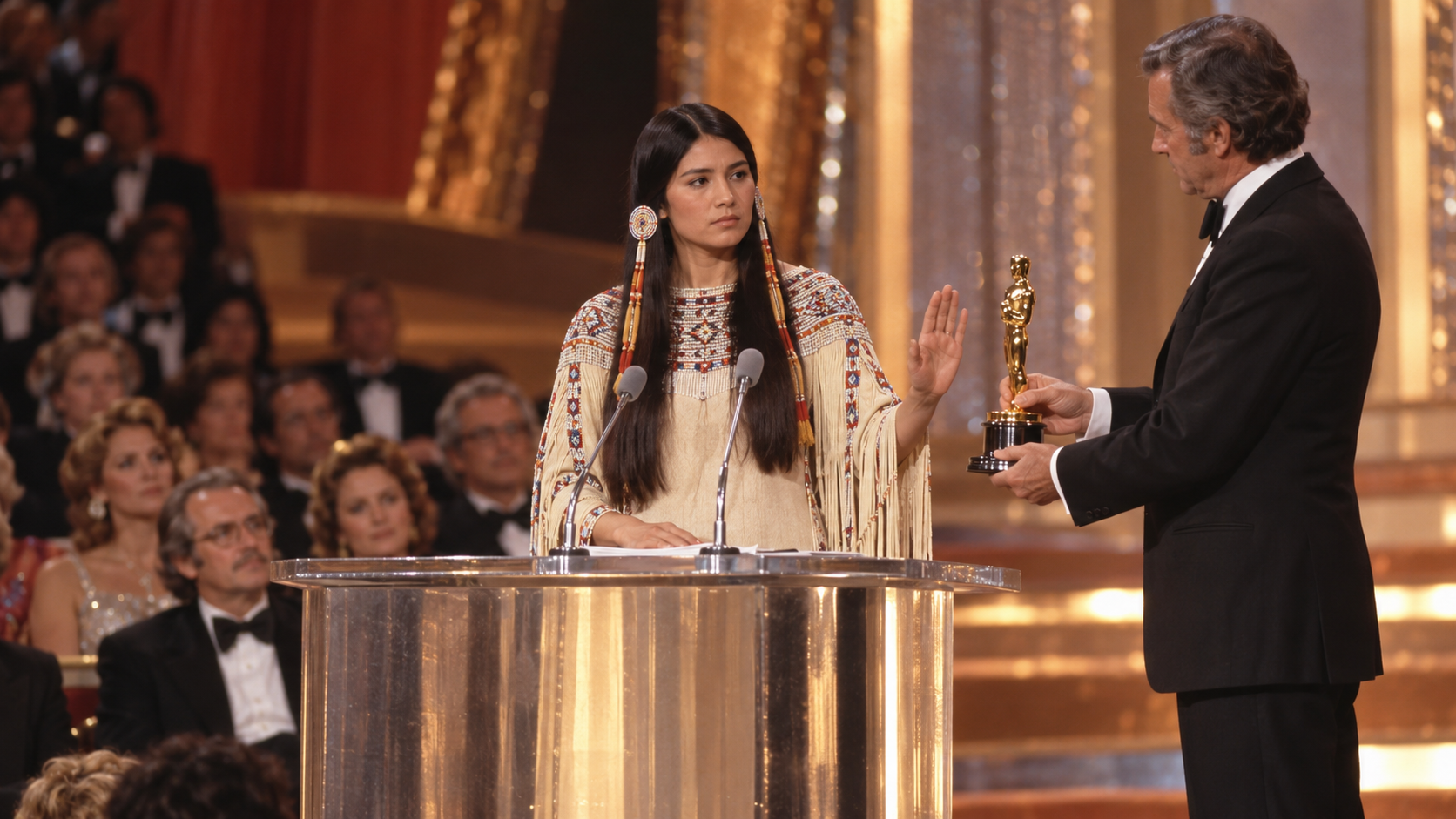
On March 27, 1973, Sacheen Littlefeather walked onto the Academy Awards stage after Marlon Brando was named Best Actor for The Godfather. Wearing Apache-style dress, she raised one hand rather than accept the statuette from Roger Moore and explained that Brando was declining because of the film industry’s treatment of Native Americans and events at Wounded Knee. Television carried the brief appearance to viewers around the world. Seen in its own time, the occasion was more than a tidy calendar entry. It emerged from choices by performers, writers, technicians, executives and audiences, each working within the opportunities and constraints of the period. Restoring that setting keeps the story human and specific instead of treating a complicated cultural shift as inevitable.
The room responded with a mixture of applause and boos, while broadcast time limits prevented Littlefeather from reading Brando’s longer statement. Backstage and afterward she faced ridicule, threats and professional consequences. The moment exposed how Native people were caricatured or erased on screen while rarely controlling production. It also transformed an awards ritual built on gratitude into a live challenge to the institution presenting the prize. The reaction also shows how popular culture gathers momentum. A premiere, broadcast, release or public appearance can feel self-contained on the day, yet its meaning expands through reviews, radio, television, sales, conversation and imitation. Those channels reach people unevenly, but together they can turn one event into a reference point that later work follows, revises or rejects.
The Academy formally apologized to Littlefeather in 2022 and hosted a program of conversation and healing shortly before her death. Later debate about her ancestry complicated public discussion, but it does not erase the documented industry conditions or the significance of a Native-identified woman using prime-time television to confront them. The appearance remains a landmark in awards-show protest and in the long struggle over representation and voice. That longer view is why the date still matters. It opens a door onto changes involving many contributors, including people whose labor was less visible than the headline names. Recordings, films, photographs and documents allow later audiences to reconsider both the achievement and its limits. Pop history is strongest when celebration is paired with context, and this anniversary leaves room for both. Its afterlife also shows that cultural memory is active: anniversaries, restorations, reissues and fresh criticism keep changing which details receive attention and which assumptions are questioned. Looking back does not mean pretending everyone experienced the moment alike; it means noticing the distance between a public milestone, the industry around it and the private reactions beyond the spotlight. The tension between the immediate event and the story later told about it is part of what makes this episode worth revisiting instead of merely listing.
Littlefeather appeared for Brando, refused the trophy and cited Hollywood’s treatment of Native Americans and the Wounded Knee occupation.
The setting and sequence matter because they show how Sacheen Littlefeather’s Oscar appearance reached the public on this particular date.
Applause, boos and intense backlash revealed the hostility faced by a woman interrupting an entertainment ritual with political criticism.
The immediate response traveled through the era’s available channels, from press and broadcast coverage to ticket buyers, listeners and viewers.
The moment became an emblem of awards-show activism and prompted a formal Academy apology nearly fifty years later.
Its reputation has kept developing through preservation, scholarship, revival and the interpretations of later audiences.
Explore more of "On This Day ..."
Discover more events from the same date across news, politics, technology, sports, and other fields. Each link highlights significant moments that shaped history on different fronts.