

On This Day in Pop: May 1, 1941
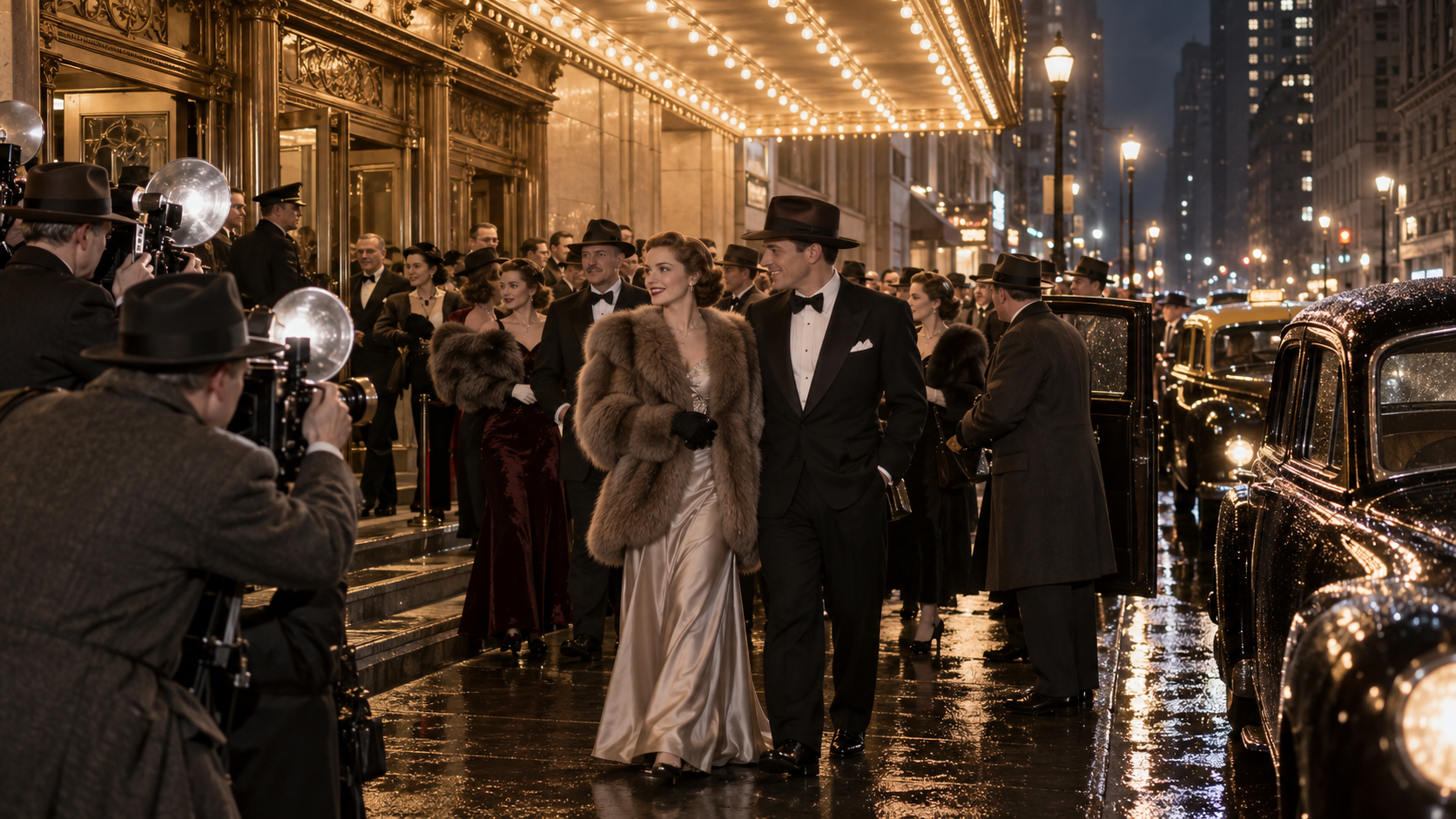
On May 1, 1941, Citizen Kane held its world premiere at the Palace Theatre in New York. Orson Welles, only twenty-five when he directed, produced, co-wrote and starred in the film, had arrived in Hollywood with unusual creative control after his celebrated theater and radio work. The picture follows reporters trying to explain the last word of newspaper magnate Charles Foster Kane, using overlapping memories rather than a single, reliable account. RKO scheduled the premiere after trade previews in April, even as publisher William Randolph Hearst and his allies tried to suppress the film because of perceived similarities between Kane and Hearst. The opening therefore introduced more than an ambitious drama. It placed a first-time feature director, a studio, and a powerful media figure inside a public argument over art, reputation and influence.
The production joined Welles’s Mercury Theatre ensemble with cinematographer Gregg Toland, composer Bernard Herrmann, editor Robert Wise and production designer Van Nest Polglase. Deep-focus images, low camera angles, ceilings built into sets, expressive sound bridges and a structure that leaps across decades made familiar techniques feel newly concentrated. Herman J. Mankiewicz and Welles received the screenplay credit, a history that later generated its own long-running debate. Initial reviews were often enthusiastic, but Hearst newspapers refused advertising or coverage, and some theaters hesitated to book the film. Its business performance did not match its later reputation. The May 1 premiere matters precisely because the film did not arrive already crowned as a universal masterpiece; it entered a contested marketplace where innovation, publicity and access to screens all shaped what audiences could see.
Citizen Kane won the Academy Award for its original screenplay and accumulated influence gradually through criticism, repertory screenings, television and film education. Directors and cinematographers studied its visual organization, while its fragmented portrait of power became a model for biographies that distrust simple explanations. The film’s standing has never made it immune from reassessment: scholars continue to examine authorship, the use of real lives as material, and the gap between technical admiration and contemporary reception. Its May 1 anniversary marks the moment this now-familiar object first met a general audience in New York. Looking back at the premiere restores the uncertainty around the film and shows how cultural landmarks are not created by one screening alone. They become landmarks through repeated viewing, argument, preservation and the work of later artists who discover possibilities inside them. The Palace Theatre setting also placed the film inside New York’s crowded entertainment district, where the struggle for bookings was visible rather than abstract. A premiere could begin a conversation, but distribution determined how far that conversation traveled.
RKO scheduled the world premiere at the Palace Theatre in New York after April trade previews.
Hearst-linked opposition affected advertising and theater bookings before the public opening.
The film used overlapping testimonies rather than one authoritative life story.
Its initial commercial performance was more modest than its later reputation suggests.
Welles and Herman J. Mankiewicz shared the Academy Award for original screenplay.
Its influence grew through revival screenings, criticism, television and film schools.
Explore more of "On This Day ..."
Discover more events from the same date across news, politics, technology, sports, and other fields. Each link highlights significant moments that shaped history on different fronts.