

On This Day in Pop: June 12, 1981
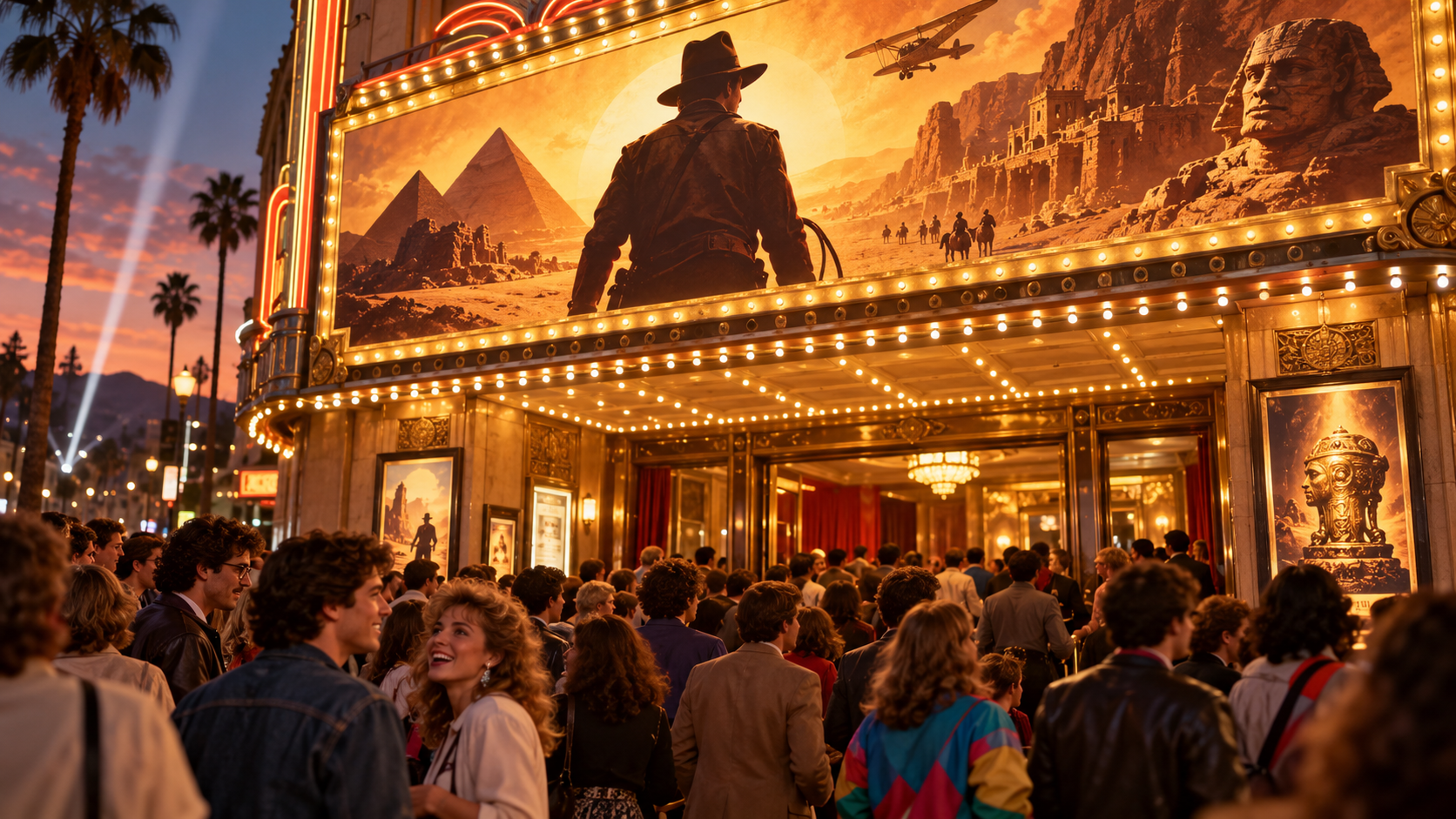
On June 12, 1981, Raiders of the Lost Ark opened in American theaters and introduced audiences to archaeologist-adventurer Indiana Jones. George Lucas conceived the story with Philip Kaufman, Lawrence Kasdan wrote the screenplay and Steven Spielberg directed Harrison Ford in a performance built from confidence, exhaustion, wit and improvisation. Set in 1936, the film sent Jones from a booby-trapped South American temple to Nepal, Cairo and a supernatural confrontation with Nazis seeking the Ark of the Covenant. Karen Allen’s Marion Ravenwood met the hero as an equal in stubbornness and history. The opening sequence established the method: classical composition, clear physical stakes and a chain of reversals delivered with the breathless rhythm of the Saturday-matinee serials that inspired Lucas and Spielberg.
Raiders mattered because it modernized an old form without treating it as camp. Spielberg’s camera made action easy to follow, while editor Michael Kahn and composer John Williams gave movement a precise dramatic pulse. The film’s practical stunts, location work, miniatures and effects created danger that felt tactile even when the story turned fantastic. Jones was capable but frequently bruised, afraid and forced to improvise; his vulnerability made the spectacle more immediate. The movie also drew on—and sometimes reproduced—the exotic stereotypes of the adventure tradition, a limitation that later viewers and filmmakers have had to examine. Even with that baggage, its construction became a benchmark for screen action, teaching generations how to stage chases, escapes and visual jokes within the same sequence.
The film was a major commercial success, received multiple Academy Awards and launched a franchise spanning sequels, television, games, attractions and an instantly recognizable musical theme. Indiana Jones became one of American cinema’s defining heroes, while the rolling boulder, map-room light and truck chase entered the common vocabulary of parody and homage. The movie’s influence extends beyond imitation: it renewed interest in 1930s serial grammar and demonstrated that nostalgia could be transformed through contemporary craft rather than simply copied. Later entries expanded and complicated the character, but Raiders remains unusually balanced between speed, mystery, romance and humor. Its June opening marked the moment an invented memory of old adventure cinema became a new blockbuster template, one still visible whenever an action hero survives by nerve, luck and a narrow escape.
Remembering raiders of the lost ark opens in theaters on June 12 is valuable because anniversaries turn a familiar cultural object back into a specific decision, release or broadcast. The surrounding technology, business and audience conditions explain why the moment could happen then, while its later uses show that meaning never stops changing. Seen at that scale, the date is not trivia. It is a checkpoint between creation and memory: a place to separate what occurred from the legend accumulated around it and to ask why the work still attracts attention.
Raiders of the Lost Ark opened on June 12, 1981 and introduced Harrison Ford as Indiana Jones.
The moment reached audiences through the media and distribution systems of 1981, influencing how the initial response developed.
George Lucas and Philip Kaufman developed the story, Lawrence Kasdan wrote the screenplay and Steven Spielberg directed.
Its early impact was substantial but not universal, and later retellings sometimes compressed a more complicated contemporary response.
Its serial-inspired action, practical stunts and John Williams score launched a long-running franchise.
Anniversary coverage continues to place Raiders Finds the Ark within the broader history of popular culture while distinguishing documented evidence from later legend.
Explore more of "On This Day ..."
Discover more events from the same date across news, politics, technology, sports, and other fields. Each link highlights significant moments that shaped history on different fronts.