

On This Day in Pop: June 19, 1978
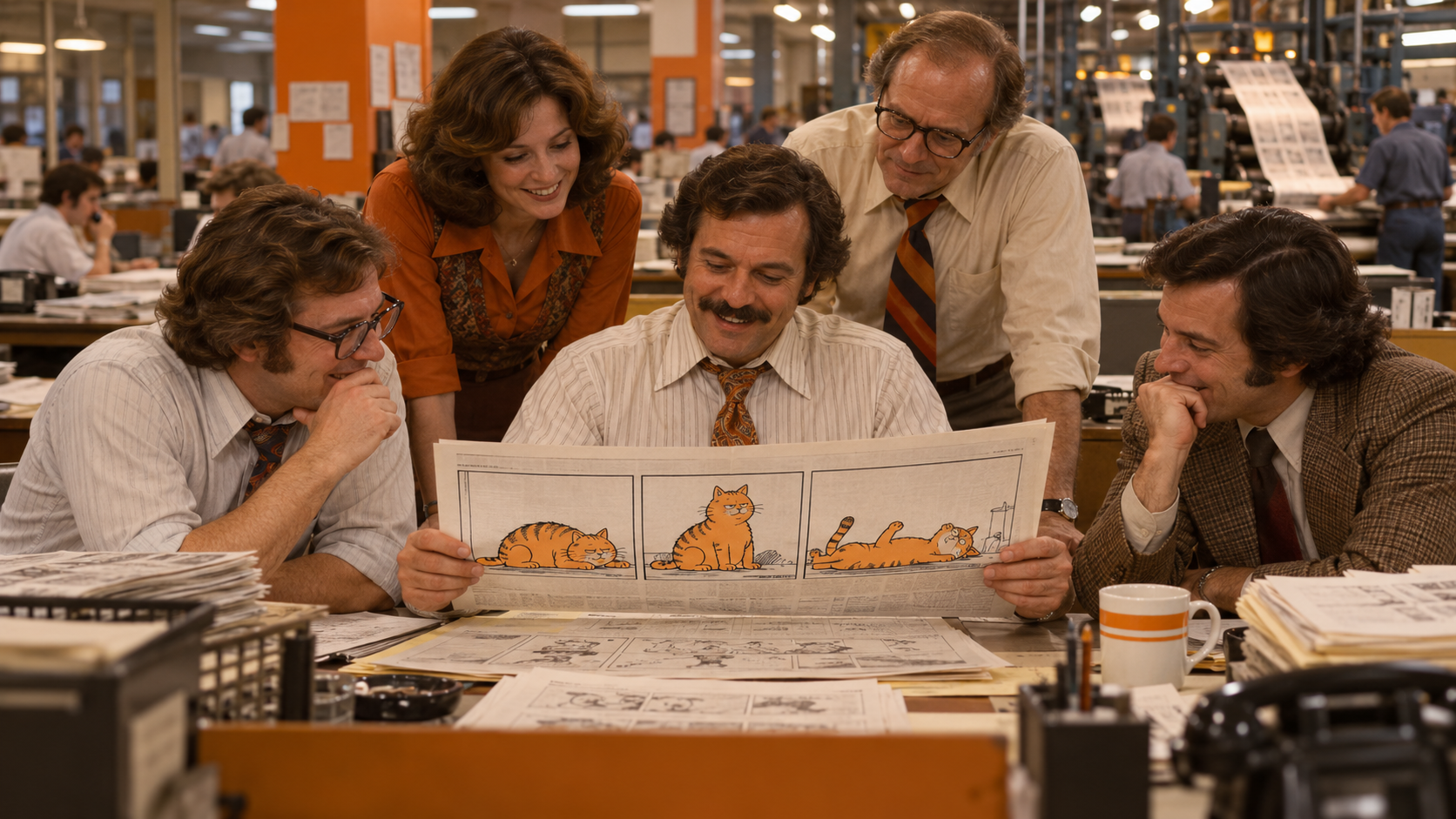
On June 19, 1978, Garfield began national syndication in 41 newspapers. Cartoonist Jim Davis centered the strip on a round orange cat whose appetite, laziness and confidence routinely overwhelmed his owner, Jon Arbuckle. Early installments looked rougher and more catlike than the design readers would later know, but the comic engine was already clear: Garfield observed human weakness from the privileged position of an animal who expected service and accepted little responsibility. His thoughts appeared to readers while Jon responded to behavior rather than spoken dialogue, creating a one-sided relationship that could generate jokes in three panels. Odie and a larger supporting cast followed, but the basic domestic triangle of pet, owner and food required almost no explanation.
The debut mattered because Davis had designed the strip with syndication and broad recognition in mind. Newspaper comics depended on limited space, daily deadlines and audiences who might enter without context. Garfield’s complaints about Mondays, diets, sleep and unwanted effort were instantly reusable experiences, while the strong silhouette and orange color worked across print, merchandise and later screens. Critics sometimes treated that calculated accessibility as a limitation, yet it was also a formidable formal skill. A successful daily strip must establish voice, setup and reversal in seconds. Garfield’s detached commentary made the family pet a proxy for impulses people suppress in public: selfishness, boredom and the refusal to perform cheerfulness.
The strip expanded into thousands of newspapers and was recognized by Guinness World Records as the world’s most widely syndicated comic strip. Television specials, animated series, feature films, books, plush toys and licensing turned the cat into a global commercial presence. At the same time, internet culture gave Garfield an unexpected second life through altered strips, surreal reinterpretations and fan projects that exposed how familiar the visual grammar had become. The character’s birthday is celebrated on the date of the syndicated debut, keeping June 19 connected to the strip’s public beginning. Decades of repetition did not exhaust the premise because ordinary irritation never vanished. Garfield started as a newspaper character, but his enduring role is broader: he is the unimpressed inner voice sitting beside the routines of work, health and affection, asking when lunch will arrive.
Remembering garfield begins national newspaper syndication on June 19 is valuable because anniversaries turn a familiar cultural object back into a specific decision, release or broadcast. The surrounding technology, business and audience conditions explain why the moment could happen then, while its later uses show that meaning never stops changing. Seen at that scale, the date is not trivia. It is a checkpoint between creation and memory: a place to separate what occurred from the legend accumulated around it and to ask why the work still attracts attention.
Garfield began national newspaper syndication on June 19, 1978 in 41 newspapers.
The moment reached audiences through the media and distribution systems of 1978, influencing how the initial response developed.
Jim Davis built the strip around Garfield's silent thoughts, Jon Arbuckle's reactions and familiar domestic frustrations.
Its early impact was substantial but not universal, and later retellings sometimes compressed a more complicated contemporary response.
The feature expanded into thousands of newspapers and a global television, publishing and licensing franchise.
Anniversary coverage continues to place Garfield Gets His Start within the broader history of popular culture while distinguishing documented evidence from later legend.
Explore more of "On This Day ..."
Discover more events from the same date across news, politics, technology, sports, and other fields. Each link highlights significant moments that shaped history on different fronts.