

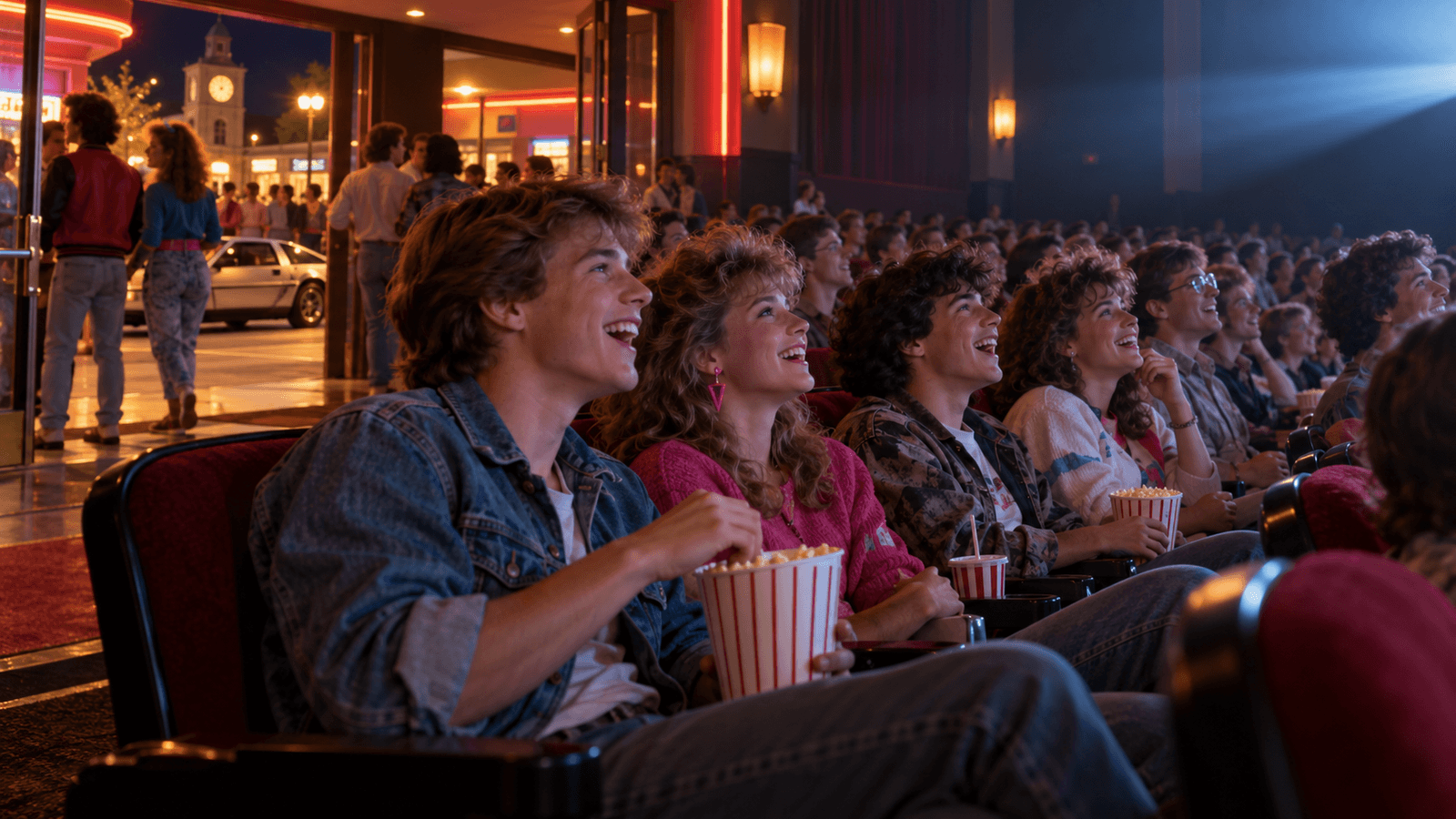
On This Day in Pop: July 3, 1985
On July 3, 1985, Back to the Future opened in American theaters. Robert Zemeckis directed the story he wrote with Bob Gale about Marty McFly, a California teenager accidentally sent from 1985 to 1955 in a time machine built from a sports car by inventor Doc Brown. Michael J. Fox and Christopher Lloyd gave the premise a quick comic rhythm, while Lea Thompson and Crispin Glover played Marty’s parents at two different ages. The plot transformed family history into a suspense mechanism: Marty must arrange his parents’ meeting or erase his own existence, then harness a precisely timed lightning strike to return home. Alan Silvestri’s score, period songs and intricate production design kept the science-fiction device anchored in recognizable American popular culture.
The opening mattered because the film made a complicated causal loop feel emotionally simple. Visual setups in 1985 acquire new meaning when Marty encounters their origins in 1955, and jokes often double as information needed later. The town square, clock tower, school dance and suburban streets form a compact stage on which two versions of the same community can be compared. Beneath the comedy, the story lets a child discover that parents once possessed fear, desire and unfinished possibilities of their own. That insight gives weight to a movie otherwise powered by skateboard chases, musical performance and mechanical countdowns. The result appealed across ages without treating younger viewers as incapable of following precise structure.
Back to the Future became the highest-grossing domestic film of 1985 and led to two sequels filmed in close succession, an animated series, stage musical, games and theme-park attractions. Its images of the clock tower, flaming tire tracks and an eccentric inventor entered the shared vocabulary of screen time travel. The film also helped define the polished adventure-comedy associated with 1980s studio filmmaking, where visual effects served character and timing instead of overwhelming them. Later viewers continue to notice what its imagined past and present include or omit, but its construction remains a model of payoff-driven storytelling. July 3 marks the launch of a franchise, yet the original endures because its largest idea is intimate: changing history begins with seeing one’s own family differently.
Remembering back to the future opens in u.s. theaters on July 3 is valuable because anniversaries turn a familiar cultural object back into a specific decision, release or broadcast. The surrounding technology, business and audience conditions explain why the moment could happen then, while its later uses show that meaning never stops changing. Seen at that scale, the date is not trivia. It is a checkpoint between creation and memory: a place to separate what occurred from the legend accumulated around it and to ask why the work still attracts attention. That perspective also restores the labor of collaborators, distributors and audiences whose choices helped a single event travel beyond its first setting. Cultural history becomes clearer when the remembered icon is reconnected to the systems and people that made it visible.
Back to the Future opened in the United States on July 3, 1985.
The remembered moment placed Back to the Future Opens inside the technology, audience habits and creative choices of 1985. Those conditions explain why it could happen then and why contemporary reactions differed from later memory.
Robert Zemeckis and Bob Gale built its time-travel story around Marty McFly's encounter with his parents in 1955.
Its immediate importance came from the way audiences, distributors and other creators responded. The event gained force beyond its first release or appearance as people repeated, debated and reinterpreted it.
The movie became 1985's top domestic grosser and launched a long-running franchise.
Over time, the event became a reference point for later work in popular culture. Its legacy includes both the achievement itself and the changing arguments about what should be celebrated, questioned or rediscovered.
Explore more of "On This Day ..."
Discover more events from the same date across news, politics, technology, sports, and other fields. Each link highlights significant moments that shaped history on different fronts.