

On This Day in Pop: July 2, 2005
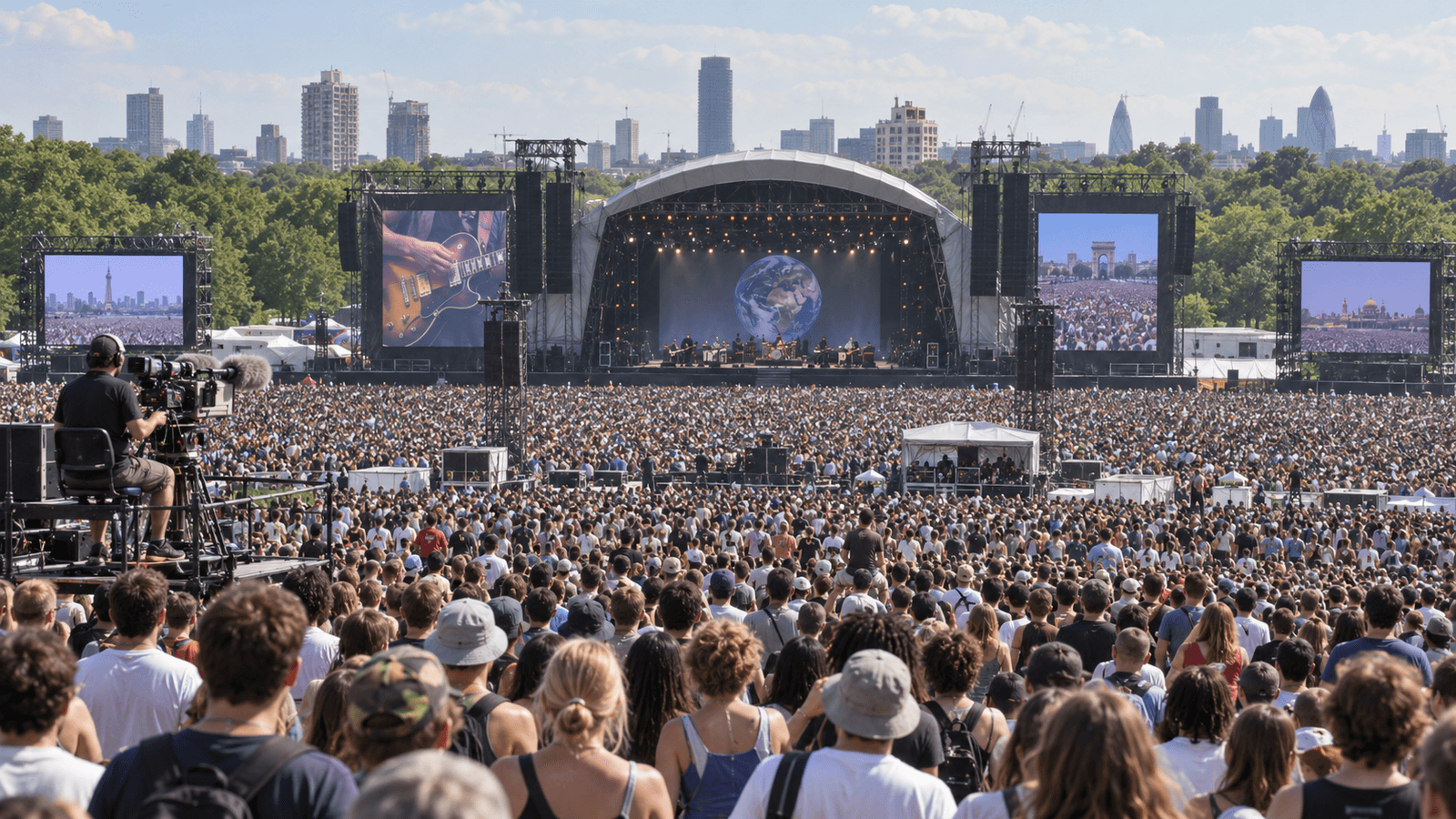
On July 2, 2005, musicians and enormous crowds gathered for Live 8, a network of benefit concerts timed ahead of the Group of Eight summit in Scotland. Shows in London, Philadelphia, Paris, Berlin, Rome, Barrie, Moscow, Johannesburg and other locations were joined through television, radio and rapidly expanding online video. Bob Geldof and Midge Ure, organizers associated with 1985’s Live Aid, framed the event around political pressure rather than ticket revenue. In London’s Hyde Park, Paul McCartney and U2 opened together, and a reunited Pink Floyd became one of the day’s most discussed performances. The slogan asked leaders to address debt, aid and trade policies affecting African countries, while audiences were encouraged to add their names to a global campaign.
The day mattered because it updated the megaconcert for a world of satellite channels, mobile phones and internet streams. Live Aid had presented charitable giving as a direct response to famine; Live 8 attempted the harder task of turning attention toward structural policy. That distinction brought praise and criticism. Supporters argued that a free global spectacle could make distant negotiations visible to millions. Critics questioned the limited representation of African performers on the largest stages and warned that celebrity advocacy could flatten complex economic histories into slogans. Those tensions became part of the event’s significance, revealing both the reach of pop stardom and the limits of substituting mass emotion for sustained political work.
The Gleneagles summit that followed announced aid and debt commitments, although experts continue to debate how much resulted from public pressure and how completely the promises were fulfilled. Live 8 also anticipated a media environment in which concerts unfold simultaneously for stadium audiences, television viewers and online participants. Its performances circulated later through recordings and clips, while the political campaign remained tied to debates about accountability, representation and long-term development. July 2 is remembered for spectacular reunions and singalongs, but its larger lesson is less tidy. Popular culture can create a moment when policy feels urgent and shared; whether that attention becomes durable change depends on institutions, local voices and decisions made after the cameras leave.
Remembering live 8 stages simultaneous concerts for action on poverty on July 2 is valuable because anniversaries turn a familiar cultural object back into a specific decision, release or broadcast. The surrounding technology, business and audience conditions explain why the moment could happen then, while its later uses show that meaning never stops changing. Seen at that scale, the date is not trivia. It is a checkpoint between creation and memory: a place to separate what occurred from the legend accumulated around it and to ask why the work still attracts attention. That perspective also restores the labor of collaborators, distributors and audiences whose choices helped a single event travel beyond its first setting. Cultural history becomes clearer when the remembered icon is reconnected to the systems and people that made it visible.
Live 8 staged linked concerts on July 2, 2005, shortly before the G8 summit at Gleneagles.
The remembered moment placed Live 8 Links the World inside the technology, audience habits and creative choices of 2005. Those conditions explain why it could happen then and why contemporary reactions differed from later memory.
The campaign focused on debt, aid and trade policy rather than raising money through ticket sales.
Its immediate importance came from the way audiences, distributors and other creators responded. The event gained force beyond its first release or appearance as people repeated, debated and reinterpreted it.
Global television and internet distribution made the event an early model for multiplatform live spectacle.
Over time, the event became a reference point for later work in popular culture. Its legacy includes both the achievement itself and the changing arguments about what should be celebrated, questioned or rediscovered.
Explore more of "On This Day ..."
Discover more events from the same date across news, politics, technology, sports, and other fields. Each link highlights significant moments that shaped history on different fronts.