

On This Day in Pop: July 18, 2008
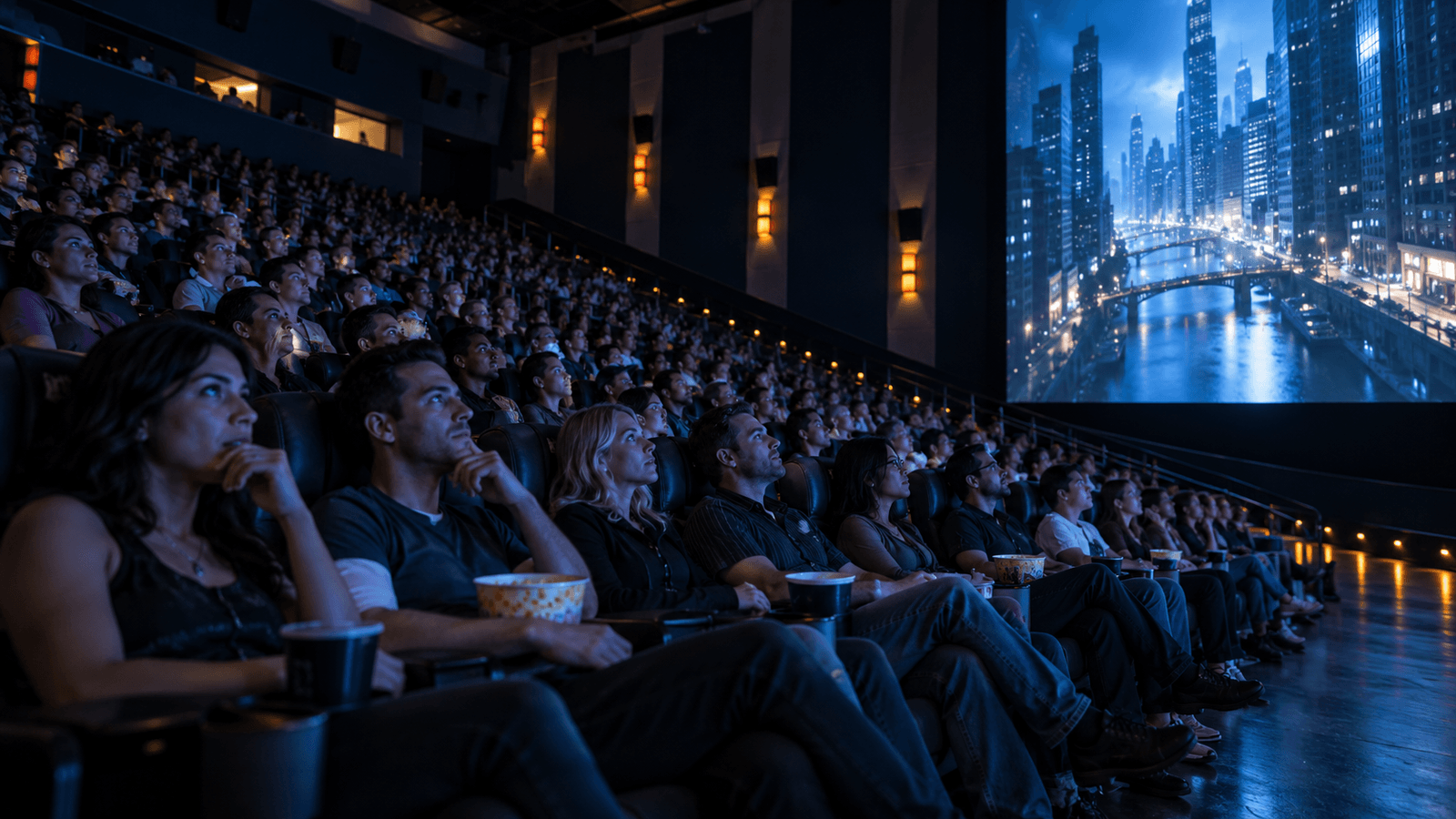
On July 18, 2008, The Dark Knight opened across the United States and Canada. Christopher Nolan’s sequel to Batman Begins returned Christian Bale as Bruce Wayne and introduced Heath Ledger’s Joker, a criminal who treats Gotham’s rules as material for destructive experiments. Aaron Eckhart played district attorney Harvey Dent, whose public idealism gives the story a second heroic center before violence transforms him. The production photographed major action passages with large-format IMAX cameras, using Chicago streets, practical stunts and controlled digital effects to give the fictional city physical weight. James Newton Howard and Hans Zimmer’s score emphasized pressure and instability rather than traditional heroic fanfare.
The release mattered because it presented a comic-book adaptation as a densely structured crime epic about surveillance, escalation and the compromises institutions make under fear. Ledger’s performance avoided a fixed psychological explanation, making the Joker’s shifting stories and precise physical choices more disturbing than a conventional origin. The film still delivered chases and spectacle, but its central conflicts concerned information, trust and whether moral examples can survive public knowledge. Anticipation intensified after Ledger’s death in January 2008, and the performance was eventually recognized with a posthumous Academy Award.
The Dark Knight broke opening-weekend records, crossed the billion-dollar worldwide threshold in later release and influenced how studios described serious franchise filmmaking. Its omission from the Academy’s Best Picture nominees was widely associated with the subsequent expansion of that category, while its use of IMAX encouraged more narrative features to adopt premium large formats. Later superhero films copied its darkness more easily than its discipline, sometimes mistaking muted color or violence for moral complexity. July 18 marks the arrival of a blockbuster whose cultural reach exceeded its genre label. It proved that a familiar hero could support civic tragedy, technological spectacle and an unresolved debate about the costs of protecting a public myth.
Remembering the dark knight opens in u.s. theaters on July 18 is valuable because anniversaries turn a familiar cultural object back into a specific decision, release or broadcast. The surrounding technology, business and audience conditions explain why the moment could happen then, while its later uses show that meaning never stops changing. Seen at that scale, the date is not trivia. It is a checkpoint between creation and memory: a place to separate what occurred from the legend accumulated around it and to ask why the work still attracts attention. That perspective also restores the labor of collaborators, distributors and audiences whose choices helped a single event travel beyond its first setting. Cultural history becomes clearer when the remembered icon is reconnected to the systems and people that made it visible.
The Dark Knight received its wide North American release on July 18, 2008.
The remembered moment placed The Dark Knight Opens inside the technology, audience habits and creative choices of 2008. Those conditions explain why it could happen then and why contemporary reactions differed from later memory.
Christopher Nolan used IMAX photography and crime-thriller structure to expand the scale of superhero filmmaking.
Its immediate importance came from the way audiences, distributors and other creators responded. The event gained force beyond its first release or appearance as people repeated, debated and reinterpreted it.
Heath Ledger received a posthumous Academy Award for his performance as the Joker.
Over time, the event became a reference point for later work in popular culture. Its legacy includes both the achievement itself and the changing arguments about what should be celebrated, questioned or rediscovered.
Explore more of "On This Day ..."
Discover more events from the same date across news, politics, technology, sports, and other fields. Each link highlights significant moments that shaped history on different fronts.