

On This Day in Pop: July 20, 2012
On July 20, 2012, The Dark Knight Rises opened in American theaters, concluding Christopher Nolan’s Batman trilogy. Eight years after the previous story, Christian Bale’s Bruce Wayne has withdrawn from public life while Gotham maintains an uneasy peace built on a lie. Tom Hardy’s masked revolutionary Bane breaks that order, Anne Hathaway’s Selina Kyle moves between survival and loyalty, and Joseph Gordon-Levitt’s John Blake represents a younger form of civic responsibility. Large-format photography, practical vehicles and location work gave the production exceptional physical scale. The story joined siege spectacle to questions about pain, inequality, sacrifice and whether a symbol can continue after the person who created it.
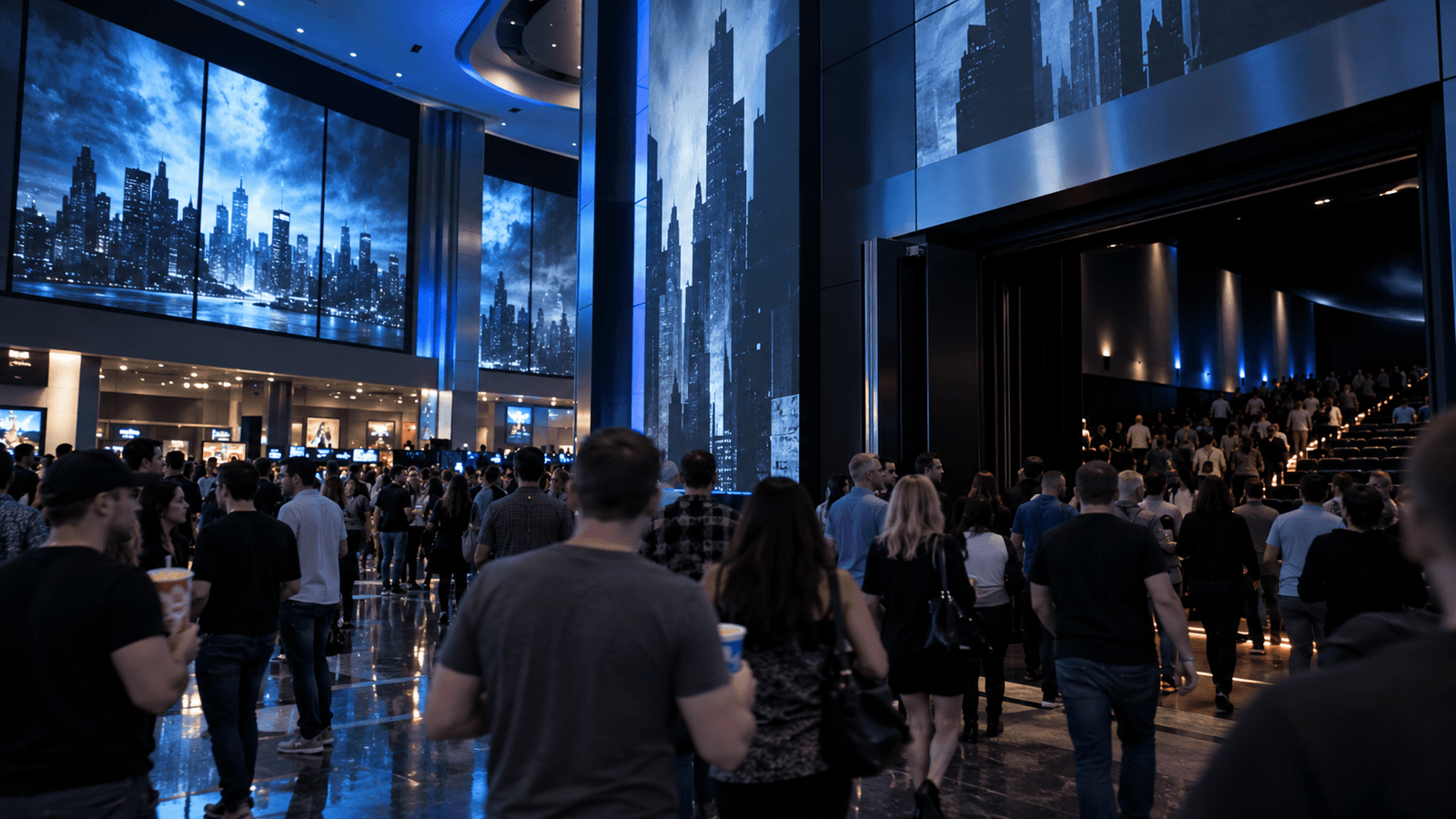
The release is inseparable from the mass shooting at a midnight screening in Aurora, Colorado, where twelve people were killed and many more injured. Premieres were canceled, publicity changed and moviegoing itself became part of a national discussion about grief, gun violence, security and the ethics of spectacle. Remembering the date therefore requires centering the victims and survivors rather than allowing the film’s fictional violence to absorb the real event. The contrast between a communal entertainment ritual and sudden terror gave the opening a historical meaning no filmmakers or audiences intended.
The Dark Knight Rises earned more than a billion dollars worldwide and completed a trilogy that helped make long-form continuity and directorial identity central to franchise marketing. Viewers continue to debate its politics, plot mechanics and the choice to give Bruce an ending that suggests release rather than endless repetition. Its influence can be seen in later studio efforts to promise both closure and future inheritance. July 20 holds two histories at once: the conclusion of a major cinematic project and a devastating attack on people gathered to see it. Any account that treats only the box office or mythology is incomplete. Popular culture creates shared spaces, and the human lives within those spaces matter more than the stories on the screen.
Remembering the dark knight rises opens in u.s. theaters on July 20 is valuable because anniversaries turn a familiar cultural object back into a specific decision, release or broadcast. The surrounding technology, business and audience conditions explain why the moment could happen then, while its later uses show that meaning never stops changing. Seen at that scale, the date is not trivia. It is a checkpoint between creation and memory: a place to separate what occurred from the legend accumulated around it and to ask why the work still attracts attention. That perspective also restores the labor of collaborators, distributors and audiences whose choices helped a single event travel beyond its first setting. Cultural history becomes clearer when the remembered icon is reconnected to the systems and people that made it visible.
The Dark Knight Rises opened in the United States on July 20, 2012.
The remembered moment placed Dark Knight Rises inside the technology, audience habits and creative choices of 2012. Those conditions explain why it could happen then and why contemporary reactions differed from later memory.
The film concluded Christopher Nolan's Batman trilogy and earned more than a billion dollars worldwide.
Its immediate importance came from the way audiences, distributors and other creators responded. The event gained force beyond its first release or appearance as people repeated, debated and reinterpreted it.
Its opening is inseparable from the mass shooting at a midnight screening in Aurora, Colorado.
Over time, the event became a reference point for later work in popular culture. Its legacy includes both the achievement itself and the changing arguments about what should be celebrated, questioned or rediscovered.
Explore more of "On This Day ..."
Discover more events from the same date across news, politics, technology, sports, and other fields. Each link highlights significant moments that shaped history on different fronts.