

On This Day in Pop: July 15, 1988
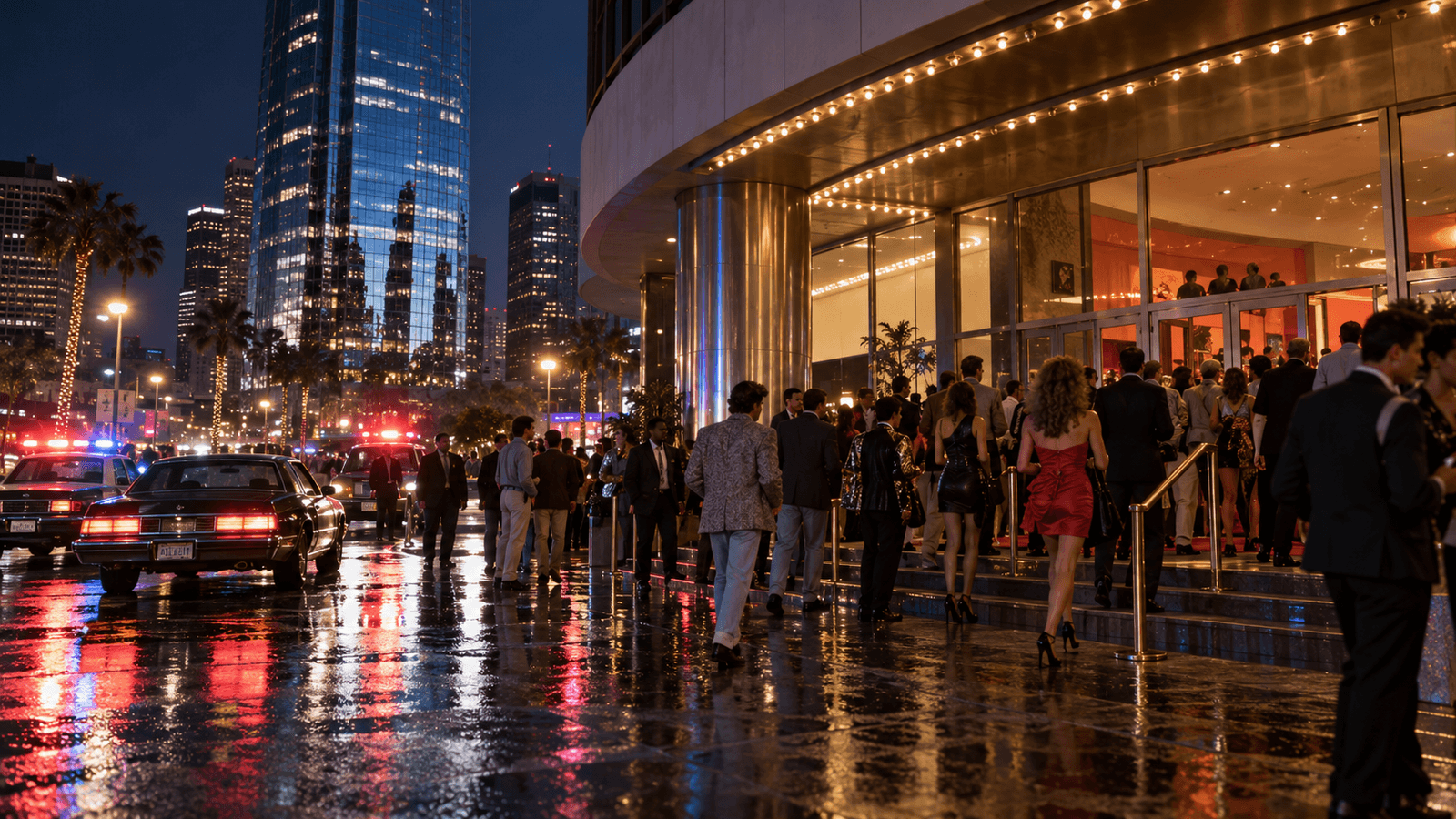
On July 15, 1988, Die Hard opened in American theaters. John McTiernan directed Bruce Willis as New York police officer John McClane, who arrives in Los Angeles hoping to repair his marriage and becomes trapped inside a high-rise seized during an office Christmas party. Alan Rickman’s Hans Gruber leads the takeover with theatrical calm, while Bonnie Bedelia’s Holly provides a personal stake that is never merely decorative. Adapted from Roderick Thorp’s novel Nothing Lasts Forever, the film confines most of its action to Nakatomi Plaza, using elevators, stairwells, offices and unfinished floors as pieces of a spatial puzzle. McClane survives through observation and improvisation, accumulating injuries rather than moving through danger untouched.
The opening mattered because Willis was known primarily for television comedy, not the enormous physique associated with 1980s action stars. His performance brought sarcasm, fear and exhaustion into the genre without reducing its excitement. McTiernan and cinematographer Jan de Bont kept the building’s geography clear, allowing each choice to affect later scenes. Rickman’s controlled villainy created a strong contrast, and the script gave supporting characters competing information rather than treating everyone outside the hero’s path as invisible. The result combined a siege thriller, marital story and workplace satire with exceptional mechanical precision.
Die Hard became a box-office success, received four Academy Award nominations and generated sequels of declining resemblance to the contained original. More importantly, its title became a production shorthand: countless projects were pitched as Die Hard on a bus, a plane, a ship or another restricted location. The movie also inspired an annual argument over whether a story set at a Christmas party counts as a Christmas film, evidence of how comfortably it moved from summer release into seasonal ritual. July 15 marks the arrival of a modern action template whose strength lies in limitation. One building, one wounded hero and one opponent with a plan proved more durable than scale alone, and vulnerability became a source of suspense rather than a flaw to hide.
Remembering die hard opens in u.s. theaters on July 15 is valuable because anniversaries turn a familiar cultural object back into a specific decision, release or broadcast. The surrounding technology, business and audience conditions explain why the moment could happen then, while its later uses show that meaning never stops changing. Seen at that scale, the date is not trivia. It is a checkpoint between creation and memory: a place to separate what occurred from the legend accumulated around it and to ask why the work still attracts attention. That perspective also restores the labor of collaborators, distributors and audiences whose choices helped a single event travel beyond its first setting. Cultural history becomes clearer when the remembered icon is reconnected to the systems and people that made it visible.
Die Hard opened in the United States on July 15, 1988.
The remembered moment placed Die Hard Opens inside the technology, audience habits and creative choices of 1988. Those conditions explain why it could happen then and why contemporary reactions differed from later memory.
Bruce Willis's vulnerable, comic John McClane challenged the dominant image of the invincible action hero.
Its immediate importance came from the way audiences, distributors and other creators responded. The event gained force beyond its first release or appearance as people repeated, debated and reinterpreted it.
The film's contained high-rise structure became a template imitated across later action movies.
Over time, the event became a reference point for later work in popular culture. Its legacy includes both the achievement itself and the changing arguments about what should be celebrated, questioned or rediscovered.
Explore more of "On This Day ..."
Discover more events from the same date across news, politics, technology, sports, and other fields. Each link highlights significant moments that shaped history on different fronts.